In today's competitive manufacturing landscape, efficient production planning and scheduling isn't just a goal, it's a survival requirement. Today, we explore how modern Production Planning & Scheduling (PPS) systems can transform your manufacturing operations from reactive chaos into proactive excellence that drives productivity, reduces costs, and ensures on time delivery.
Production planning and scheduling form the backbone of any successful manufacturing operation. Without systematic planning and optimization, businesses face constant challenges of missed deadlines, excess inventory, machine downtime, and inefficient resource utilization. Modern PPS solutions are now evolving beyond basic scheduling to provide intelligent, real time optimization across the entire production lifecycle, from demand forecasting to final delivery.
The cost of poor production planning is staggering. Industry studies show that inefficient scheduling can cost manufacturers up to 20-30% of their potential revenue. This includes direct costs like overtime, expedited shipping, and scrap, as well as indirect costs like lost sales, damaged customer relationships, and reduced market share. A robust PPS system helps organizations eliminate these costs through systematic optimization and real time adjustments.
Schedule Execution: Order Allocation and Resource Management
The heart of production scheduling is intelligent order allocation and resource management. Modern PPS systems provide detailed visibility into how orders are allocated to resources, highlight material shortages and labor constraints, and ensure that production runs smoothly even when unexpected issues arise.
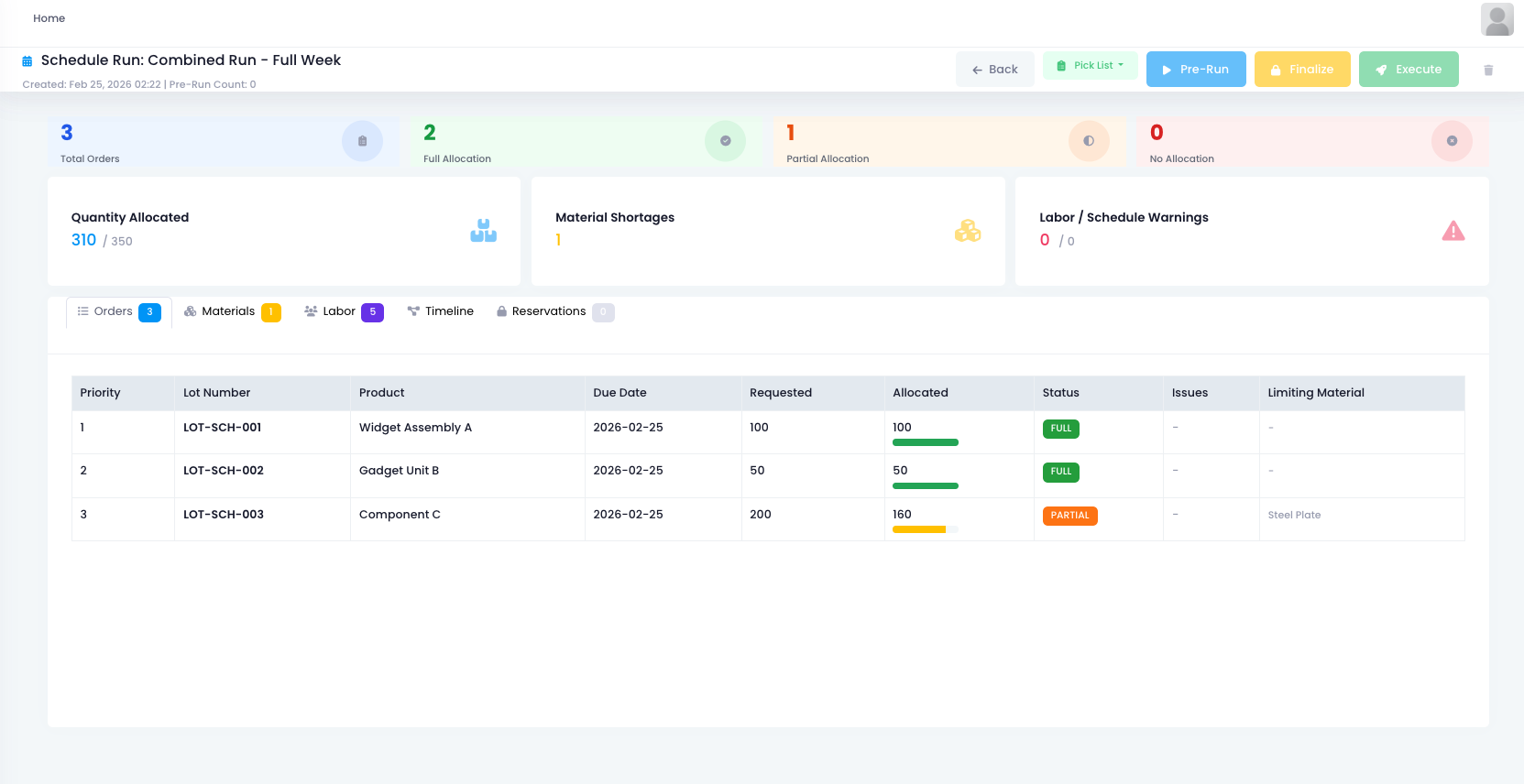
As shown in our schedule execution interface, production managers can see:
- Order Allocation Status: Which orders have been fully allocated, partially allocated, or not allocated at all
- Material Shortages: Real time alerts when required materials are not available for production
- Labor and Schedule Warnings: Identification of potential labor constraints or scheduling conflicts
- Quantity Allocated: Detailed breakdown of how much of each order has been allocated to production
- Limiting Materials: Identification of specific materials that are constraining production
This level of detail ensures that production managers can quickly identify bottlenecks, resolve material shortages, and adjust schedules before issues impact delivery. The system highlights potential problems in real time, allowing for proactive resolution rather than reactive firefighting.
Unified Production Dashboard: Real Time Visibility
The foundation of effective production planning is comprehensive visibility. A centralized Production Dashboard provides a bird's eye view of all production activities, schedules, and performance metrics across all production lines, enabling data driven decision making and proactive management.
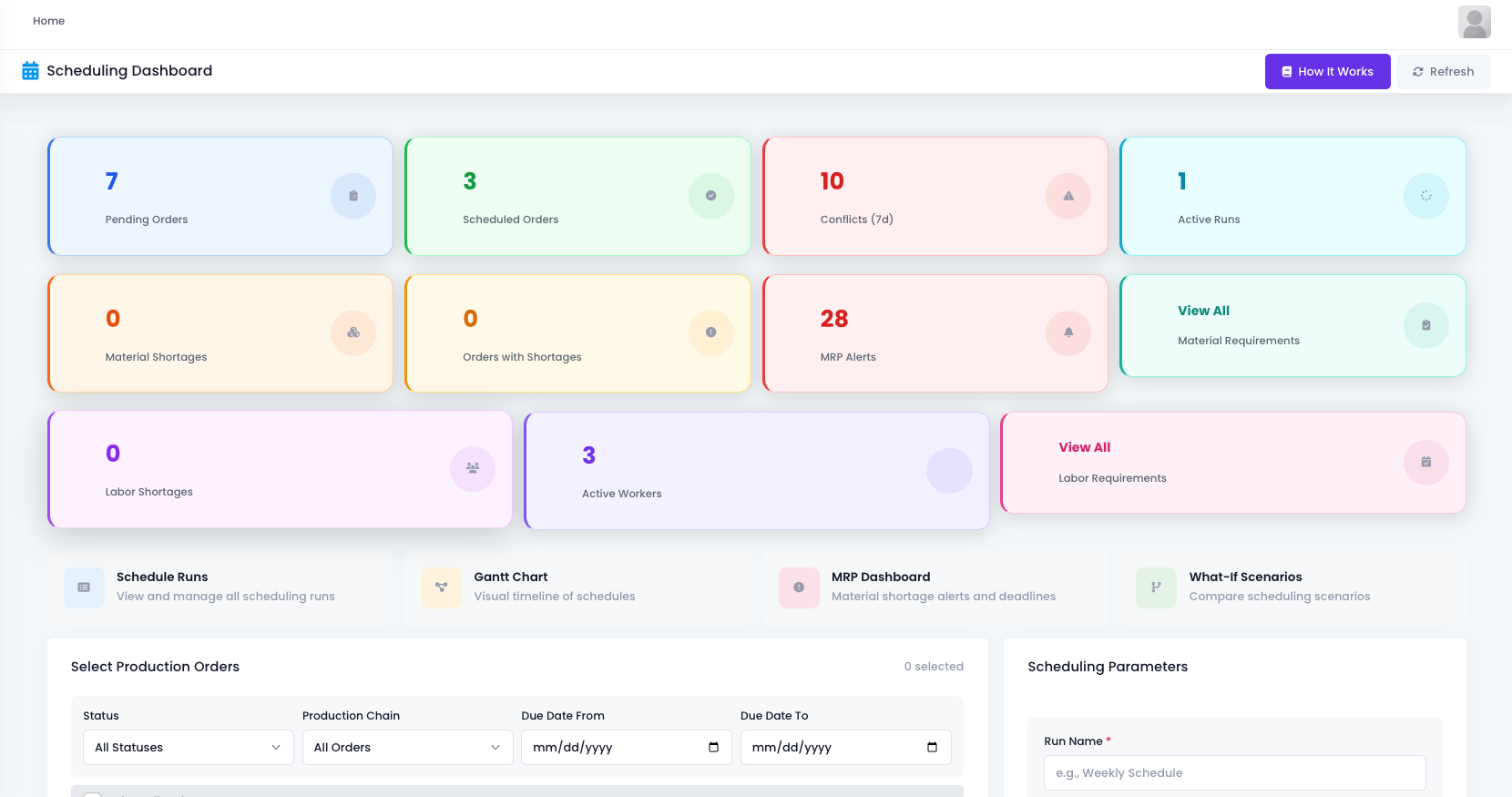
As shown in our dashboard, production managers can instantly see key indicators such as:
- Pending Orders: Number of orders waiting to be scheduled and produced
- Scheduled Orders: Orders that have been successfully scheduled for production
- Conflicts: Scheduling conflicts that need to be resolved
- Active Runs: Currently executing production runs
- Material Shortages: Critical material shortages that could impact production
- Labor Shortages: Labor availability issues that need to be addressed
This high level visibility ensures that production managers can quickly identify emerging issues, spot potential bottlenecks before they escalate, and make informed decisions about schedule adjustments, resource allocation, and production priorities. The dashboard also provides quick access to schedule runs, Gantt charts, MRP dashboards, and what if scenarios for comprehensive planning.
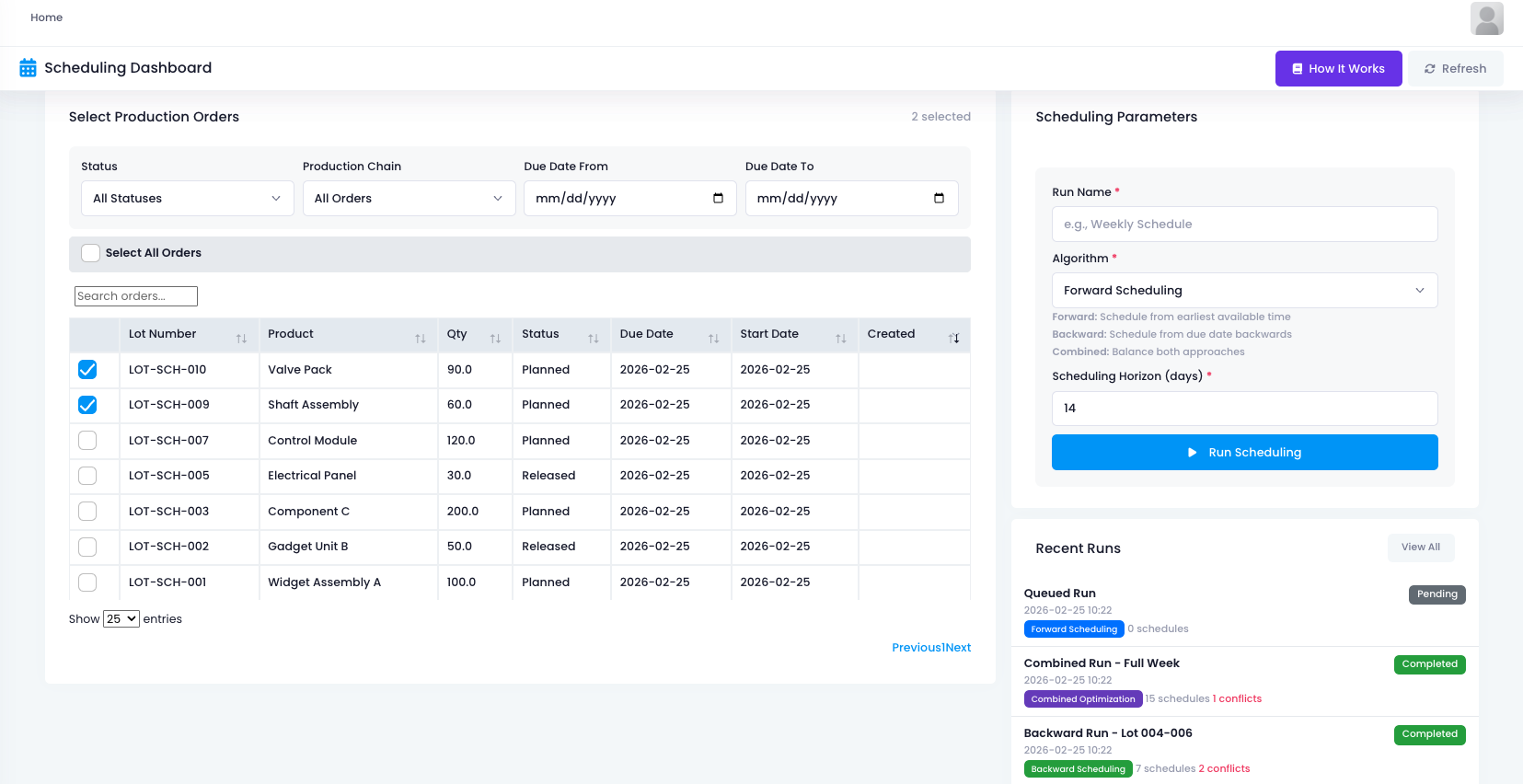
Schedule Creation: Intelligent Order Selection and Parameterization
Creating effective production schedules requires careful selection of orders and parameterization of scheduling algorithms. Modern PPS systems provide intuitive interfaces for selecting production orders, setting scheduling parameters, and running optimization algorithms that generate optimal schedules.
This intuitive scheduling interface enables organizations to create optimal schedules through:
- Order Selection: Flexible filtering and selection of production orders based on status, date ranges, and other criteria
- Algorithm Selection: Choice of scheduling algorithms like Forward Scheduling, Backward Scheduling, or Combined Optimization
- Parameter Configuration: Setting of scheduling parameters like scheduling horizon days and other optimization criteria
- Recent Runs: Quick access to previously executed scheduling runs for comparison and reuse
- One-Click Execution: Simple button to run the scheduling algorithm and generate the optimal schedule
By providing an intuitive interface for schedule creation, organizations can reduce the time spent on scheduling by up to 80% while improving schedule quality. The system allows for rapid testing of different scenarios and ensures that schedules are always optimized based on the latest business priorities and constraints.
Key Benefits of Intelligent Scheduling
- Reduce scheduling time by up to 80% through automated optimization
- Increase throughput by 15-25% through better resource utilization
- Reduce lead times by 20-30% through optimized sequencing
- Minimize setup times through intelligent job sequencing
- Improve on time delivery rates to 95%+
Material Requirements Planning: Inventory and Demand Alignment
Production schedules are only as good as the materials available to support them. Modern PPS systems provide integrated Material Requirements Planning (MRP) capabilities that ensure all required materials are available when needed, preventing production delays while minimizing inventory costs.
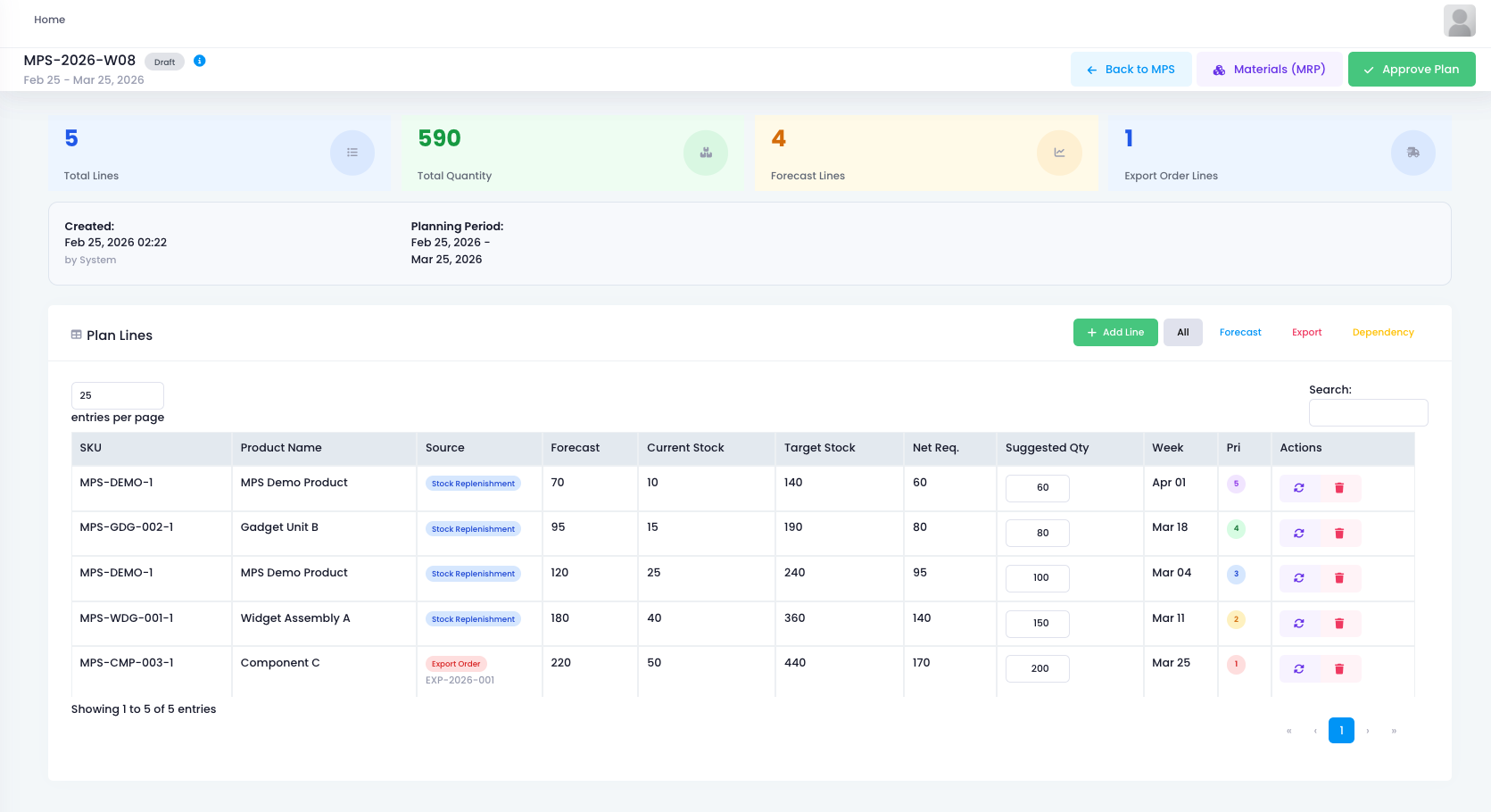
This comprehensive MRP integration enables organizations to maintain material availability through:
- Forecasted Demand: Integration with sales forecasts to understand future material requirements
- Current Stock Levels: Real time visibility into existing inventory levels
- Target Stock: Setting of optimal stock levels based on demand patterns and lead times
- Net Requirements: Automatic calculation of material needs after accounting for current stock
- Suggested Order Quantities: Intelligent recommendations for how much to order and when
- Expiration Tracking: Monitoring of material expiration dates for perishable items
By integrating material requirements planning with production scheduling, organizations can eliminate material shortages that cause production delays while simultaneously reducing excess inventory that ties up working capital. This just in time approach ensures materials arrive exactly when needed, not too early and not too late, optimizing both production efficiency and working capital.
Master Production Schedule: Demand-Driven Planning
The Master Production Schedule (MPS) is the cornerstone of production planning, translating demand forecasts into specific production plans. Modern PPS systems provide robust MPS capabilities that enable forecast-driven planning, ensuring that production aligns with market demand while maintaining optimal inventory levels.
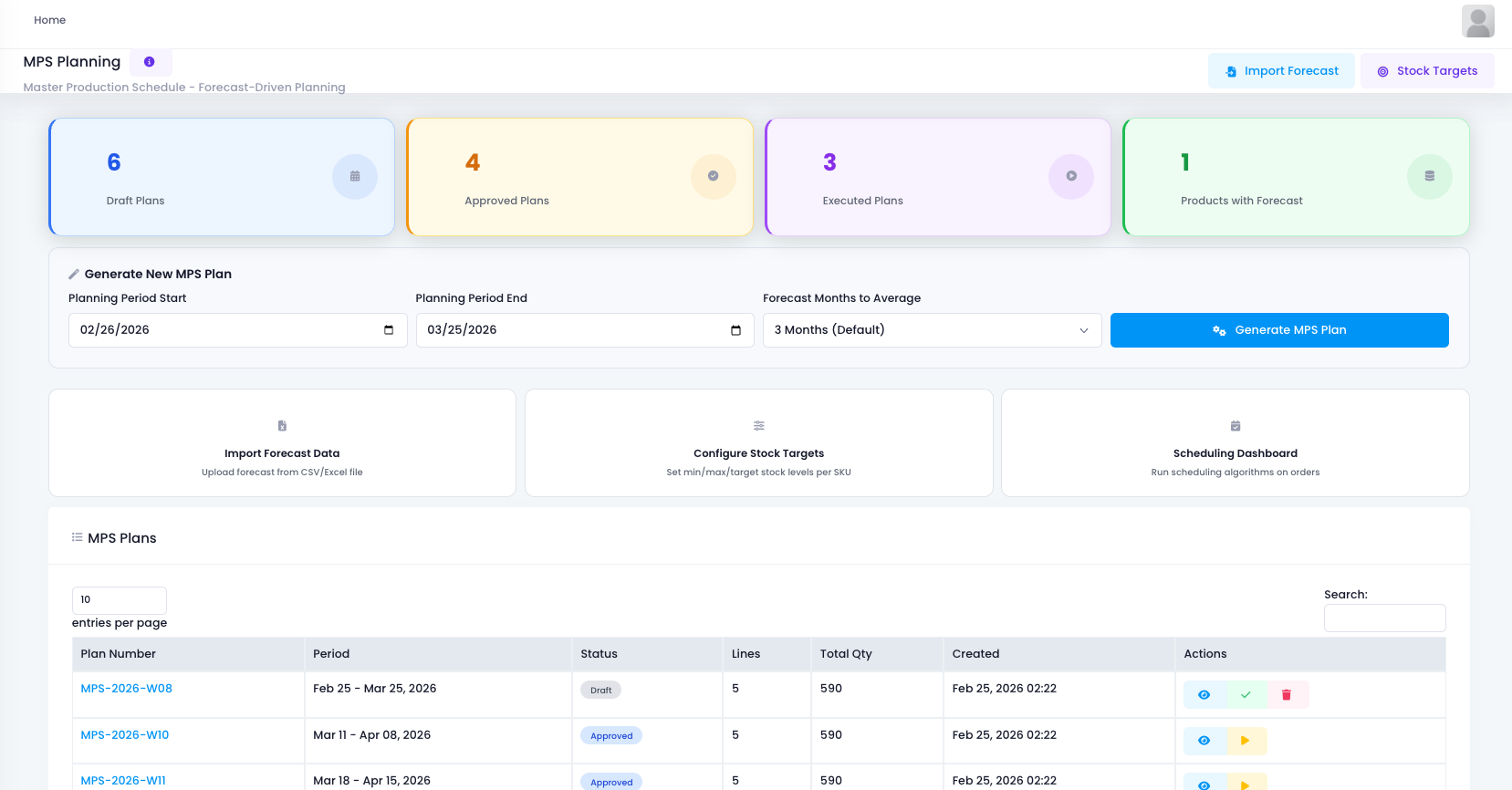
This comprehensive MPS capability enables organizations to achieve demand driven planning through:
- Draft Plans: Creation of preliminary production plans for review and refinement
- Approved Plans: Formal approval workflow for production plans before execution
- Executed Plans: Tracking of plans that have been put into production
- Forecast Integration: Import and integration of demand forecasts from various sources
- Planning Periods: Flexible planning periods with configurable start and end dates
- Stock Target Configuration: Setting of optimal stock levels for each product
By implementing a robust Master Production Schedule, organizations can ensure that production is always aligned with market demand. The system allows for what if analysis, rapid replanning when demand changes, and seamless integration with scheduling and execution systems. This demand driven approach ensures that resources are used efficiently and that customer needs are met consistently.
MPS Planning Benefits
- Improve forecast accuracy by 20-30% through data driven planning
- Reduce stockouts by 40-50% through better demand alignment
- Lower inventory carrying costs by 20-40% through optimized stock levels
- Increase planner productivity by 30-50% through automated planning
- Improve customer satisfaction through better on time delivery
Conclusion: Production Planning as a Competitive Advantage
In today's competitive marketplace, production planning and scheduling is not just an operational necessity, it's a competitive advantage. Companies that excel in production planning enjoy higher productivity, lower costs, better customer service, and greater profitability. A modern PPS system provides the tools, algorithms, and insights needed to achieve production excellence.
By adopting these modern Production Planning & Scheduling practices, companies can:
- Increase production throughput by 15-25%
- Reduce lead times by 20-30%
- Improve on time delivery rates to 95%+
- Reduce inventory carrying costs by 20-40%
- Increase schedule adherence to 95%+
- Achieve competitive advantage through operational excellence
The result is a production-focused organization that delivers products on time, every time, while continuously improving efficiency and reducing costs. Production planning becomes not just a scheduling activity but a strategic capability that drives business success.