The Foundation of Operational Excellence
In the complex world of manufacturing and distribution, effective inventory management is the cornerstone of operational excellence. Today, we explore how a modern Inventory Management system can transform your warehouse operations from a reactive cost center into a strategic asset that drives profitability and customer satisfaction.
Inventory represents one of the largest investments for most manufacturing and distribution companies. Without precise control and visibility, businesses face a constant balancing act between excess stock (tying up capital) and stockouts (losing sales and disappointing customers). Modern inventory solutions are now evolving beyond basic tracking to provide intelligent, real time control across the entire supply chain.
Unified Inventory Visibility
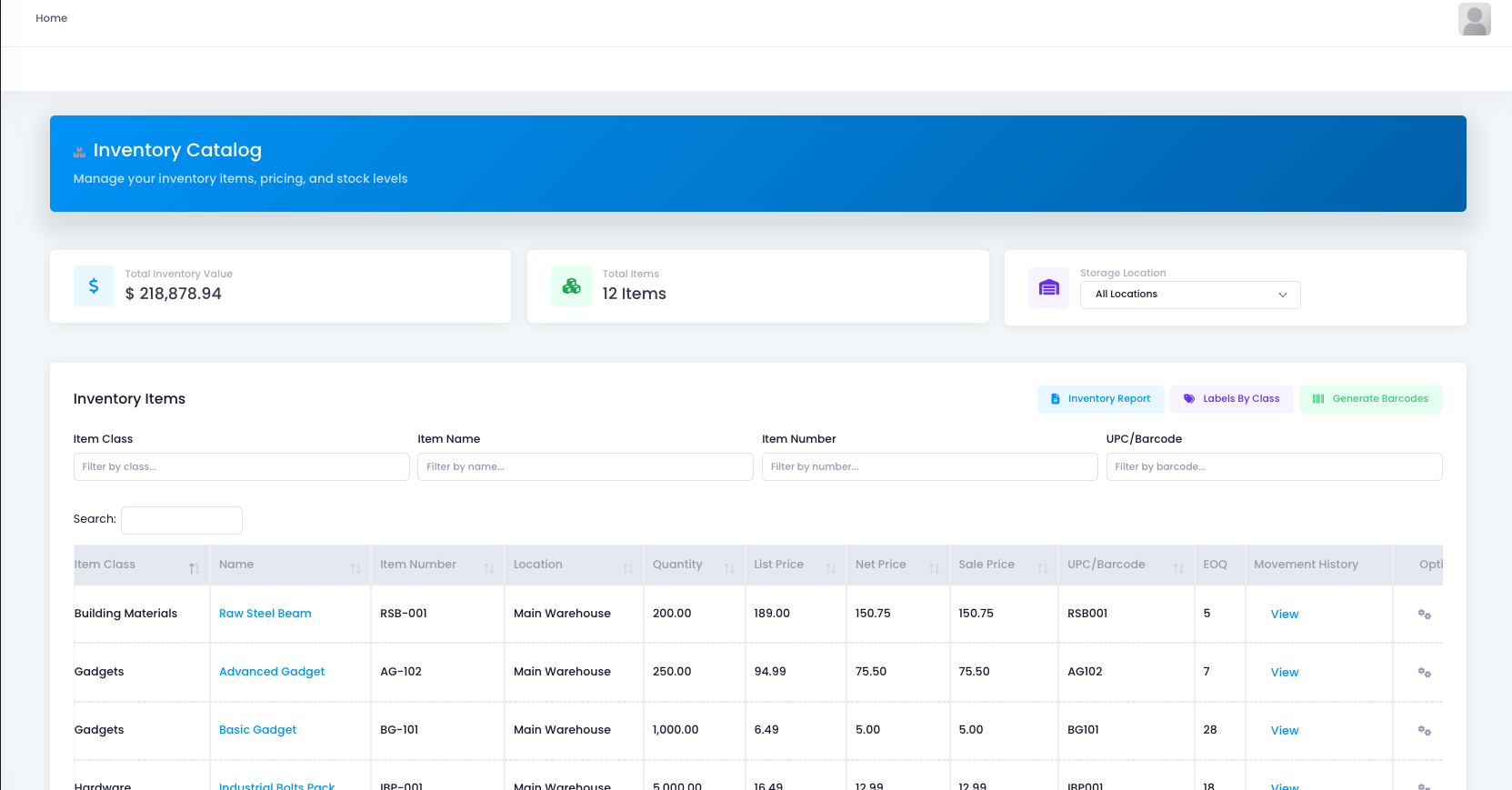
The foundation of effective inventory management is complete visibility. A centralized Inventory Overview dashboard provides a comprehensive view of all stock levels, locations, and movements, eliminating blind spots and enabling data driven decision making.
As shown in our dashboard, users can instantly see key metrics like total inventory value ($218,878.94) and item count (12 items), with the ability to filter by storage location. This high level visibility ensures that managers can quickly assess inventory health and make informed decisions about purchasing and production.
Detailed Item Management
Beyond high level visibility, modern systems provide granular control over individual inventory items. The Inventory Items screen allows for detailed tracking of each product, including classification, location, quantities, and pricing information.
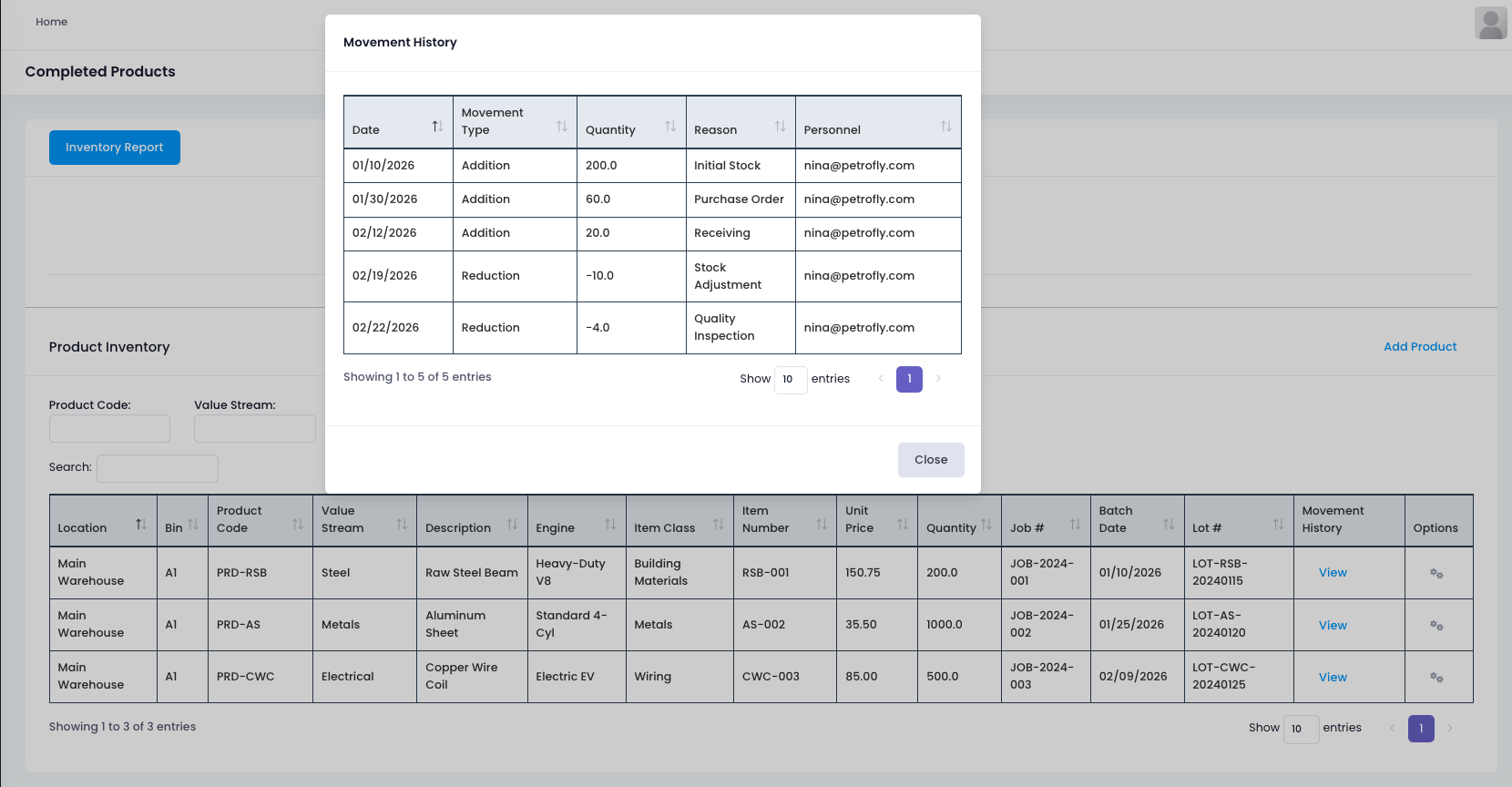
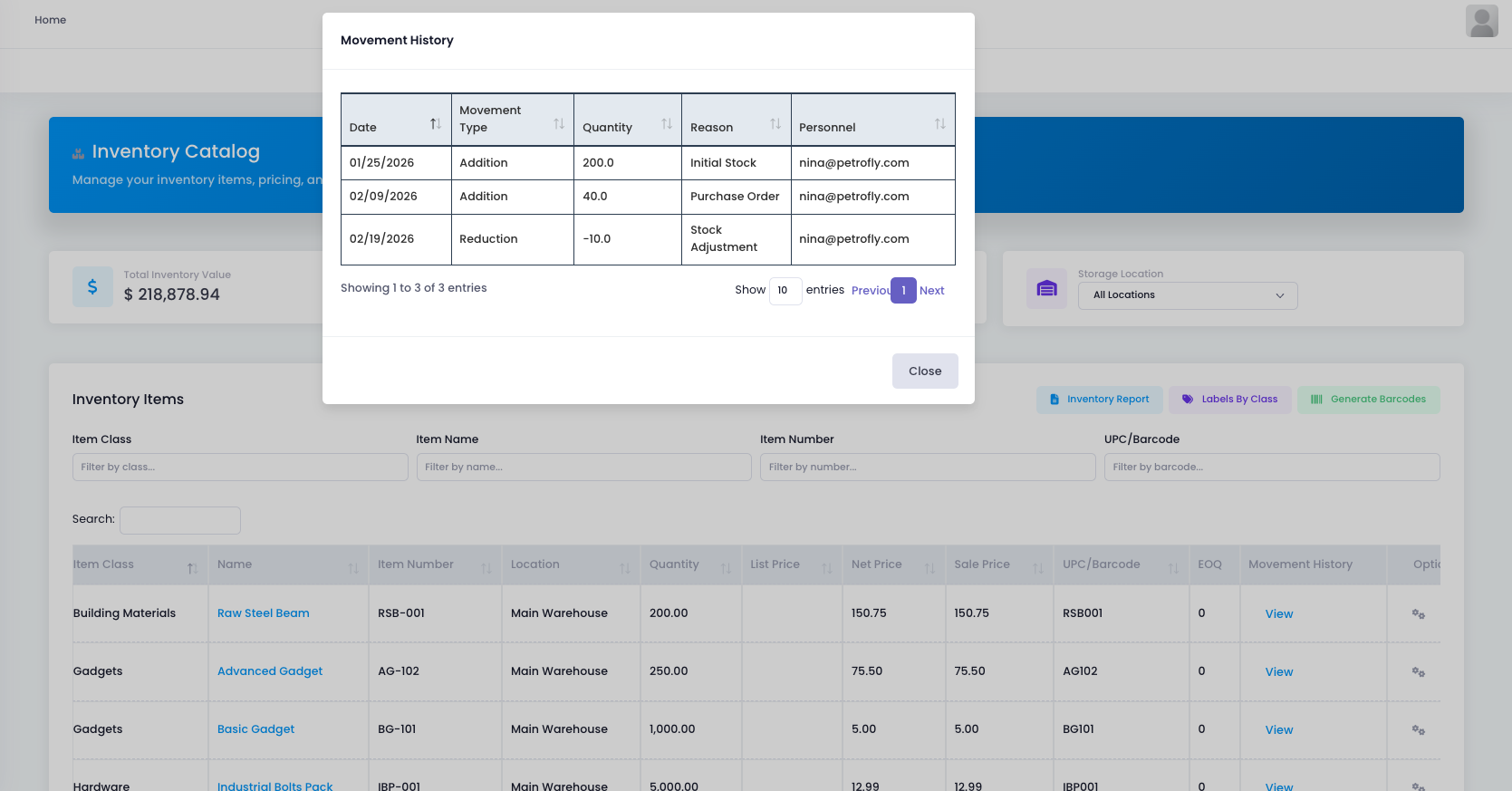
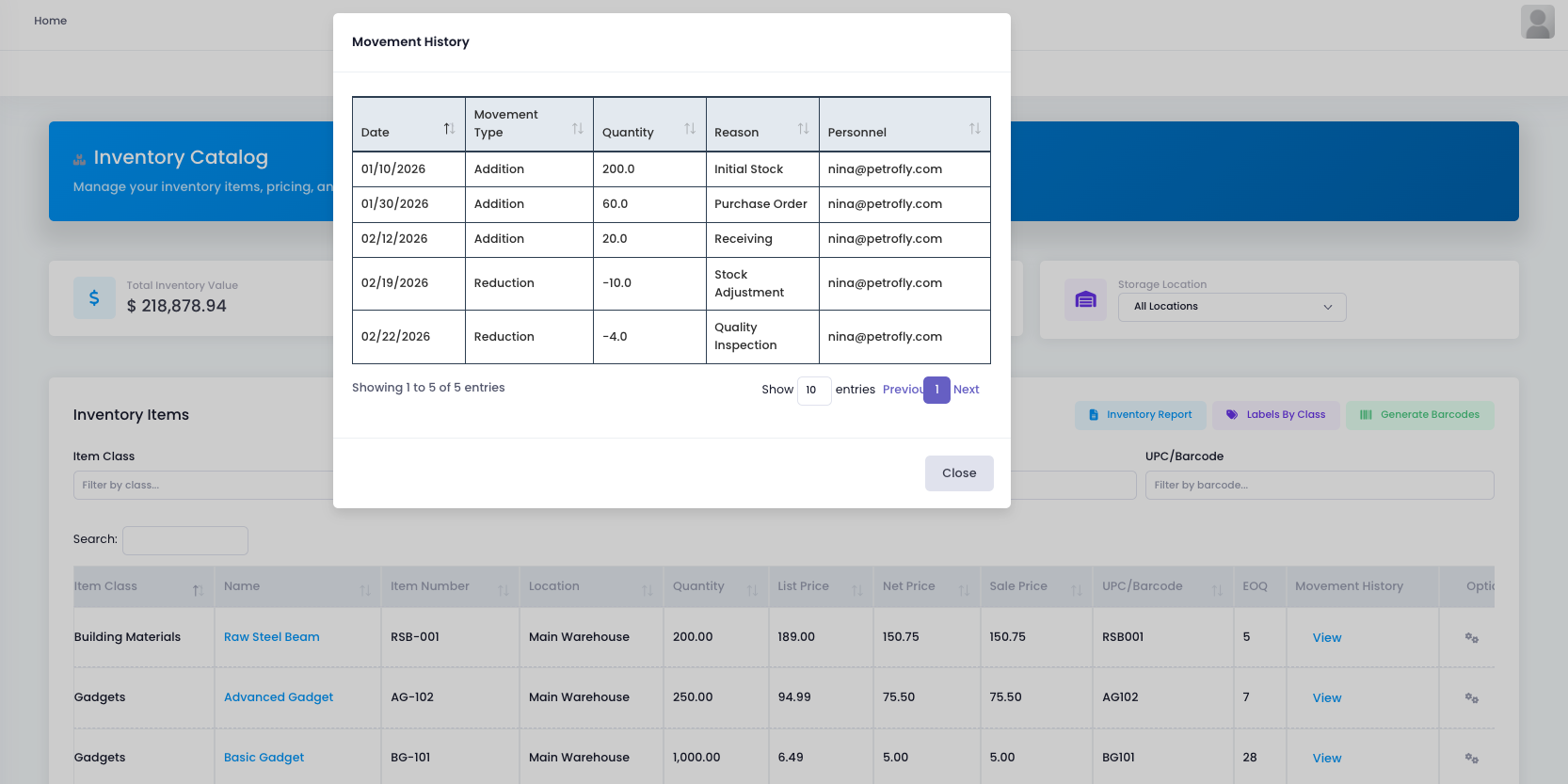
This detailed view enables precise inventory management, with the ability to track items by class (e.g., Building Materials, Gadgets, Hardware), monitor stock levels across locations, and maintain accurate pricing information. The system also provides quick access to movement history and other operational details through the "View" option.
Streamlined Inventory Operations
Efficient inventory operations are essential for maintaining accuracy and reducing labor costs. Modern systems simplify common tasks like adding new items, with intuitive interfaces that guide users through the process.
The Add Item form allows users to quickly input essential information like location, bin, description, item number, and current stock level. This streamlined process reduces data entry errors and ensures that new items are properly categorized from the moment they enter the system.
Job Specific Inventory Tracking
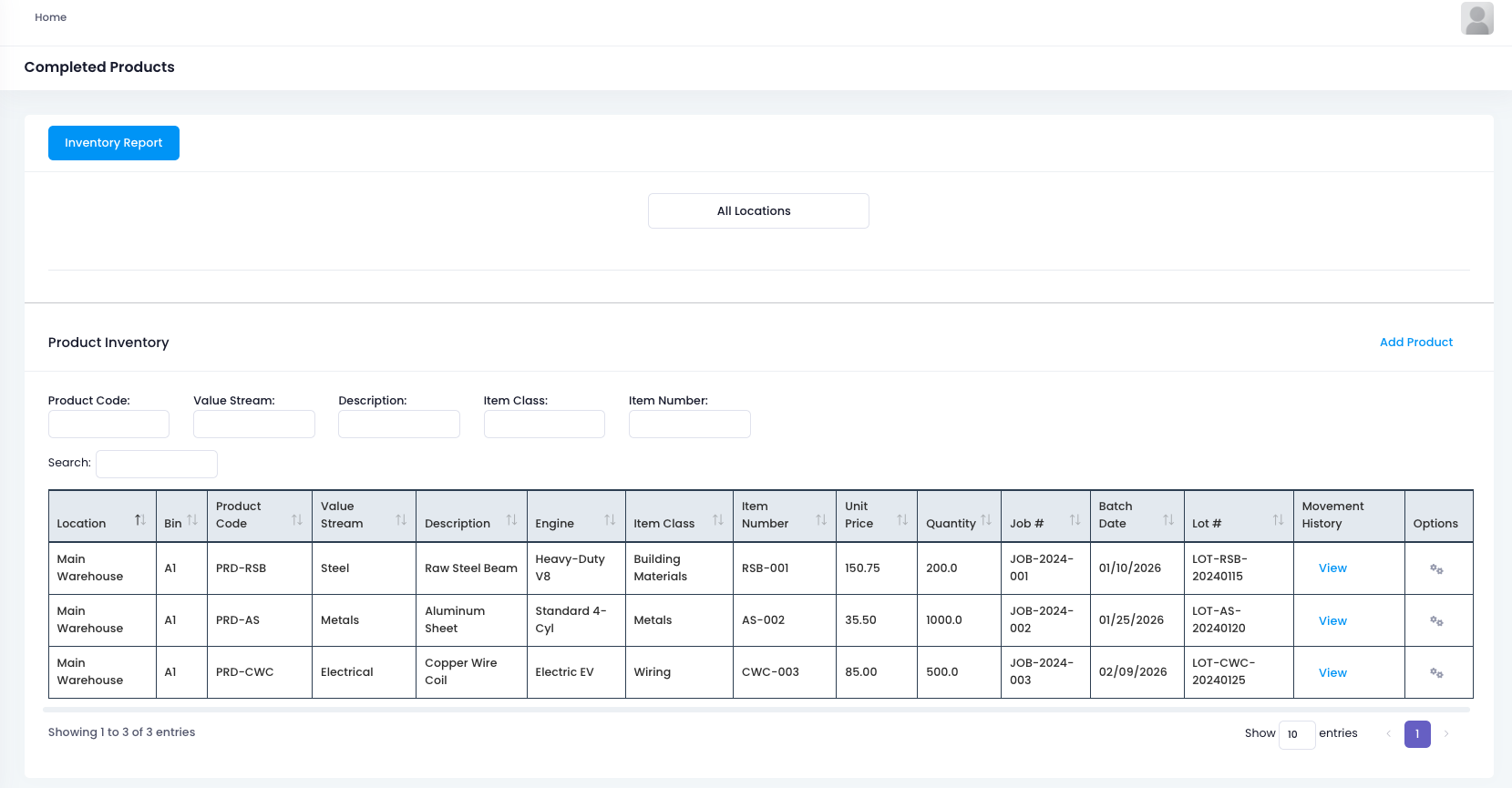
For manufacturing and construction companies, tracking inventory allocated to specific jobs is critical for project profitability. Modern systems provide dedicated views for job related inventory, ensuring that materials are properly accounted for and charged to the correct projects.
This job specific tracking capability allows for precise cost accounting and helps prevent material shortages that can delay production. By maintaining separate views for general inventory and job specific materials, the system provides clarity while eliminating confusion between operational and project specific stock.
Advanced Inventory Analytics
The next frontier in inventory management is predictive analytics. Modern systems are increasingly incorporating AI driven insights to help businesses optimize stock levels, forecast demand, and identify trends before they impact operations.
These analytics capabilities enable businesses to move from reactive to proactive inventory management, anticipating needs and optimizing stock levels based on historical data and market trends. This forward looking approach helps reduce carrying costs while ensuring that critical materials are always available when needed.
The Future of Inventory Management
As technology continues to evolve, inventory management systems are becoming increasingly intelligent and interconnected. The integration of IoT devices, AI-powered demand forecasting, and machine learning algorithms will further enhance visibility and automation, allowing businesses to achieve unprecedented levels of efficiency.
By adopting these modern Inventory Management practices, companies can reduce carrying costs, eliminate stockouts, improve order fulfillment rates, and gain a competitive edge in today's fast paced marketplace. The result is a more agile, responsive supply chain that can adapt to changing market conditions while delivering consistent value to customers.