Gain the Quality Edge with Industry Software

Summary
×Quality management in modern manufacturing is undergoing a profound transformation. Traditional quality systems often consist of isolated components: paper work instructions scattered across the shop floor, statistical process control data trapped on individual computers, quality records sleeping in file cabinets, and production equipment data locked inside PLCs. This fragmentation not only creates management blind spots but also makes root cause analysis and continuous improvement extremely difficult.
Industry Software's integrated manufacturing quality architecture connects these discrete elements into a unified intelligent system. From sensor data collection at the equipment layer, through real time monitoring and analysis at the processing layer, to dashboards and mobile alerts at the application layer, data flows seamlessly through every stage, ultimately transforming into actionable insights that help organizations evolve from reactive inspection to proactive prevention.
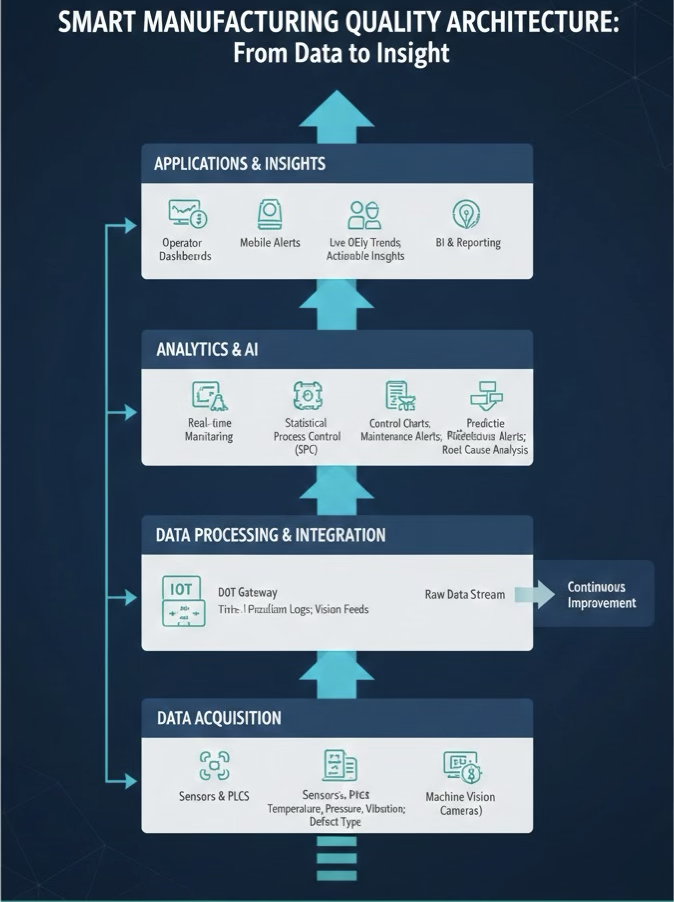
An integrated quality architecture connects equipment, data, and applications into a unified intelligent system
Core Quality Pillars
Standard Work: The Foundation of Consistency
Consistent quality begins with standardized work processes. Each standard work instruction in the system contains not only step by step operating instructions but also integrates video guides, torque specifications, inspection points, and other critical information. Operators can access the latest version of work instructions at shop floor terminals at any time, ensuring every step meets process requirements.
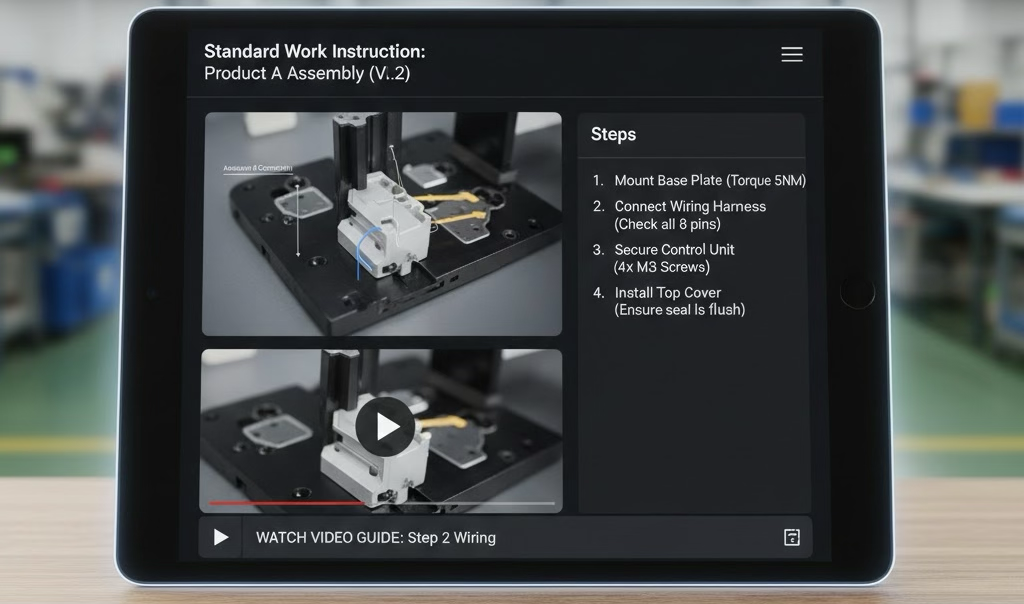
Standard work instructions include step descriptions, torque specifications, and video guidance
Bill of Materials: Precise Product Definition
Quality starts with accurate product definition. The Bill of Materials management module presents the complete composition from finished product to components in a hierarchical structure, with each material item associated with version numbers, cost information, and current status. When engineering changes occur, the system automatically updates the BOM and retains complete revision history, ensuring the production floor always uses the correct version.
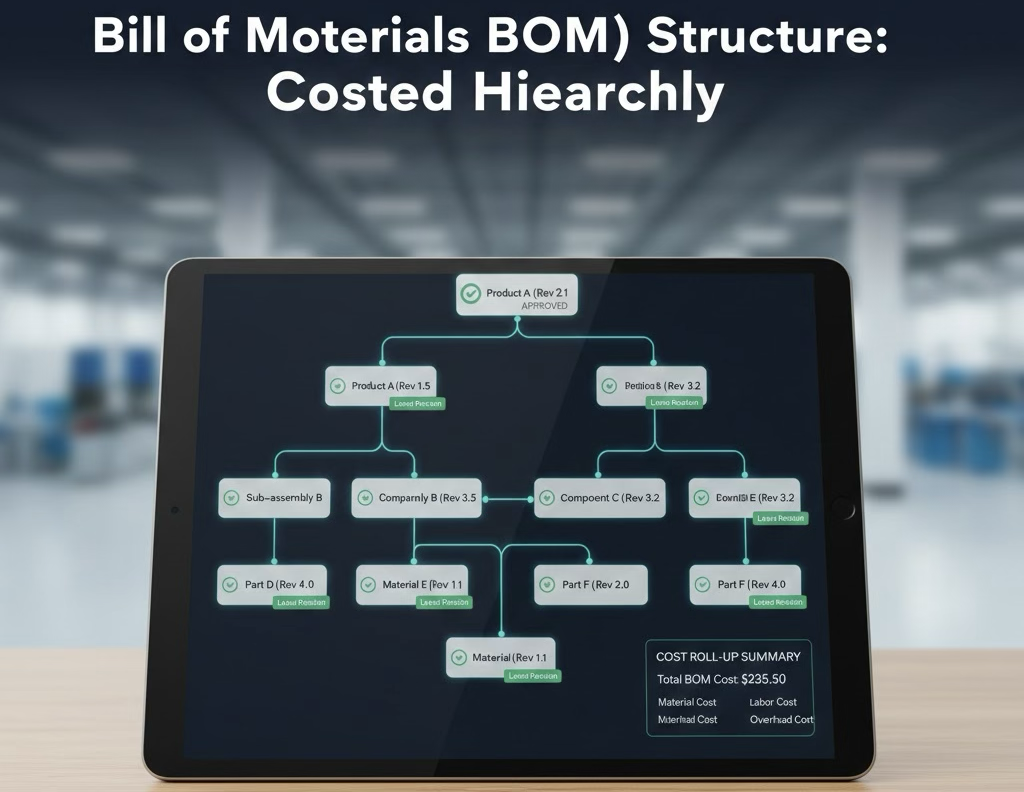
BOM clearly displays product structure, version status, and cost composition
Statistical Process Control: Real Time Quality Monitoring
The Statistical Process Control module provides real time process monitoring capabilities. The system automatically collects critical process parameters, plots data points on control charts, and applies standard rule sets to detect anomalies. When abnormal signals appear, such as points beyond control limits or seven consecutive points on the same side, the system immediately triggers alerts, notifying quality personnel to intervene promptly and prevent batch defects.
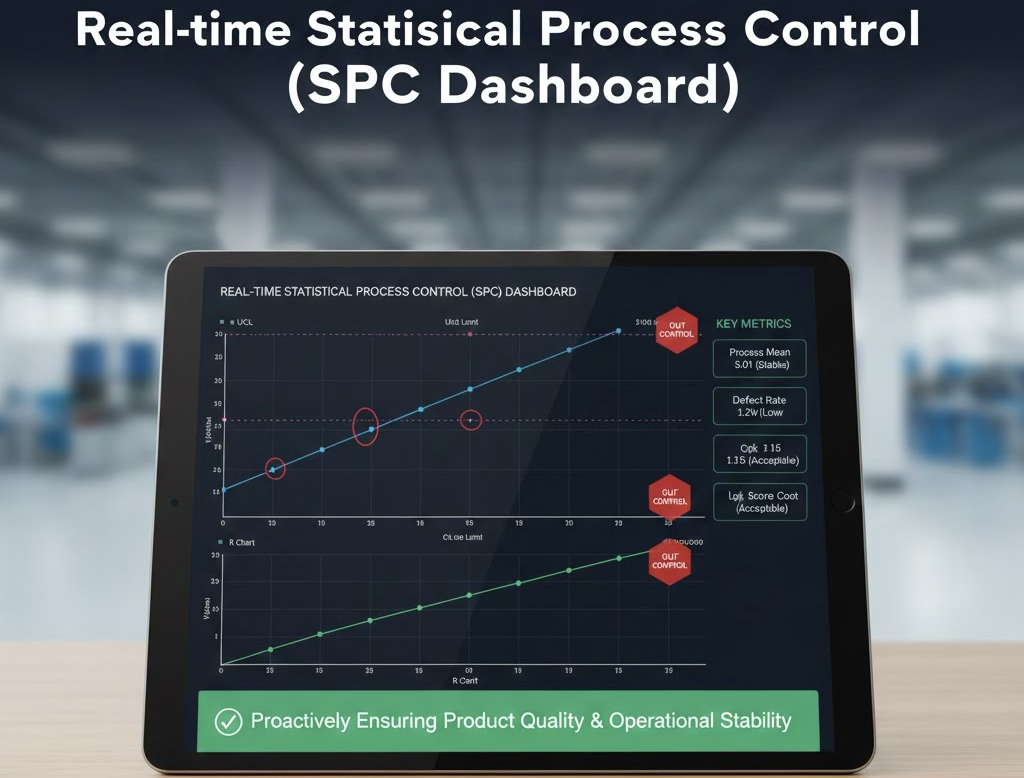
SPC control charts monitor process stability in real time and automatically identify abnormal signals
Quality Management System: Controlled Documentation and Processes
The Quality Management System module provides a controlled environment for documentation and processes. From standard work instructions to quality manuals, every document undergoes a rigorous approval process and maintains complete revision history with distribution lists. Any change requires authorization, and the system tracks personnel training confirmation to ensure new versions are effectively communicated.
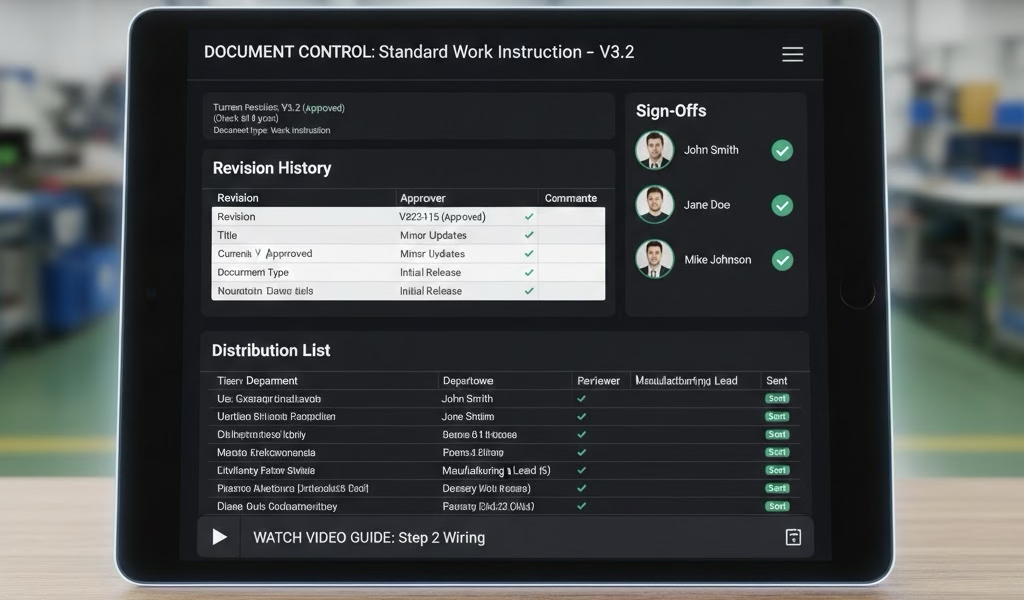
Document control module records complete revision history and maintains distribution lists
Nonconforming Material Management: From Identification to Closure
When quality defects occur, the system provides structured nonconforming material management. From problem identification and logging, through evaluation and disposition, correction and verification, to final approval and closure with preventive actions, every step is traceable. Disposition decisions may include rework, scrap, return to vendor, or use as is, and the system automatically associates related corrective actions to prevent recurrence.
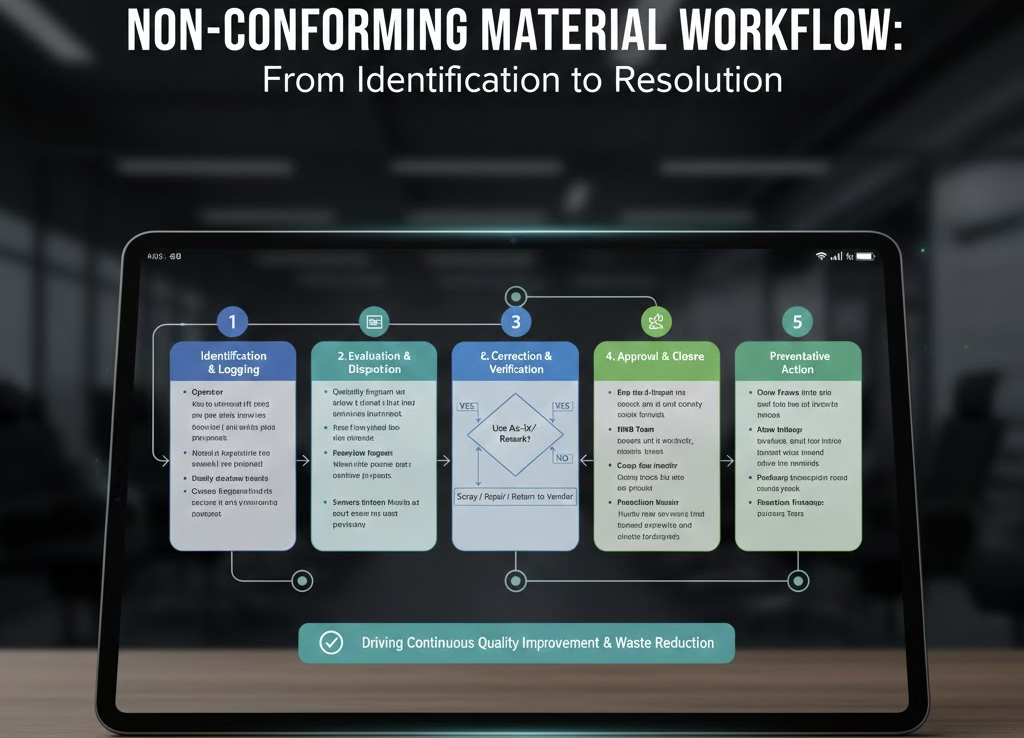
Shop Floor Connectivity and Data Foundation
PLC Integration: Automated Data Collection
Through the PLC integration module, the system communicates directly with production equipment, automatically collecting process parameters such as temperature, pressure, vibration, and cycle time. Supported protocols include OPC-UA, Modbus, and direct drivers for major PLC platforms. Automated data collection eliminates manual transcription errors, enables 100% inspection, and provides real-time data sources for SPC.

From sensors to cloud, PLC integration enables automated data collection and transmission
Production Job Tracking: Real Time Shop Floor Visibilit
The MES module tracks the status of each production job in real time, including material consumption, output quantity, scrap, and labor costs. Operators and supervisors can view job progress at any time and identify anomalies promptly. Scrap data is recorded in detail with reasons and costs, providing the basis for continuous improvement.
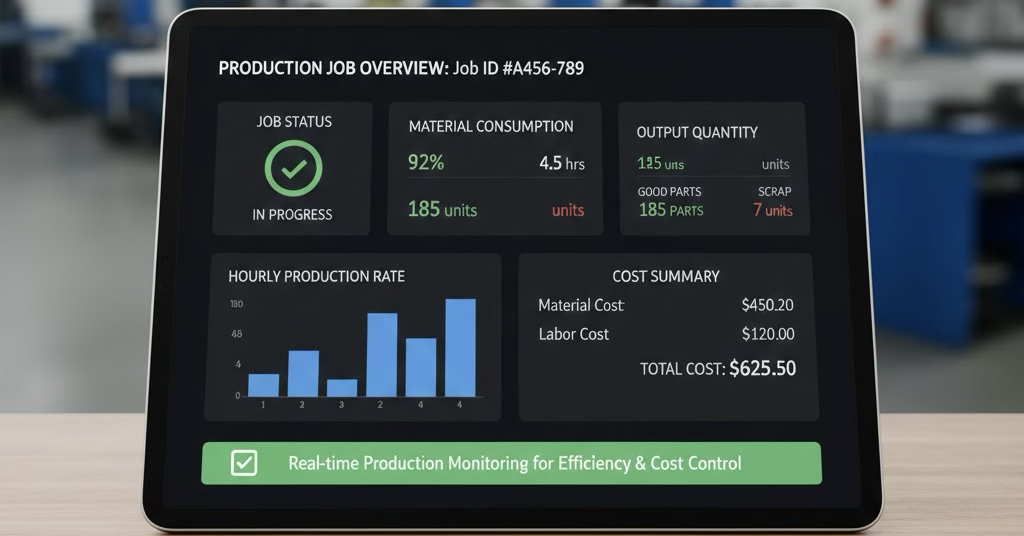
Real time tracking of production progress, material consumption, and costs
Performance Measurement and Continuous Improvement
Quality Metrics Dashboard
The system provides a comprehensive quality metrics dashboard. Key indicators include First Pass Yield trends, process capability indices, scrap rate Pareto analysis, and NCR aging summaries. Managers can intuitively understand quality performance, identify improvement opportunities, and track the effectiveness of corrective actions.
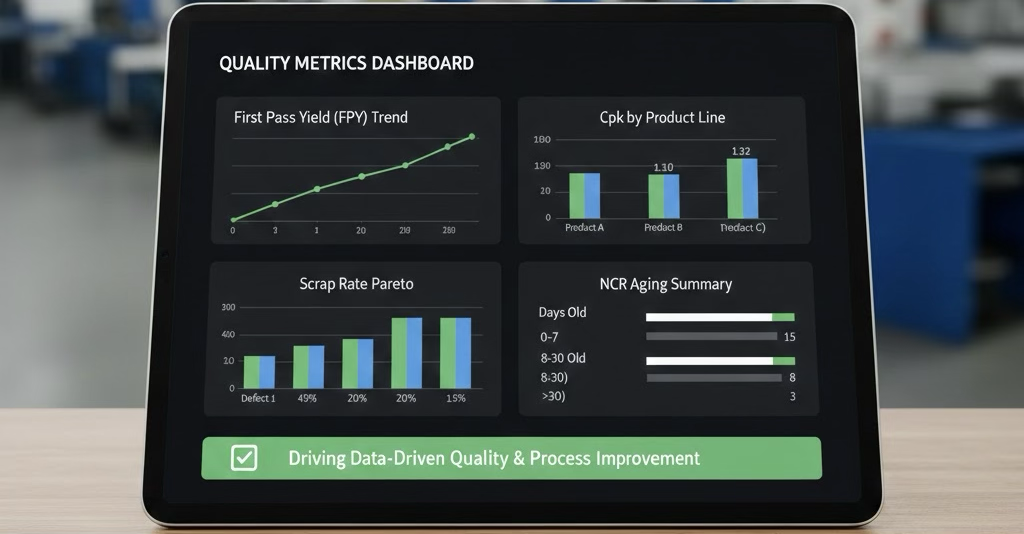
Quality dashboard centralizes key metrics to drive decisions based on data.
Implementation Roadmap
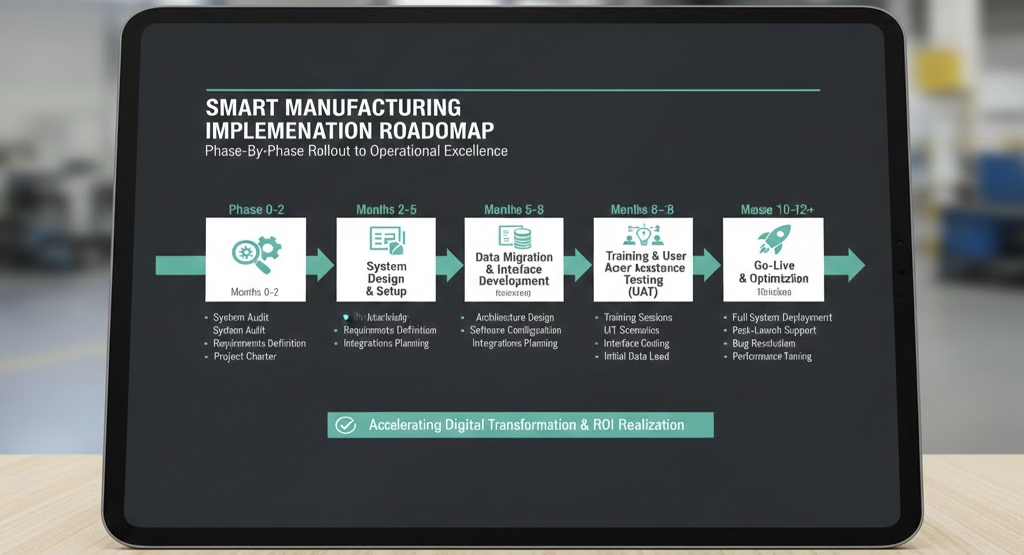
Successful deployment of an integrated manufacturing quality system requires a phased approach. The process begins with system audit and requirements definition, followed by system design and configuration, data migration and interface development, user training and acceptance testing, and concludes with final go live and continuous optimization. Each phase has clear objectives and deliverables, ensuring steady project progress and accelerated ROI.
Conclusion
The quality competition in modern manufacturing is essentially a competition in the ability to integrate data and processes. Industry Software's integrated manufacturing quality solution brings together standard work, Bill of Materials, Statistical Process Control, Quality Management System, equipment integration, and production tracking into a complete quality ecosystem. Here, data is no longer isolated but flows as lifeblood; quality is no longer the result of inspection but the product of design and process. Organizations implementing this system will respond to issues faster, improve processes more precisely, and ultimately win the quality advantage in fierce market competition.
Ready to elevate your manufacturing quality to the next level? Contact our manufacturing solutions team to schedule a customized technical demonstration.