Modern ERP Is Not About More Features, But About Running the Business on One Shared Logic

Summary
×When companies evaluate ERP, the visible problems often seem straightforward: too many systems, disconnected workflows, and slow coordination across teams. But the deeper issue is usually more fundamental. The business has evolved, while the system logic has not. Sales, procurement, inventory, production, and finance operate in parallel, data gets entered multiple times across different stages, and critical workflows continue to move in and out of the system. Leadership sees outcomes, teams spend time handling exceptions, and the organization lacks a truly shared operating foundation.
That is also why many ERP initiatives struggle to deliver lasting value. The problem is not always a lack of features. More often, the system has not established a coherent business backbone. Without a shared data structure, a stable process model, and enough flexibility to reflect how the company actually operates, ERP becomes a recording tool instead of an operating system. A platform may go live, but the business still lacks cross functional coordination, process discipline, and real management visibility.
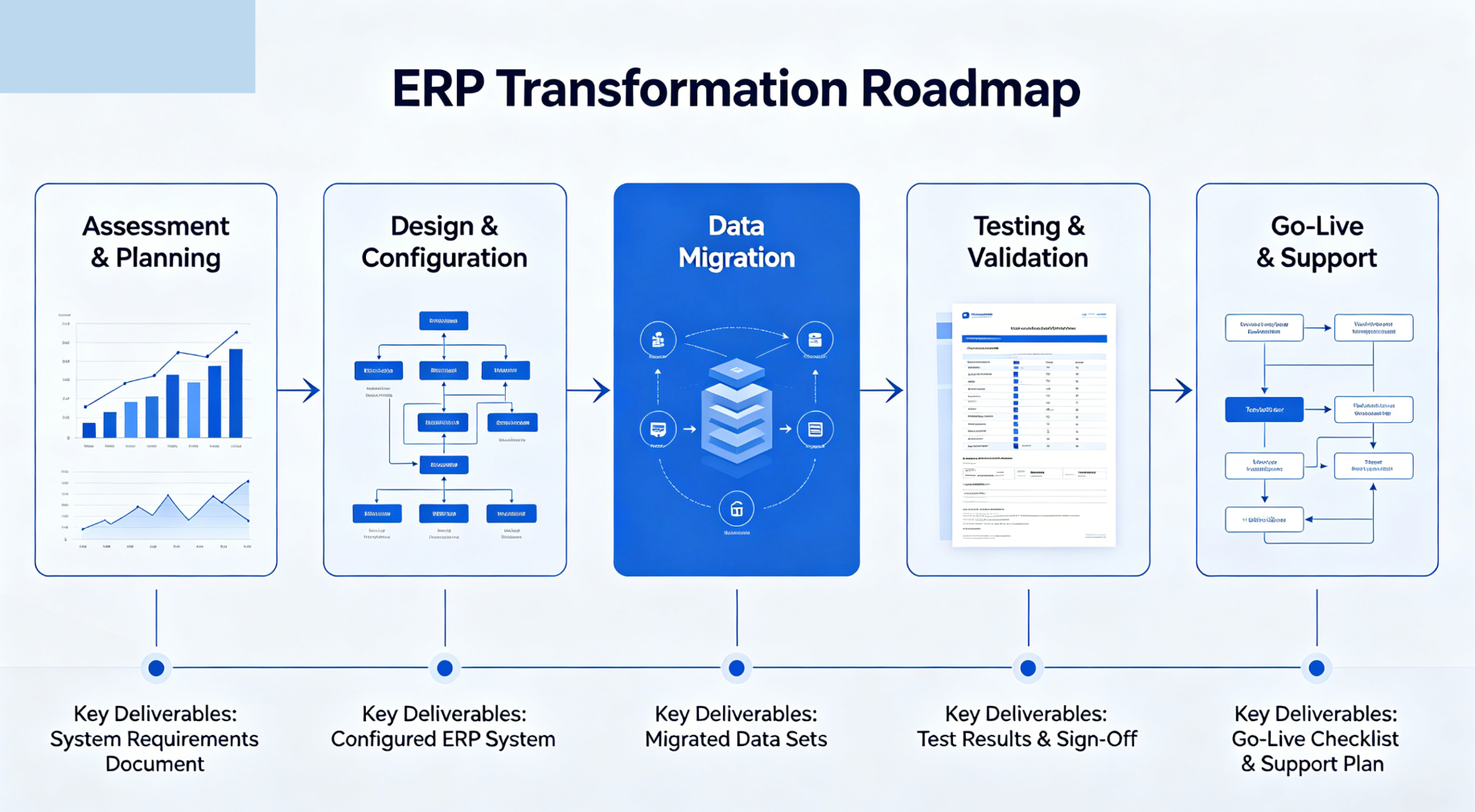
ERP Is a Digital Model of How the Business Operates
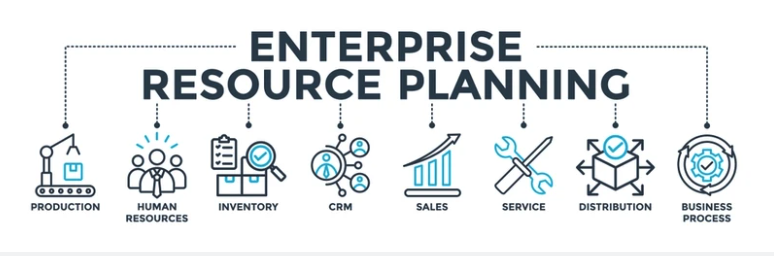
A mature ERP platform is never just a collection of functions. Its real role is to serve as the transaction and process backbone of the enterprise. It shapes how orders move, how inventory changes, how costs are captured, how revenue is recognized, and how operational activity flows into management insight.
That is what makes ERP fundamentally different from general business applications. It is not only a productivity tool for isolated tasks. It defines how work is executed, recorded, validated, and traced across the organization. A strong ERP platform reflects a deeper understanding of master data, business objects, process states, permission boundaries, and financial relationships.
From that perspective, ERP maturity is not measured by the number of available modules. It is measured by whether the system creates a unified, traceable, and extensible operating model. Only when core objects such as customers, materials, suppliers, projects, cost centers, and financial accounts are defined within one logical framework can the organization achieve real process continuity and data closure.
ERP Should Standardize What Matters and Manage Variation Where It Is Necessary
Many ERP projects fail because companies move toward one of two extremes. One extreme is excessive standardization, where every part of the business is expected to adapt to a fixed template. The other is excessive customization, where every historical preference is treated as something the system must preserve.
A more mature ERP approach understands the boundary between the two. Strong systems standardize the workflows that protect efficiency, control, and data consistency, such as order handling, procurement governance, inventory movement, approval routing, settlement logic, and financial linkage. At the same time, they preserve room for business appropriate flexibility through configurable workflows, adaptable forms, role based permissions, and industry specific extensions.
This reflects one of the most important principles in ERP design and implementation: not every difference deserves customization, but critical differences must be understood by the system.
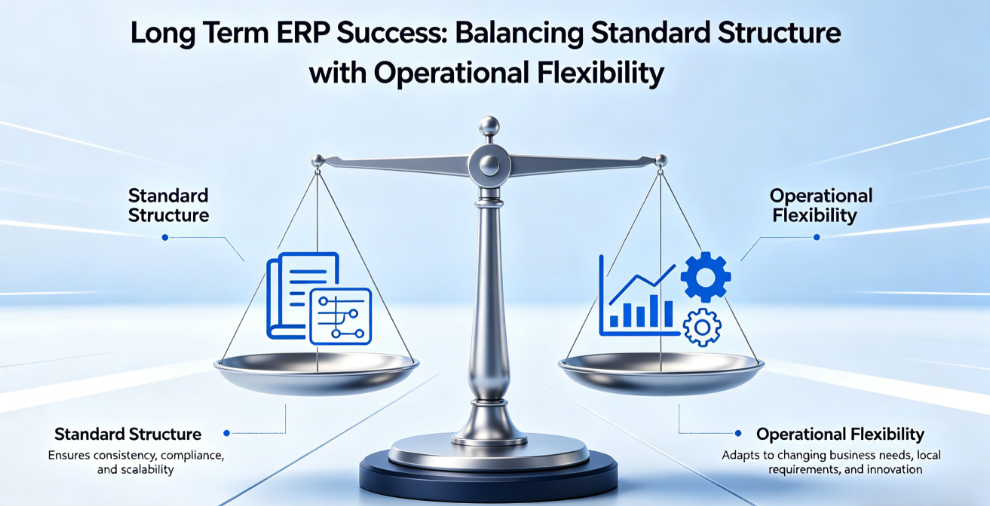
If the platform is too rigid, users will work around it. If the platform has no boundaries, it becomes difficult to scale and maintain. Long term ERP success depends on balancing standard structure with operational flexibility.
Modular ERP Is Not Just Easier to Deploy, It Is Better Aligned With Business Growth
Modularity is often discussed as an implementation benefit because it allows phased rollout. But in ERP, its deeper value is architectural. A modular platform is better equipped to match how businesses actually evolve.
Different companies have different priorities at different stages. One may need to improve procurement and inventory control first. Another may need stronger project and cost management. A third may be focused on aligning financial and operational reporting. When the platform has clear module boundaries built on a unified data foundation, the business can start where value is most urgent and expand from there into a broader operating system.
That matters because ERP is not a short term project. It is long term business infrastructure. Modularity helps companies avoid excessive complexity at the beginning while preserving room to grow as their processes, organization, and management needs become more sophisticated. Instead of locking the company into a rigid first phase design, modular ERP allows the platform to mature with the business. For modern organizations, that is a far more practical and sustainable model.
The Real Value of Customization Is Not More Code, But Better Business Fit
Many ERP systems appear to be live, yet they fail to create true execution discipline. The reason is often not user resistance. It is that the system does not accurately represent the business logic that matters most. Workflow design does not match operational reality. Role structures do not reflect real accountability. Approval paths do not align with decision authority. Reporting structures do not answer the questions leadership actually needs to ask.
That is why customization matters. Not because everything should be changed, but because the platform must adapt where business logic is genuinely important.
A mature ERP platform treats customization as controlled adaptability, not open ended development. Forms should be adjustable. Workflows should be configurable. Permissions should be structured. Business rules should be extensible. The data model should be capable of supporting industry specific requirements. This allows the company to preserve the management logic that makes it effective without turning the system into a fragile isolated build.
Teams that truly understand ERP do not discuss customization only in terms of development effort. They ask more strategic questions first.
Is this business difference structural or temporary
Will it affect master data or financial linkage
Is it a local exception or should it become part of the platform capability
Will the same rule still make sense as the organization scales
That is when customization becomes a business tool rather than a source of future complexity.
Cloud ERP Is Not Just Easier to Access, It Is Easier to Run, Align, and Evolve
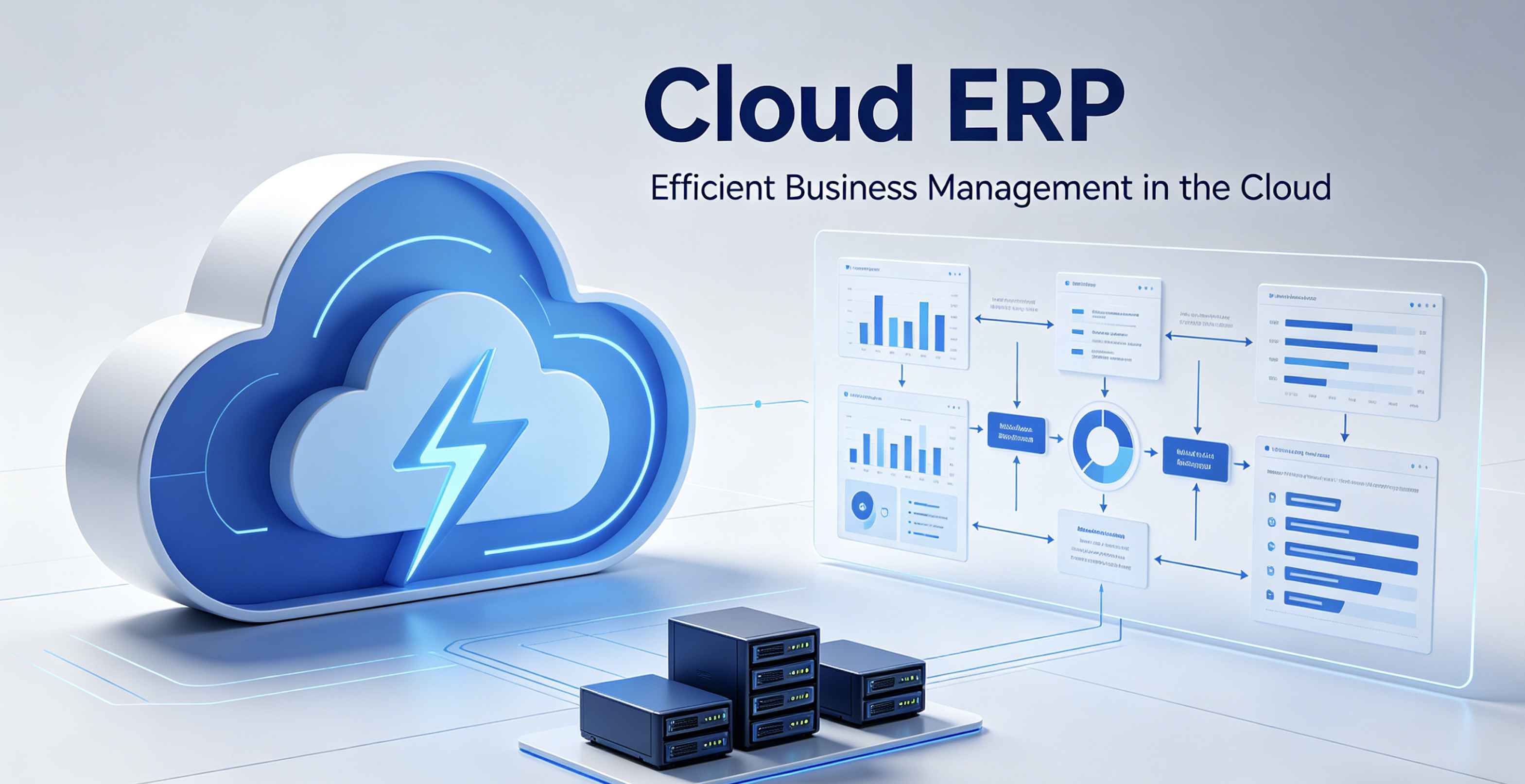
Cloud delivery is no longer a secondary option for ERP. It is increasingly the foundation of a modern platform strategy. Historically, many companies viewed cloud ERP mainly through the lens of deployment convenience or reduced infrastructure overhead. But from an operating standpoint, its more important value is that it creates a shared environment for consistent execution.
This has real business implications. Once ERP spans multiple departments, locations, and roles, the ability to operate within one version, one access model, and one coordinated environment directly affects data timeliness, process reliability, and organizational responsiveness. Can sales input immediately influence supply decisions. Can inventory movement be reflected in planning without delay. Can project execution flow into cost visibility in the same environment. Can leadership work from one current version of the truth. These are not simply access questions. They are platform coordination questions.
Cloud based ERP makes it easier to support ongoing updates, modular expansion, and organizational growth. It also helps companies shift ERP from a one time deployment into a continuously improving business capability. For businesses seeking faster response, stronger visibility, and more scalable operations, that is a meaningful advantage.
A Mature ERP Strategy Must Handle Process, Data, and Management Together
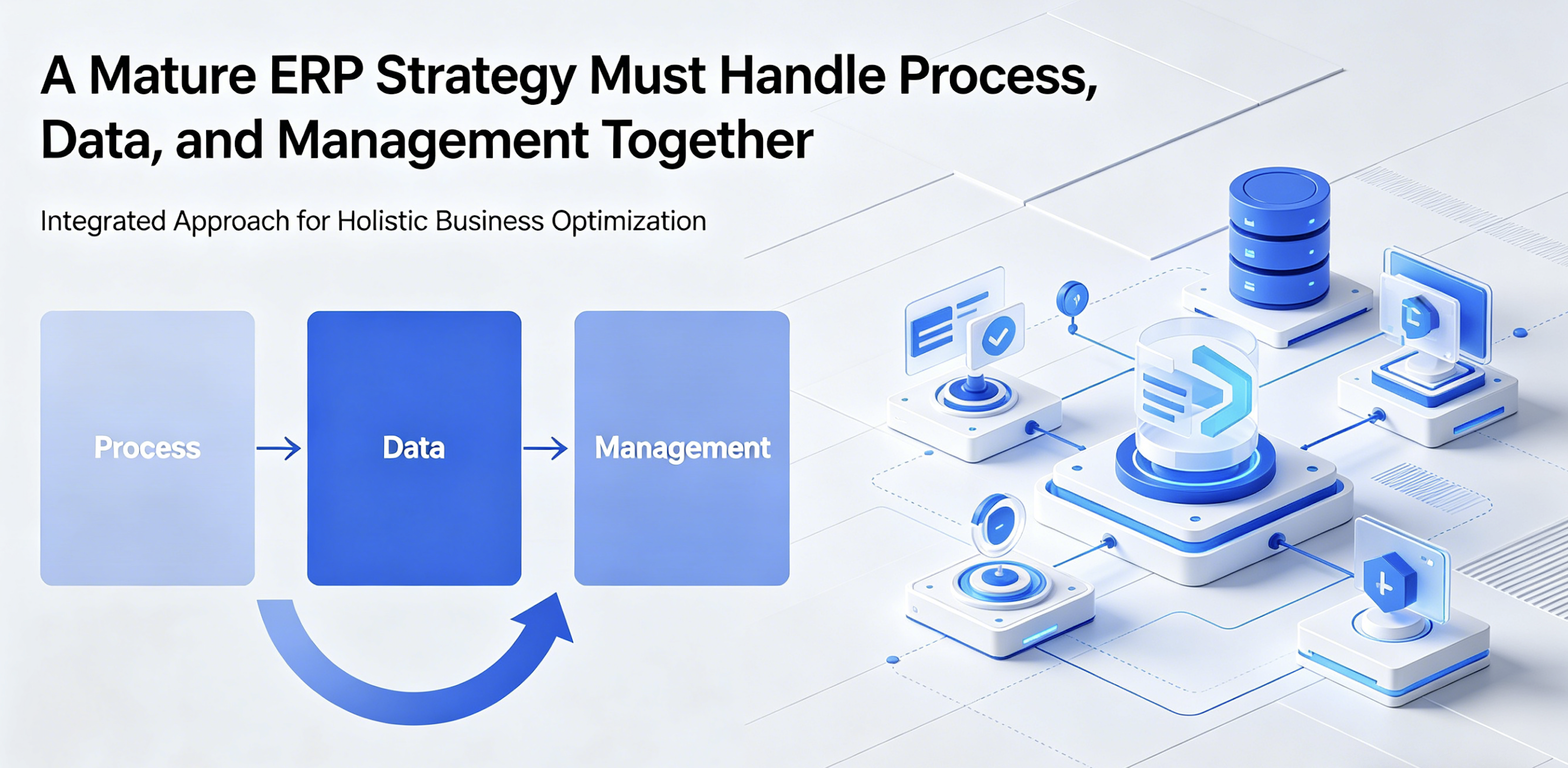
ERP is difficult because it is never just a software project. It is also a process design project, a data governance project, and a management architecture project.
At the process level, the business must define how work flows, where control matters, and which actions require traceability.
At the data level, the company must align master data so that customers, materials, orders, suppliers, and cost structures are not defined differently in different places.
At the management level, approvals, roles, accountability, financial treatment, and operational analysis must all work within one coherent structure.
That is also why teams that understand ERP write about it differently. They do not speak only about efficiency. They talk about business objects, process closure, financial linkage, data consistency, and extensible governance. Those are the deeper levers of ERP value, and they are what determine whether the system can continue to support the business over time.
How Industry Software Supports a More Modern ERP Approach
Industry Software focuses not only on whether a company has an ERP system, but on whether that system can truly support growth, coordination, and operational maturity.
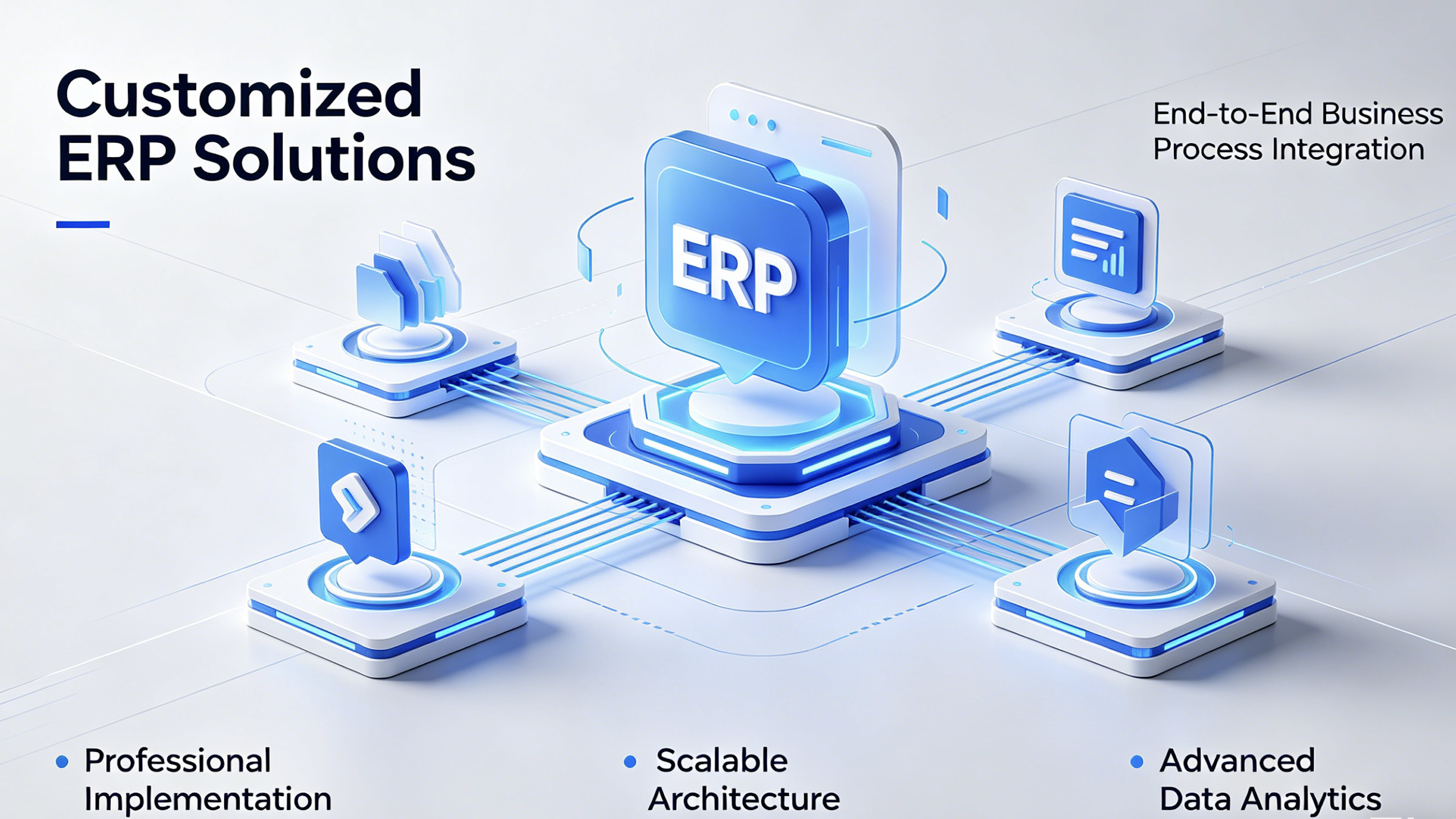
Through a modular platform architecture, Industry Software allows companies to build ERP in stages based on business priority, making deployment more practical and aligned with real operating needs. Through flexible configuration across workflows, permissions, forms, and rules, the platform can better reflect how the business actually runs. Through a cloud based delivery model, organizations gain a more unified environment for collaboration, smoother expansion, and a stronger foundation for continuous software evolution.
Most importantly, this approach does not force the business into a rigid template. It helps organizations build a clearer, more controlled, and more extensible operating structure on top of a shared platform logic.