Quality Issues Should Not Reach Delivery

Summary
×Many manufacturers do not lack quality procedures. They already have inspection rules, release controls, and approval requirements. The problem is that quality status often does not move into the execution chain fast enough. By the time the impact becomes visible, orders are already under pressure.
First article approval slows down, but production keeps moving.
Rework starts to rise, but scheduling still follows the original plan.
Batch release is delayed, but delivery teams do not receive an early enough risk signal.
The floor already knows the issue is expanding, but leadership still cannot see what it will do to customer commitments.
So what companies finally experience is late shipment pressure, customer escalation, and internal rescheduling. But the real starting point was a quality issue that never triggered the right operational response early enough.
The Most Expensive Part of Rework Is How Quietly It Consumes Delivery Capacity
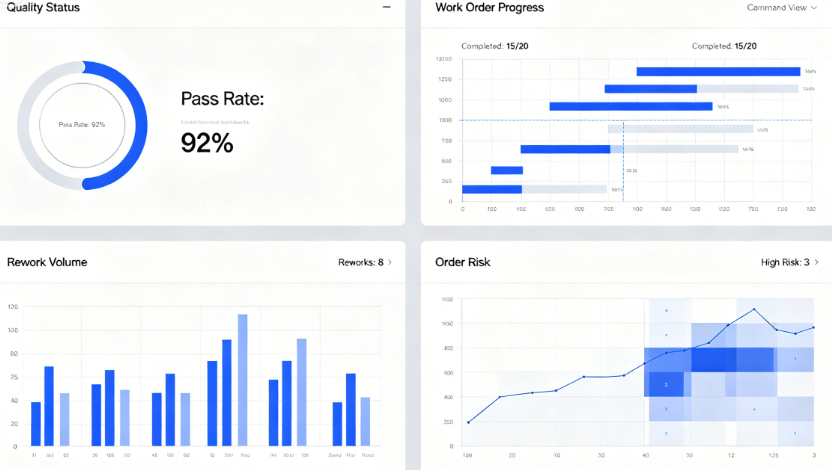
Quality is hard to manage not only because it creates scrap, rework, and added inspection. It is hard because it quietly eats the time and capacity that delivery depends on.
A delayed batch release looks like a small inspection slowdown.
An extended review looks like one more process step.
A growing rework cycle looks like one more shop floor task.
But once these shifts stack up, the result is waiting time, schedule disruption, unstable order commitments, and difficult customer conversations. What leadership sees at the end is a delivery problem. The root cause is that quality status did not change execution fast enough.
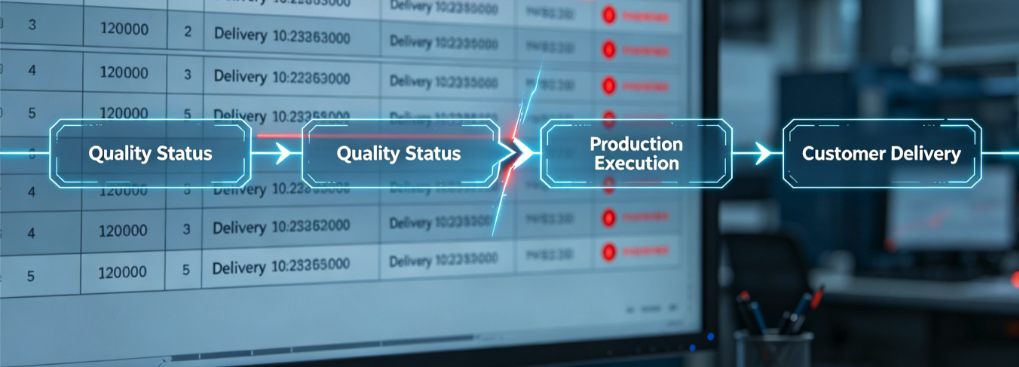
That is why many companies still struggle even when they already have both quality software and production software. The problem is not missing process. The problem is missing linkage across process.
The Most Valuable Systems Do More Than Tell You What Happened
Many systems can tell you that an exception exists. Fewer can answer the questions that actually matter.
Which work orders are now affected.
Who needs to act right away.
Whether escalation is needed now.
Whether today’s or this week’s delivery commitments are at risk.
That is where Industry Software creates more practical value.
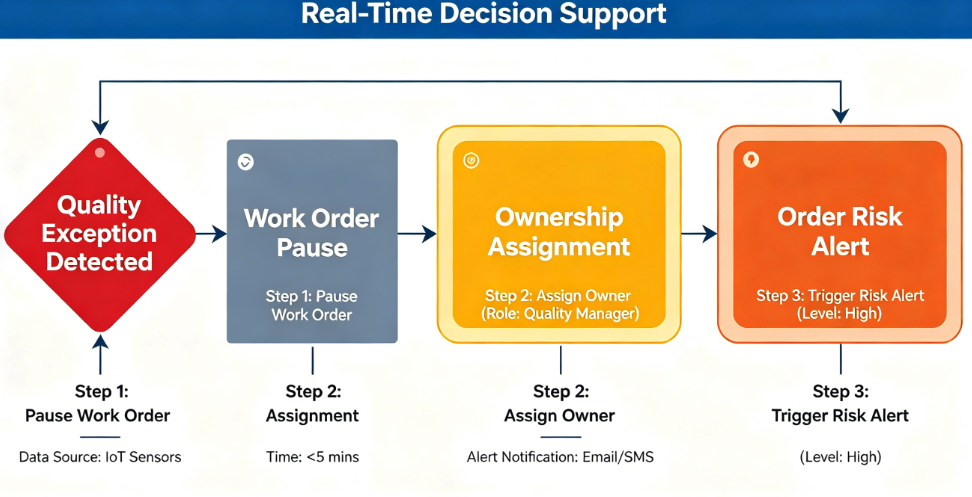
It connects quality status directly to execution flow instead of leaving quality inside a standalone module for delayed record keeping. When quality status changes, work order movement, exception escalation, ownership, and order risk can change with it. That makes quality part of control, not just part of inspection.
It also fits more complex manufacturing environments. Many plants do not run one line, one process, or one customer rule. Different products, approval logic, and release paths demand stronger configurability. Industry Software is built to organize flow around the business instead of forcing the business into rigid logic.
It also brings a stronger order view. Many systems can display line status, but they struggle to connect that status directly to delivery exposure. Industry Software puts quality progress, production pace, and order impact into one view so leadership can see earlier which orders need intervention and where resources should shift.
The Best MES Stops Loss Before It Spreads
Manufacturers do not need fuller reports for their own sake. They need less rework, steadier delivery, and faster coordination.
The real value of MES is not how completely it documents a problem. It is whether it stops a quality issue before it becomes a delivery issue, whether it contains a local exception before it becomes a broader disruption, and whether it helps leadership intervene earlier instead of reacting later.
That is what Industry Software helps manufacturers do. It does not just make problems visible. It turns changing quality conditions into faster execution decisions, faster coordination, and better protection for delivery commitments.