Why Your Manufacturing Execution System Still Feels Slow

Summary
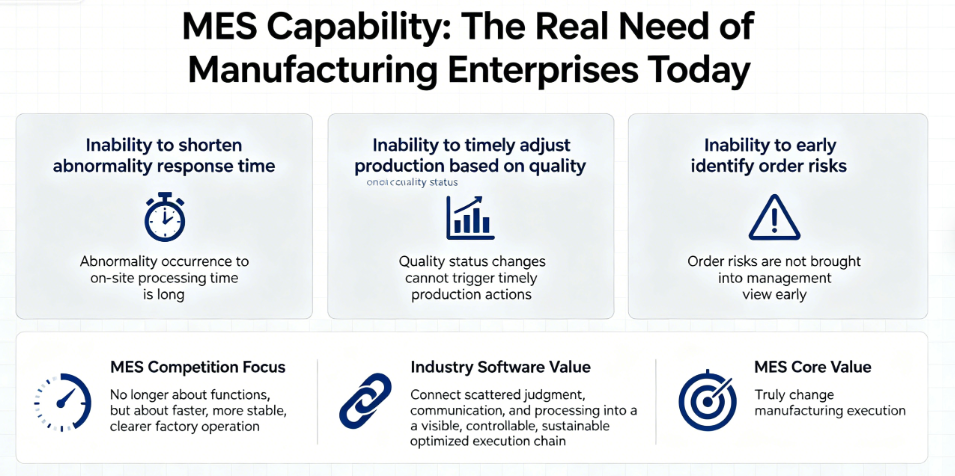
×Many manufacturers do not lack systems. They already have ERP, MES, quality tools, and often equipment and warehouse software as well. On paper, digital transformation looks active. In reality, when delivery starts to slip, teams still rely on calls, chat threads, and spreadsheets to find out what is happening.
A work order is released, but no one can clearly explain where flow is blocked.
A machine issue appears, but the order impact still takes too long to confirm.
A quality hold starts, but production, quality, and planning are not working from the same status.
Leadership sees reports every day, yet the issues that threaten delivery still show up too late.
That is the real gap. More systems are live, but execution is not faster. More data exists, but action is not more connected.
Many MES Platforms Improve Recording, But Not Response
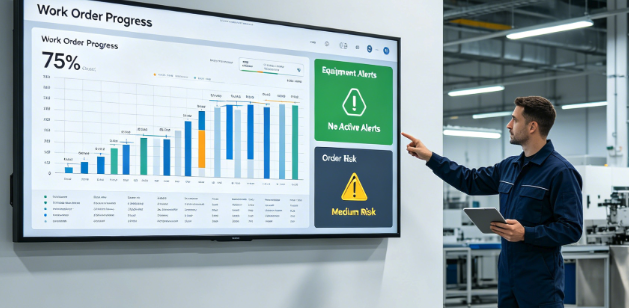
A lot of MES projects do solve basic control problems. Reporting becomes cleaner. Routing becomes clearer. Traceability improves. But that still does not create execution speed.What slows a factory is not missing data. It is the lack of action tied to the data.
Plans change, but the floor does not adjust fast enough.
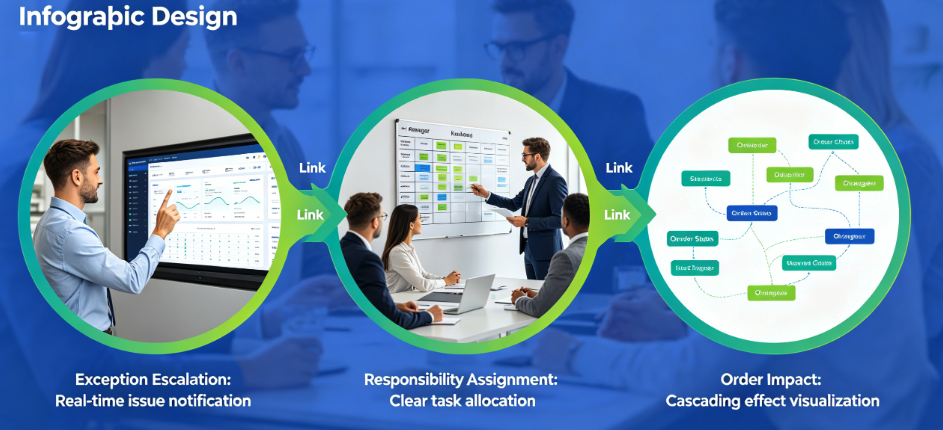
An exception appears, but ownership and escalation are unclear.
A quality hold starts, but the work order flow does not respond in time.
A process begins to drag output, but leadership cannot yet see how the issue will affect orders.
That is why many manufacturers still depend on manual coordination even after MES is in place. The record is inside the system, but the response still happens outside it. The software helps teams see what happened, but not move faster on what is happening now.
What Sets Better MES Apart Is Not More Features, But Better Flow
The market does not lack MES vendors. Many providers can offer similar modules and tell a similar story about traceability, reporting, and visibility. The real question is not who has the longest feature list. The real question is who helps operations move faster, lower coordination effort, and expose delivery risk earlier.
That is where Industry Software stands out.
It does not stop at standard modules. It is built to fit real operating flow. Different plants, products, process paths, and quality rules rarely work well inside one rigid template. Industry Software puts more emphasis on configuration so manufacturers can shape execution around their own rules, exception paths, approvals, and ownership models instead of changing critical management behavior to fit the software.
It also supports a more practical rollout path. Many factories cannot reset everything at once. Industry Software lets teams start where the pain is most visible, such as work order control, exception coordination, quality linkage, or progress visibility, and expand from there. That lowers rollout friction and improves adoption on the floor.
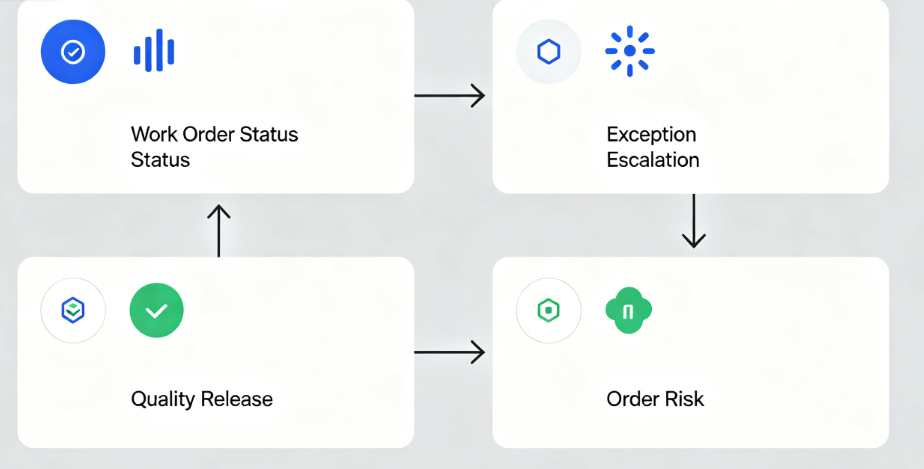
Most importantly, it creates one operating view. Many systems can show one function. Industry Software connects production, quality, planning, and order impact in the same execution chain so leaders can see risk earlier and teams can act faster.
Manufacturers Buy a Shorter Path to Action, Not Software
If a system cannot reduce the time from exception to response, cannot let quality status change production behavior quickly, and cannot bring delivery risk into view earlier, it will not materially improve execution.
MES is no longer a competition about whether features exist. It is about who helps factories run faster, steadier, and with more control.
That is the value of Industry Software. It does not simply replace an older tool. It connects scattered decisions, handoffs, and responses into one visible execution path that can keep improving over time.