Organizations across manufacturing, energy, utilities, logistics, and engineering services are operating under tighter execution demands, stronger cost pressure, and growing coordination complexity. Many do not suffer from a lack of systems. They struggle because their systems do not truly connect business workflows, operational data, and execution accountability. Traditional software may cover isolated functions, yet still fall short when companies need end-to-end visibility, consistent execution, and stronger alignment across teams.
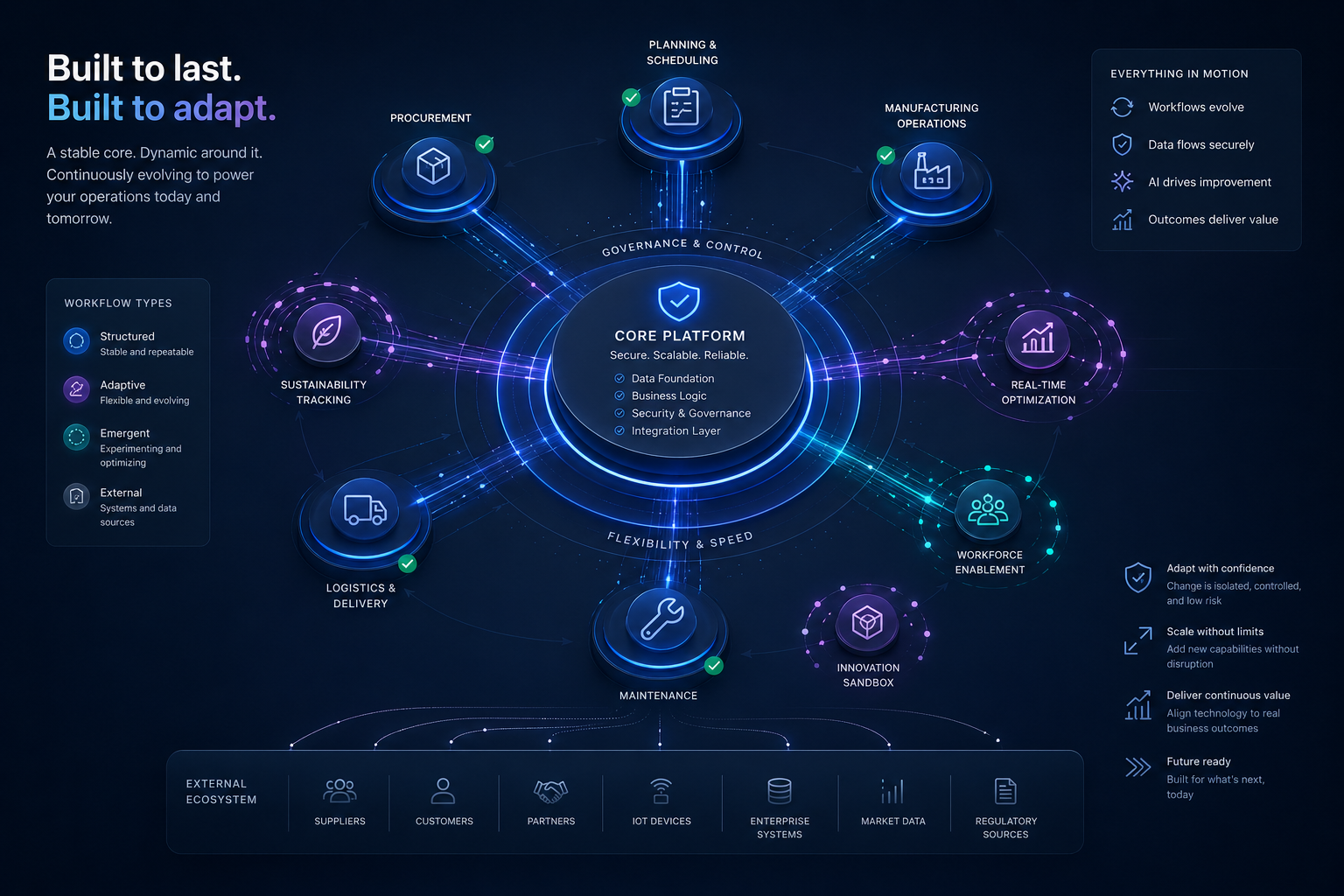
The value of Industry Software lies in helping organizations redesign operations through a modern industry software platform. With configurable workflows, modular deployment, cloud-based access, and a unified operational view, businesses can transform fragmented activities into a more traceable, coordinated, and scalable operating model. This is not simply a software replacement. It is an upgrade to the way operations are managed.
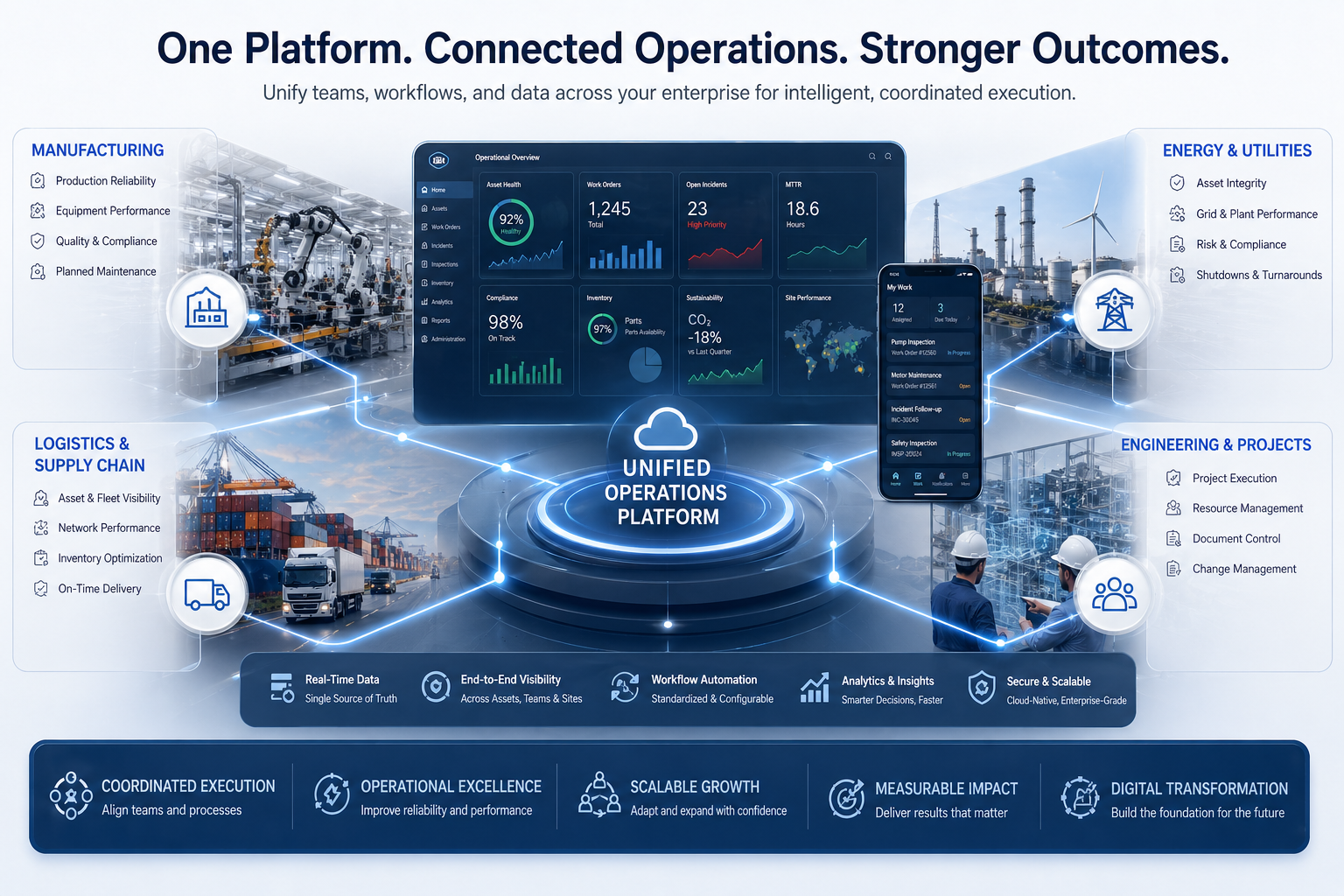
Operational complexity is reshaping software requirements
Many organizations have spent years building daily operations around separate systems. Production, maintenance, quality, procurement, field service, project delivery, and reporting often sit in different tools. Each system may perform a useful role, but the operating model as a whole still lacks a unified view. The result is delayed updates between process steps, unclear accountability, limited management visibility, and weaker collaboration between teams.
These challenges do not always appear as obvious system failure. More often, they emerge as a slow decline in execution quality. Distributed information creates repeated data entry. Process switching increases communication overhead. Priorities become harder to align across functions. Field teams and leadership may not even be looking at the same version of operational reality. As organizations grow, expand into more sites, or take on more complex customer demands, these inefficiencies become more costly.
Industry Software is designed for this kind of operating friction. Modern industry software should not only document what happened. It should actively support execution, connect teams, and improve visibility across the business.
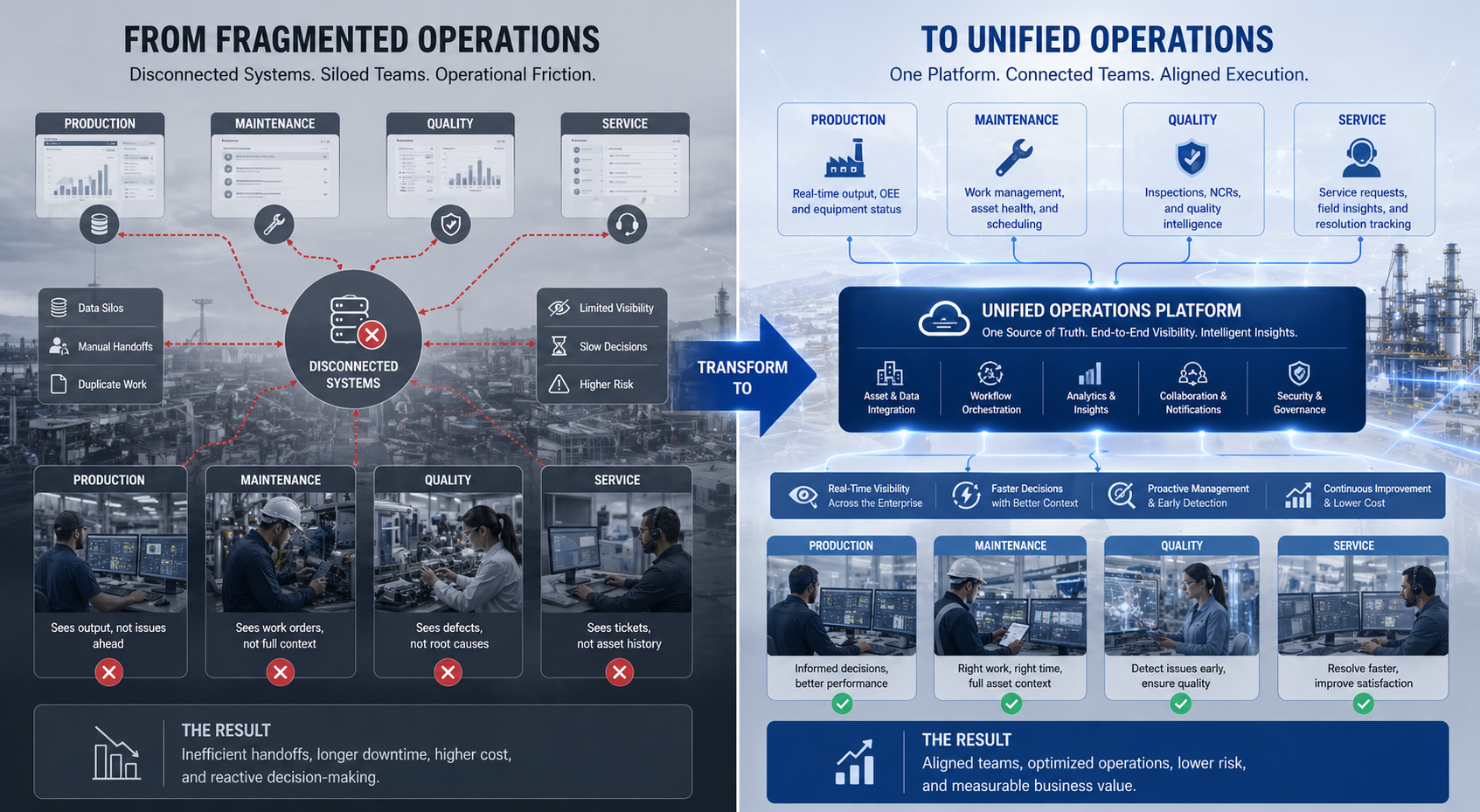
Moving from digital functions to digital operations
Many early digital initiatives focused on putting individual functions into software. This often included work-order management, asset records, inventory tracking, project updates, or approval routing. These investments can deliver value, but without a common platform foundation, organizations often recreate fragmentation a few years later. The reason is simple. Business performance depends less on whether a feature exists and more on whether critical workflows are connected.
Digital operations is about process integrity and execution consistency. It requires companies to identify which workflows need standardization, which steps need cross-team coordination, which data must be shared, and which actions must be tracked, escalated, reminded, or audited. When these capabilities exist within one platform, organizations can move from reactive follow-up to active operational control.
Industry Software helps businesses move beyond isolated tools and toward a connected operations platform. The goal is not complexity for its own sake. The goal is practical software that supports clearer process control and a more reliable execution rhythm.
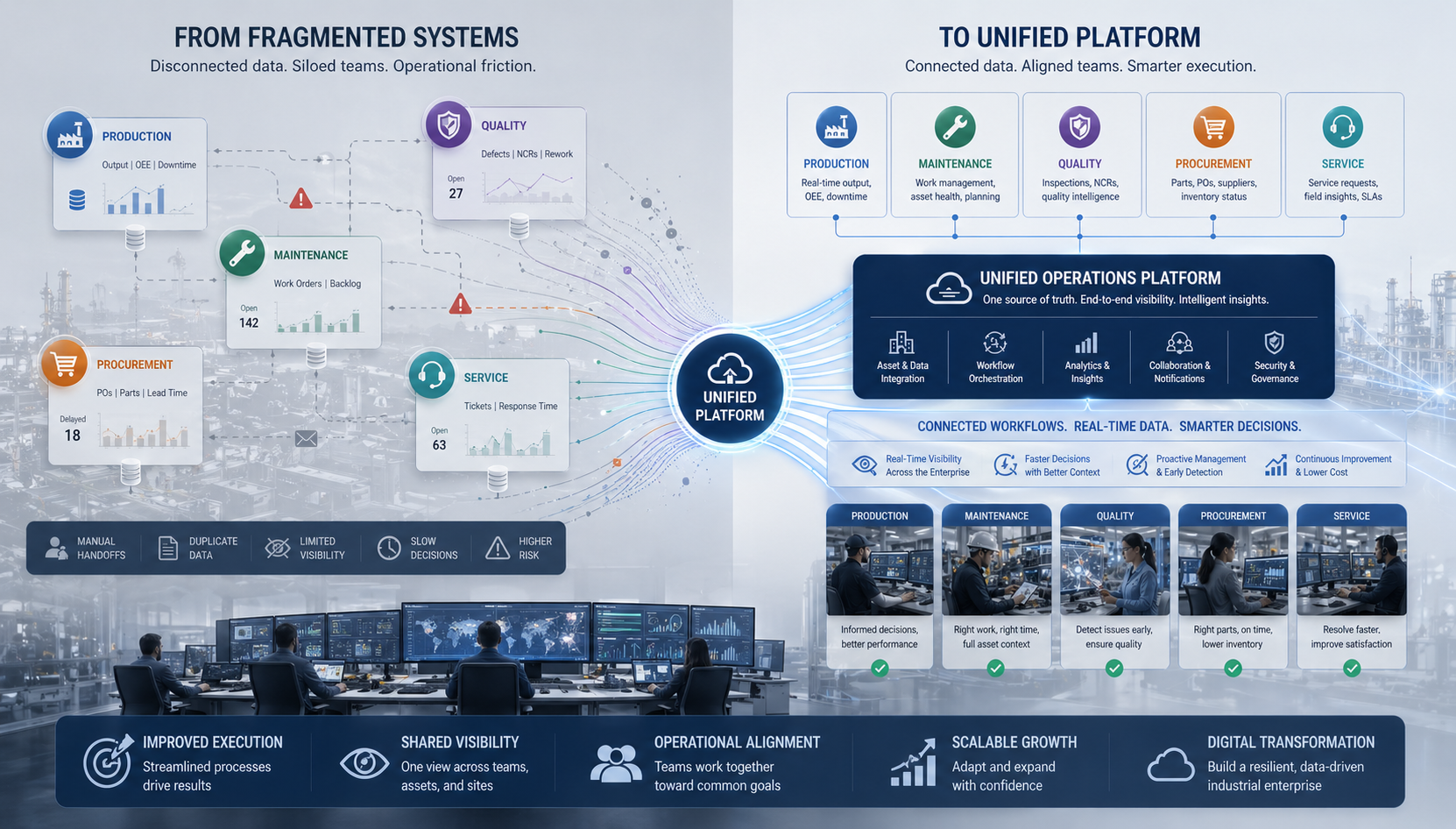
Core capabilities of a unified platform
The first core capability is operational visibility. Business status, task progress, process stages, backlog risks, and key metrics should not be scattered across multiple locations. They should be accessible in a clear and actionable environment. For leadership, this means faster decisions and fewer blind spots. For operational teams, it means clearer priorities and less repeated follow-up.
The second core capability is workflow configurability. Every organization has its own operating structure, approval logic, responsibility model, and compliance requirements. Software that cannot adapt to these realities often creates friction at the point of execution. Industry Software emphasizes configurable workflows, forms, permissions, alerts, and status rules so the platform can reflect the real way the business operates.
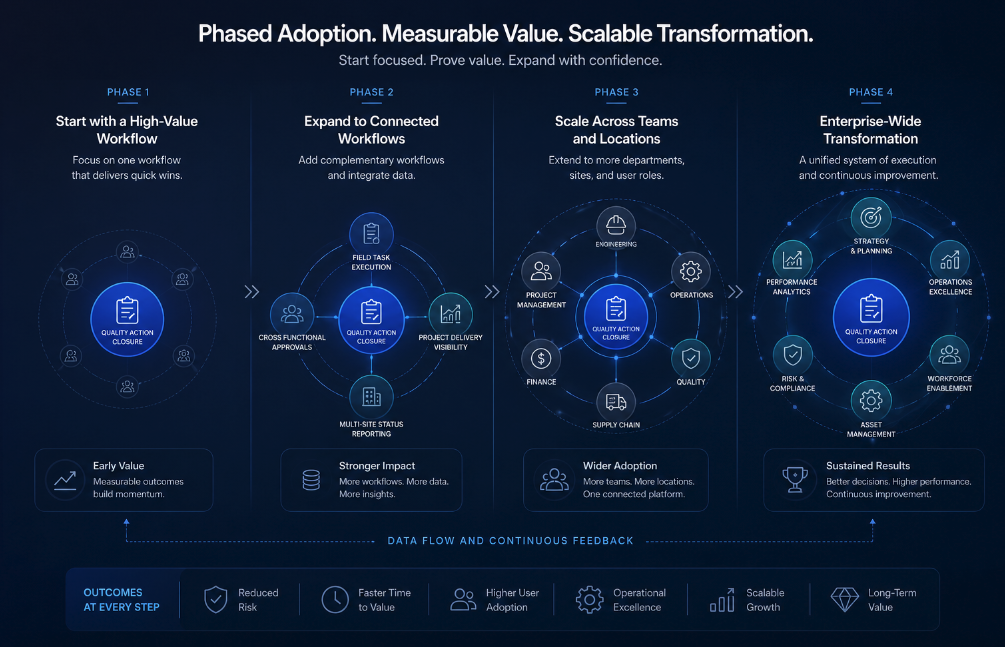
The third core capability is modular scalability. Most companies do not redesign every business process at once, so the platform must support phased deployment. A modular structure allows the organization to begin with the highest-value workflows, reduce implementation risk, and expand over time into more teams and more use cases. This model aligns far better with the realities of industrial budgets, resource planning, and change management.
The fourth core capability is cloud-based accessibility across roles and locations. For organizations operating across multiple sites, plants, regions, or service areas, a consistent access model is essential. Cloud-based software can shorten deployment cycles, reduce maintenance burden, and help office teams, supervisors, and field personnel work from the same operational truth.
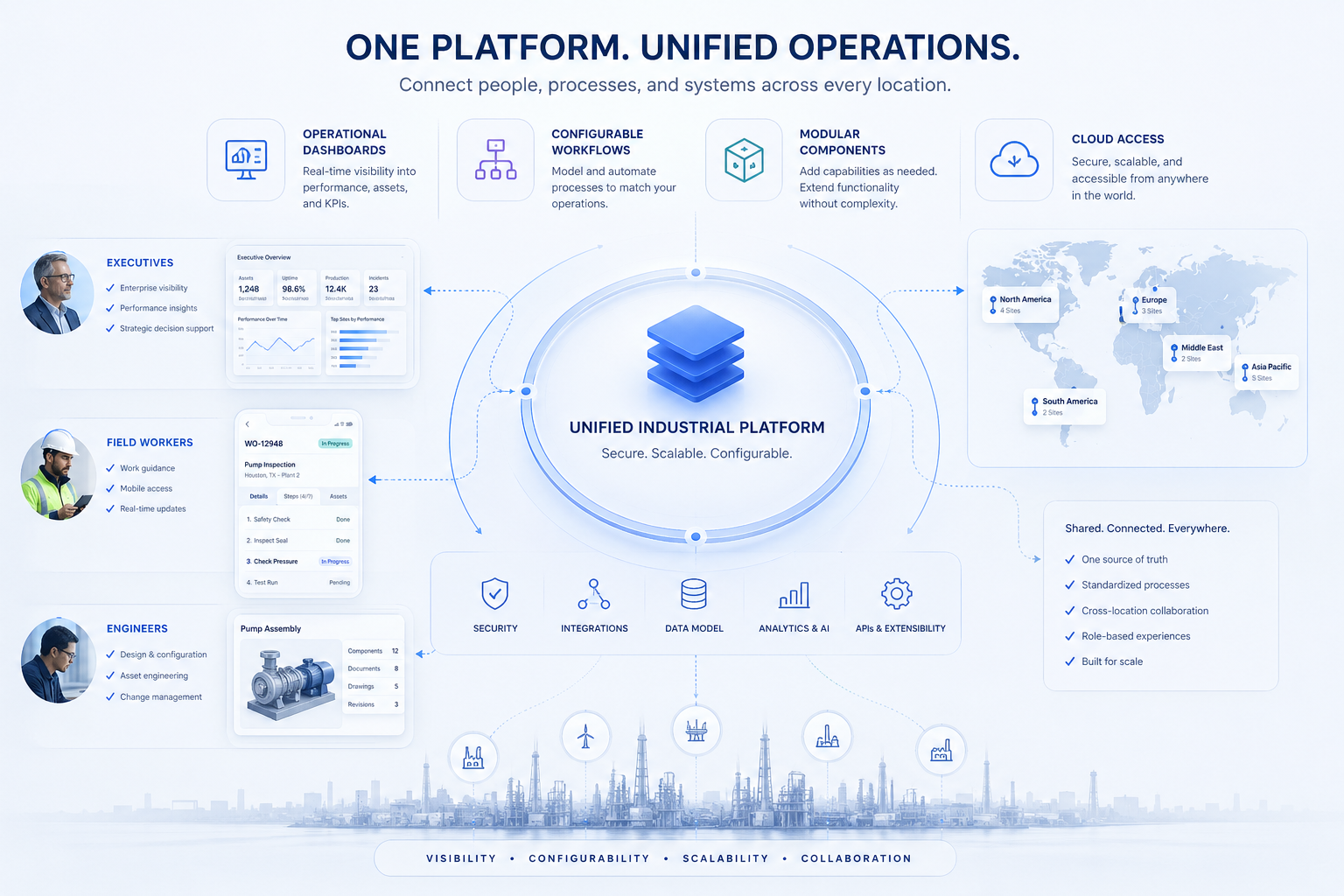
Practical value across industry environments
In manufacturing, a unified platform can connect production coordination, quality response, maintenance execution, and exception management. Information that once moved between email, spreadsheets, and local tools can now progress through a structured workflow. A quality issue does not stop at documentation. It can trigger investigation, assign responsibility, track corrective action, and close the loop.
In project and service-oriented organizations, the platform can help teams coordinate resources, tasks, customer needs, and delivery timing. Project status becomes more transparent. Site feedback enters the management view faster. Leaders can identify delay risks or resource conflicts earlier. Customers benefit from a more stable and predictable delivery experience.
In multi-site environments, the platform can also support stronger alignment between central leadership and regional teams. Critical workflows can be standardized while local operational differences remain configurable. This gives organizations greater repeatability and stronger scalability, especially when they are expanding geographically or seeking more consistent governance.
Why configurability matters more than fixed functionality
The value of industry software is not defined only by the number of available features. It is defined by how well the platform fits real business workflows. Many software initiatives underperform not because the product lacks modules, but because the business is forced to adapt around the software. This creates more exceptions, more off-system work, weaker data quality, and lower long-term value.
Industry Software takes a more operations-focused approach. Through configurable workflows and modular design, organizations can preserve necessary business differences while still operating on a unified platform foundation. That makes it possible to balance control with flexibility instead of choosing one at the expense of the other.
This is especially important for companies going through organizational consolidation, growth, process governance improvement, or system modernization. In these periods, workflows are not static. They evolve with the business. A configurable platform can evolve with them.
Implementation should begin with business value
Successful software adoption rarely begins with a full-scale replacement of everything. It usually starts with a clear business objective. Organizations should identify the workflows that are most valuable to connect first, such as cross-functional approvals, field task execution, quality action closure, project delivery visibility, or multi-site status reporting. High-value workflows make the strongest entry point because they create measurable outcomes early.
Once priorities are defined, the platform should be shaped around real operating roles, process rules, data structures, and usage expectations. Technical deployment matters, but the real success factor is whether the system becomes part of daily execution. Industry Software is built not only to deploy software, but to support a clearer and more disciplined way of operating.
After the first workflows are running well, the organization can expand to additional departments, locations, and operational layers. This phased path reduces resistance to change and helps internal teams see practical value early in the journey.
How to evaluate modern industry software
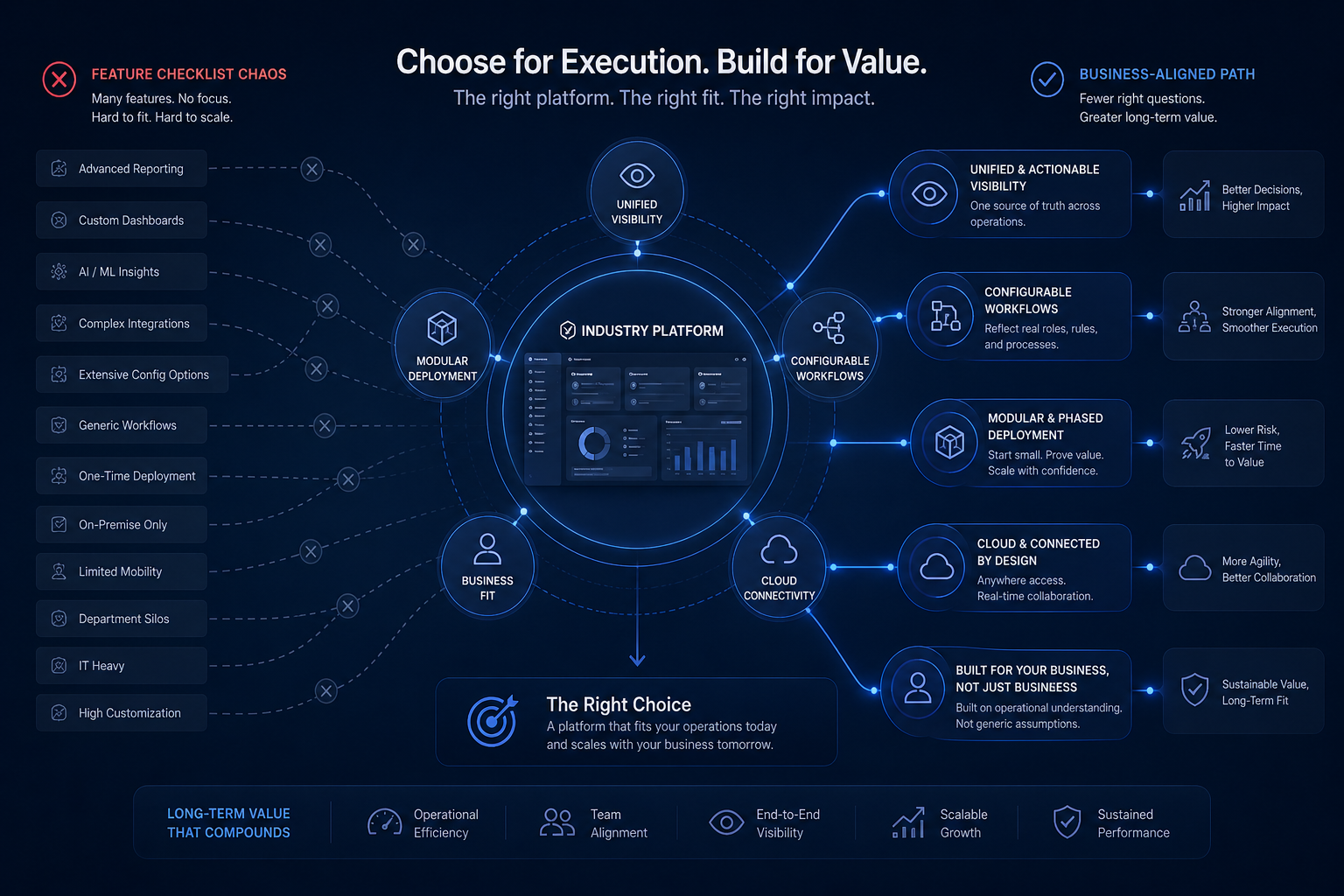
When selecting industry software, organizations should look beyond a feature checklist and ask more important questions. Can the platform deliver a unified and actionable view of operations. Can workflows be configured to reflect real business roles and rules. Can modules be deployed in phases instead of forcing a full redesign at once. Does the platform support cloud-based access and cross-team coordination. Does the software provider understand operational realities, or only provide generic business tools.
These questions may sound basic, yet they determine whether software can create lasting value. A platform that performs well in a demonstration but cannot fit into the daily rhythm of the business will only add another layer of system burden. A platform that supports real execution, on the other hand, can deliver sustained gains in efficiency, alignment, visibility, and scalability.
A stronger foundation for future operations
Industrial organizations are entering a period where transparent execution, cross-functional alignment, and operational adaptability matter more than ever. The role of software is changing with it. Software is no longer just a back-office support layer. It is becoming a core part of how the business runs.
Industry Software provides more than a digital interface. It provides a modern operational foundation built for real industry environments. Through a unified platform, configurable workflows, modular expansion, and cloud-based deployment, organizations can build an operating model that is more resilient, more repeatable, and easier to manage at scale. In complex environments, that capability becomes a meaningful advantage for efficiency, coordination, and growth.