At a Glance
Inventory accuracy improved from 92% to 99.8%, discrepancies no longer require repeated-reconciliation
Warehouse operational efficiency increased by 40%, picking path length reduced by 60%
Order fulfillment time compressed from an average of 4 hours to 45 minutes
Storage utilization increased by 25%, warehouse space constraints significantly reduced
Customer Profile
An ecommerce company with annual GMV of approximately USD 800 million, warehouse area of 25,000 square meters, average daily order volume of 20,000 units, and over 30,000 SKUs. Warehouse operations had long relied on manual memory and paper documents. New employees faced steep learning curves. Incorrect shipments and missing items occurred frequently. During peak sales periods, warehouse congestion was severe. Significant discrepancies existed between inventory data and physical stock, with month-end physical counts consistently revealing variances worth hundreds of thousands of dollars.

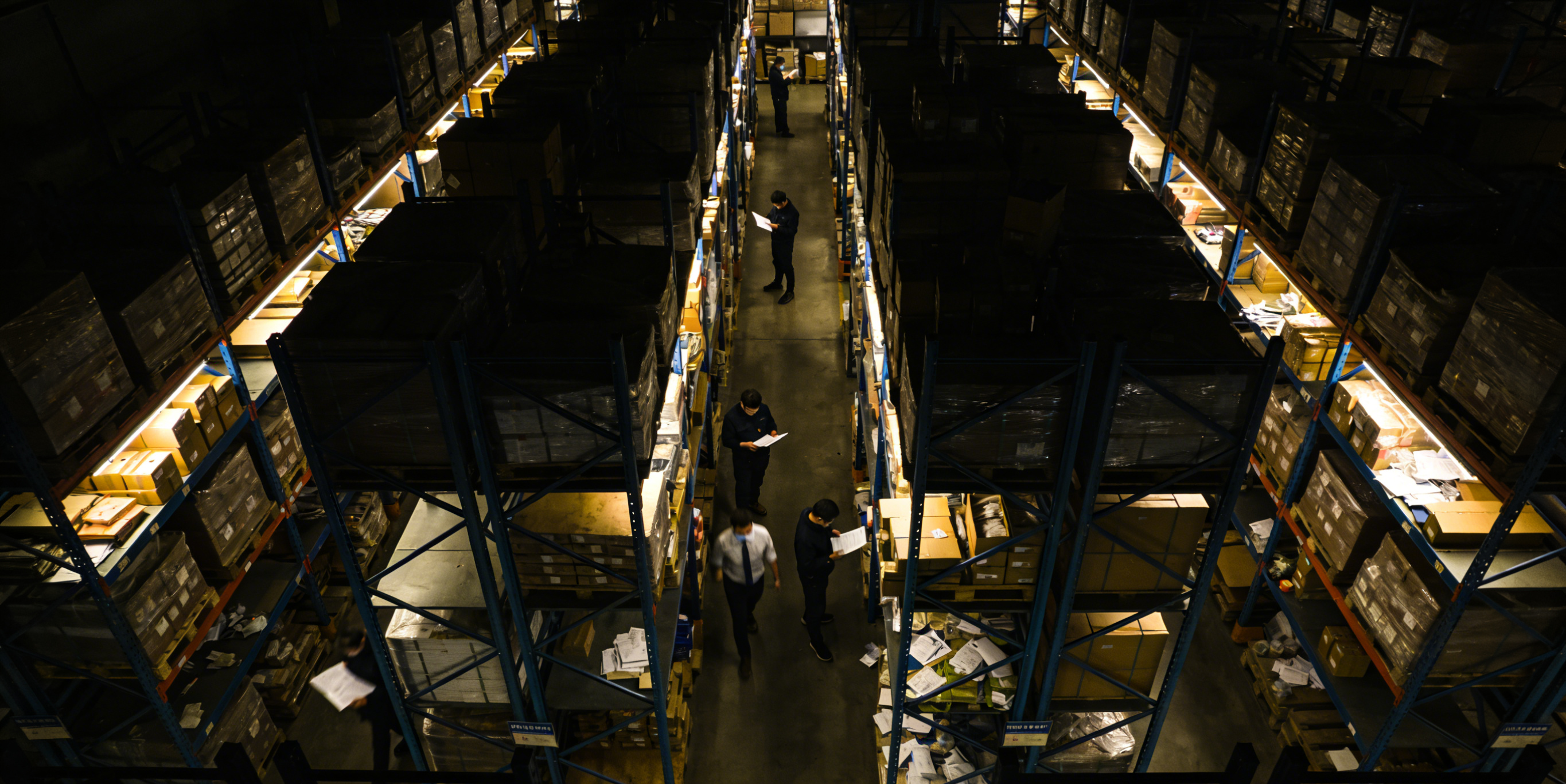
The Warehouse Was a Black Box
Once goods entered the warehouse, they entered a black box. Which shelf, which bin, how many remained, when they would expire all depended on the warehouse-keeper memory. If the warehouse keeper remembered, goods could be found. If the warehouse keeper forgot, goods were lost.
Pick operators ran across the warehouse with paper pick-lists, relying entirely on experience to locate items. New hires spent their first month mostly searching for goods. This company was once exactly that. Until WMS redefined how the warehouse operated.
Inventory Accurate in Real Time
Previously, inventory data was delayed. Incoming goods were recorded on paper first, then entered into the system at night. Outgoing goods followed the same process. Checking inventory during the day always meant seeing yesterday-numbers.
Now, every receipt, every issue, every transfer, every count updates in the system in real time. A scan of the handheld device syncs data instantly. What is in the system is what is in the warehouse.
Procurement no longer needs to wait for physical counts to know if materials are short. Sales no longer needs to guess whether items are available.
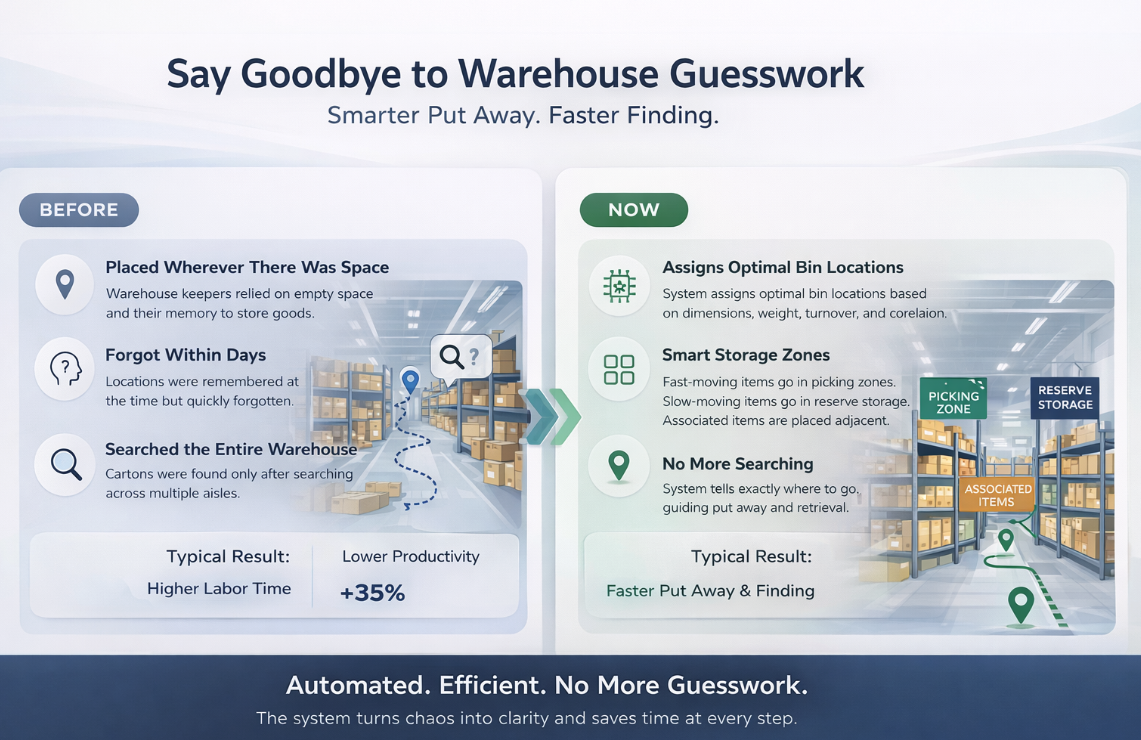
Bin Assignment Intelligent
Previously, when goods arrived, warehouse keepers placed them wherever empty space was available. They remembered the location at the time, but forgot within days. The next time that carton needed to be found, the search was across the entire warehouse.
Now, the system automatically assigns optimal bin locations based on product dimensions, weight, turnover rate, and correlation. Fast-moving items are placed in picking zones. Slow-moving items are placed in reserve storage. Associated items are placed in adjacent locations. Put away requires no guess work. Finding items requires no searching. The system tells where to go.
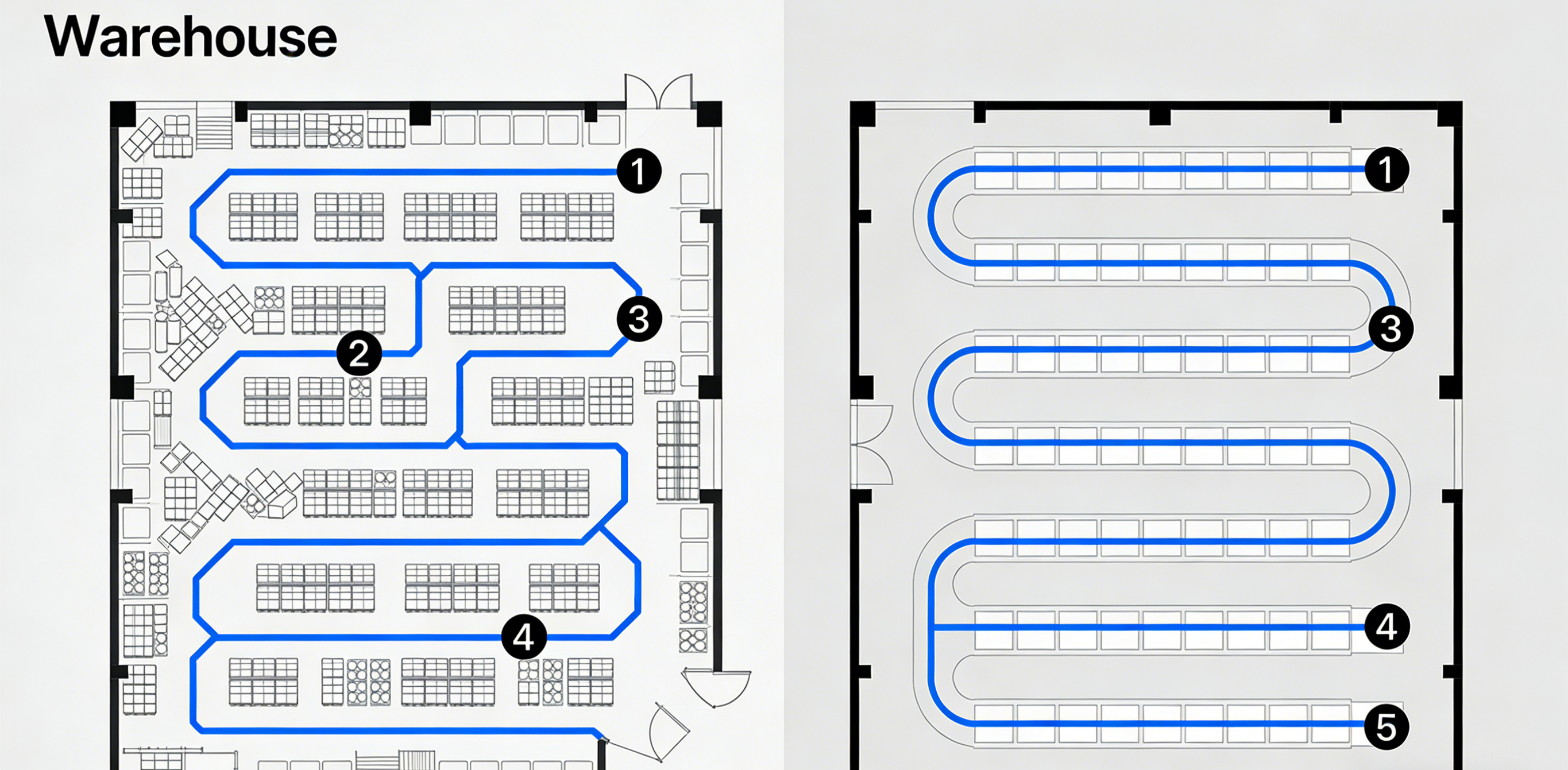
Picking Path Optimized
Previously, pick operators ran across the warehouse with paper pick-lists. They went to zone A, then zone C, then zone B, then back to zone A. By the end of the day, step-counts exceeded 20,000, but efficiency remained low.
Now, the system consolidates multiple orders into batches and automatically calculates the optimal picking path. Pick operators follow system guided instructions. No backtracking. No unnecessary travel. The same time yields more items picked and fewer steps walked.
Wave Planning Automated
Previously, orders were picked as they arrived and shipped immediately after picking. When order volumes were high, picking zones became congested, aisles became blocked, and efficiency dropped sharply.
Now, the system automatically generates wave plans based on order priority, delivery timelines, inventory locations, and picking resources. Which orders to pick first, which orders to combine, which orders to process through dedicated-lanes all are calculated. During peak order periods, the warehouse remains orderly. During promotional events, operations remain stable.
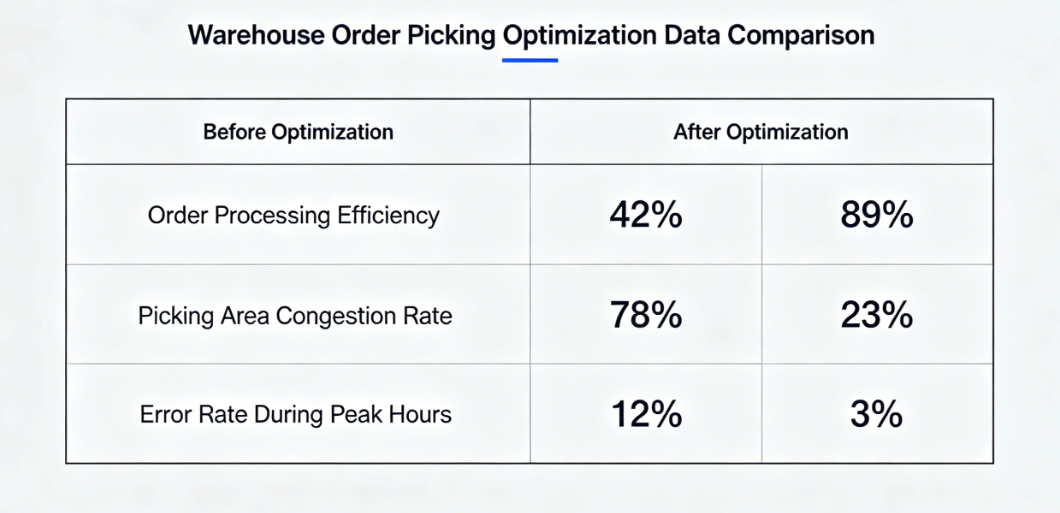
Physical Counts Without Downtime
Previously, physical counts meant stopping operations. The warehouse closed. All staff participated. Items were counted one by one, recorded line by line. Errors required restarting. Omissions required supplementation. A full count for a large warehouse took three to five days.
Now, the system supports dynamic counting, cycle counting, and sample counting. No operations shutdown. No warehouse closure. A portion is counted each day, and the entire warehouse is cycled through within a month. Discrepancies are discovered in real-time. Causes are traced immediately. Physical counts are no longer a burden. They are part of daily operations.
Customer Testimonial
During peak sales periods, the warehouse used to work overtime until early morning and still could not ship all orders. Now with the same staff and the same warehouse, orders placed during peak days ship the same day. The system has transformed every warehouse employee experience into standardized processes. New hires become productive after just one day of training.