At a Glance
Product data centralized, version chaos completely eliminated
BOM accuracy improved from 85% to 99%, production material errors significantly reduced
Engineering change cycle reduced from an average of 2 weeks to 3 days
Engineering, manufacturing, production, and procurement collaborate on a single set of data
Customer Profile
An automotive components manufacturer with annual revenue of approximately USD 250 million and 900 employees, primarily engaged in the research, development, and production of automotive electronic control units and sensors. The company manages over 1,500 product models and initiates more than 80 new projects annually. The R&D team is distributed across three cities, with design data stored across different departmental servers and local computers. Product data version control was chaotic, BOM errors and omissions were frequent, and engineering changes required weeks to propagate to the production floor.
Data Scattered Everywhere
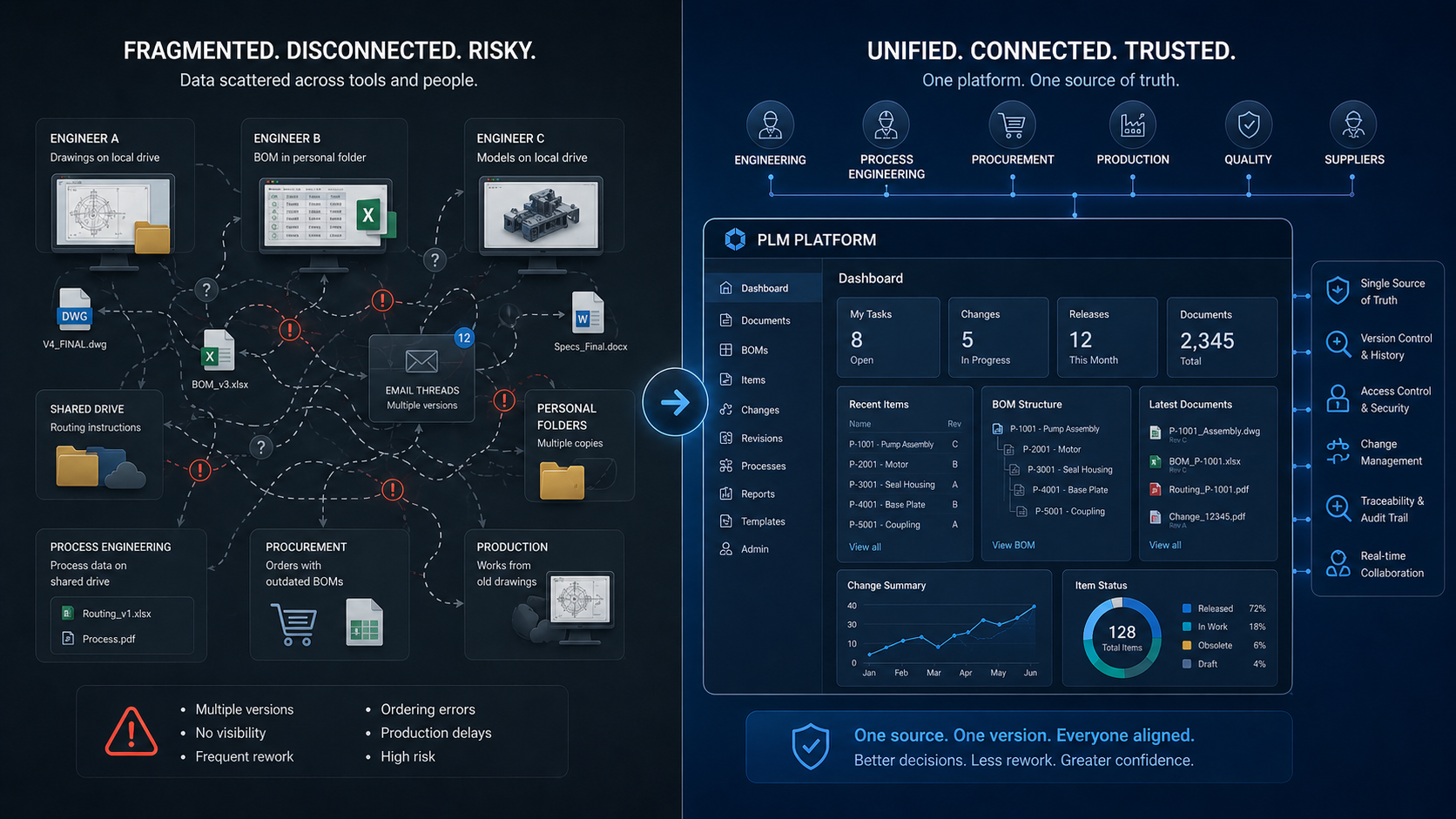
Engineer A created drawings and stored them on a personal computer. Engineer B modified the BOM and saved it in a personal folder. Process engineers created routing instructions and saved them on a shared drive. Procurement placed orders using outdated BOMs. Production worked with old drawings. No one knew which version was correct.
Products were engineered, but product data was scattered everywhere. Drawings lived in one place. BOMs lived in another. Process data lived somewhere else. Procurement worked from one version, production from another. Each claimed to be the latest. None aligned. This company was once exactly that. Until PLM brought scattered data back to a unified front.
Data Unified
Previously, drawings resided on engineer computers, BOMs in Excel spreadsheets, change records in emails, and process documents on shared drives. Locating complete product data required navigating three systems, searching through dozens of emails, and asking four or five people.
Now, all product data resides in the PLM system. Drawings, models, BOMs, process data, change records, technical documents all are structured and stored with unified version control. Engineers maintain data in a single location. Others retrieve data from a single location. Product data no longer fights its own battles. It is unified.
BOM Generated Automatically
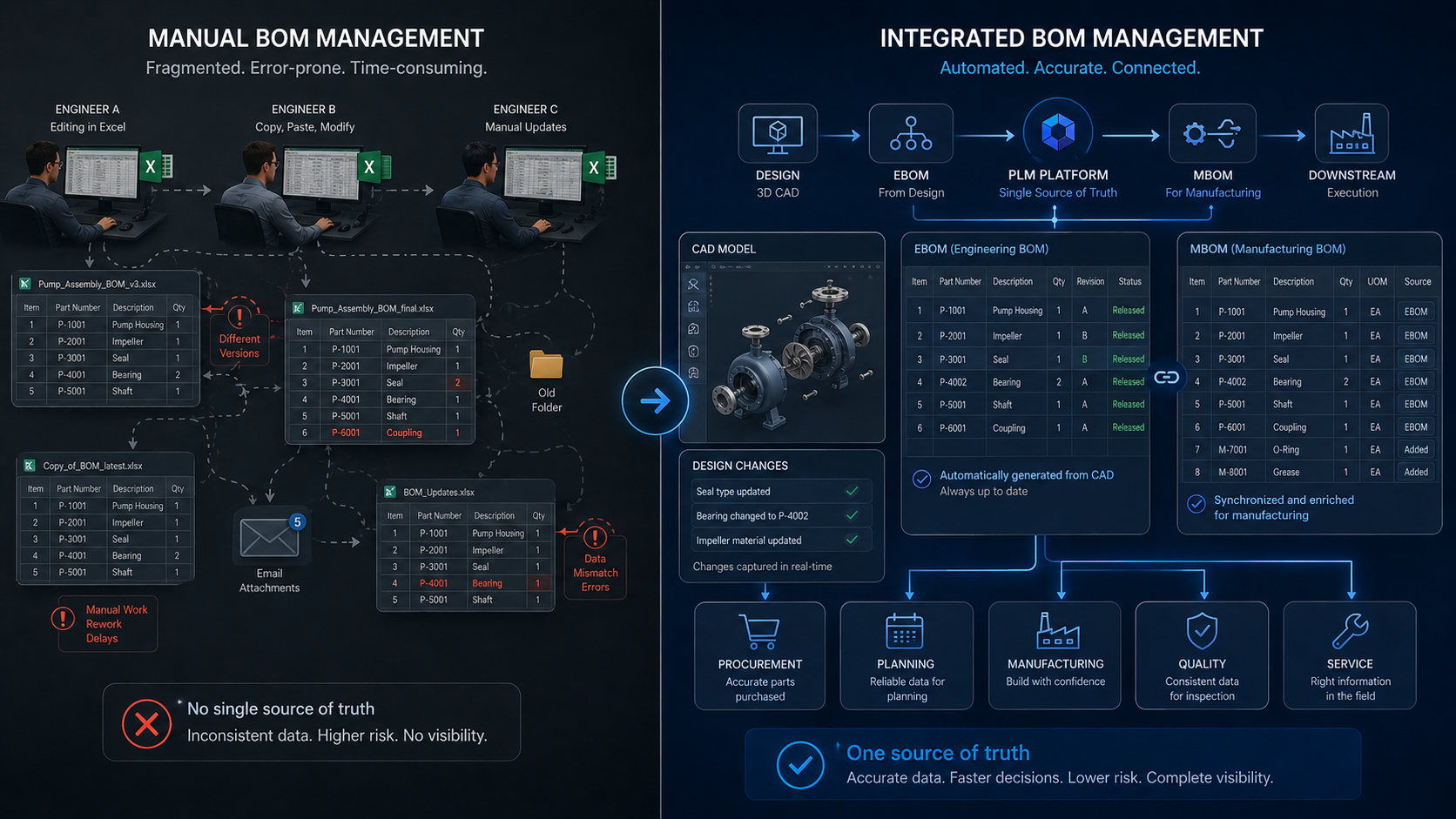
Previously, BOMs were maintained manually by engineers in Excel. Adding a new part meant manually inserting a row. Changing a quantity meant manually updating a number. When BOMs were wrong, production was wrong. When BOMs omitted items, procurement omitted them as well.
Now, BOMs are generated automatically from design data. When engineers complete designs in CAD, the system automatically extracts component information and generates the EBOM. Process engineers build the MBOM based on the EBOM, with the system automatically comparing differences and propagating changes. BOMs are no longer manual work. They are the output of design.
Change Control Closed-Loop
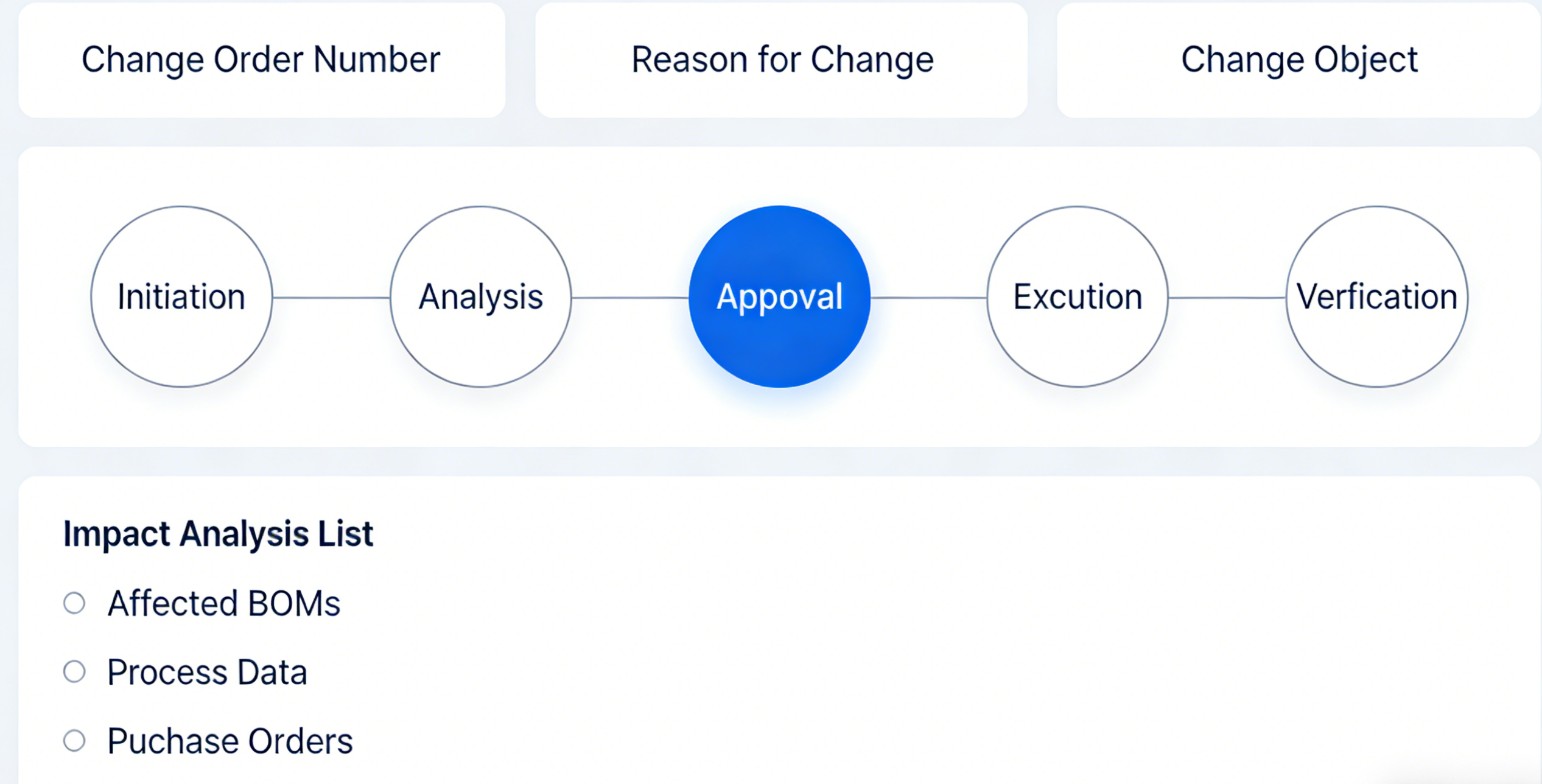
Previously, engineering changes were handled through email. When a design changed, an email was sent to process engineering. When process engineering changed, an email was sent to production. When production changed, an email was sent to procurement. If an email was missed, the change was missed. If an email was incorrect, the change was incorrect.
Now, changes flow through the system. Change initiation, impact analysis, approval, execution, and verification each step is recorded in the system. What was changed, why it was changed, who approved it, when it was executed all are fully traceable. Changes no longer rely on email chains. They rely on closed loop-processes.
Cross-Functional Collaboration
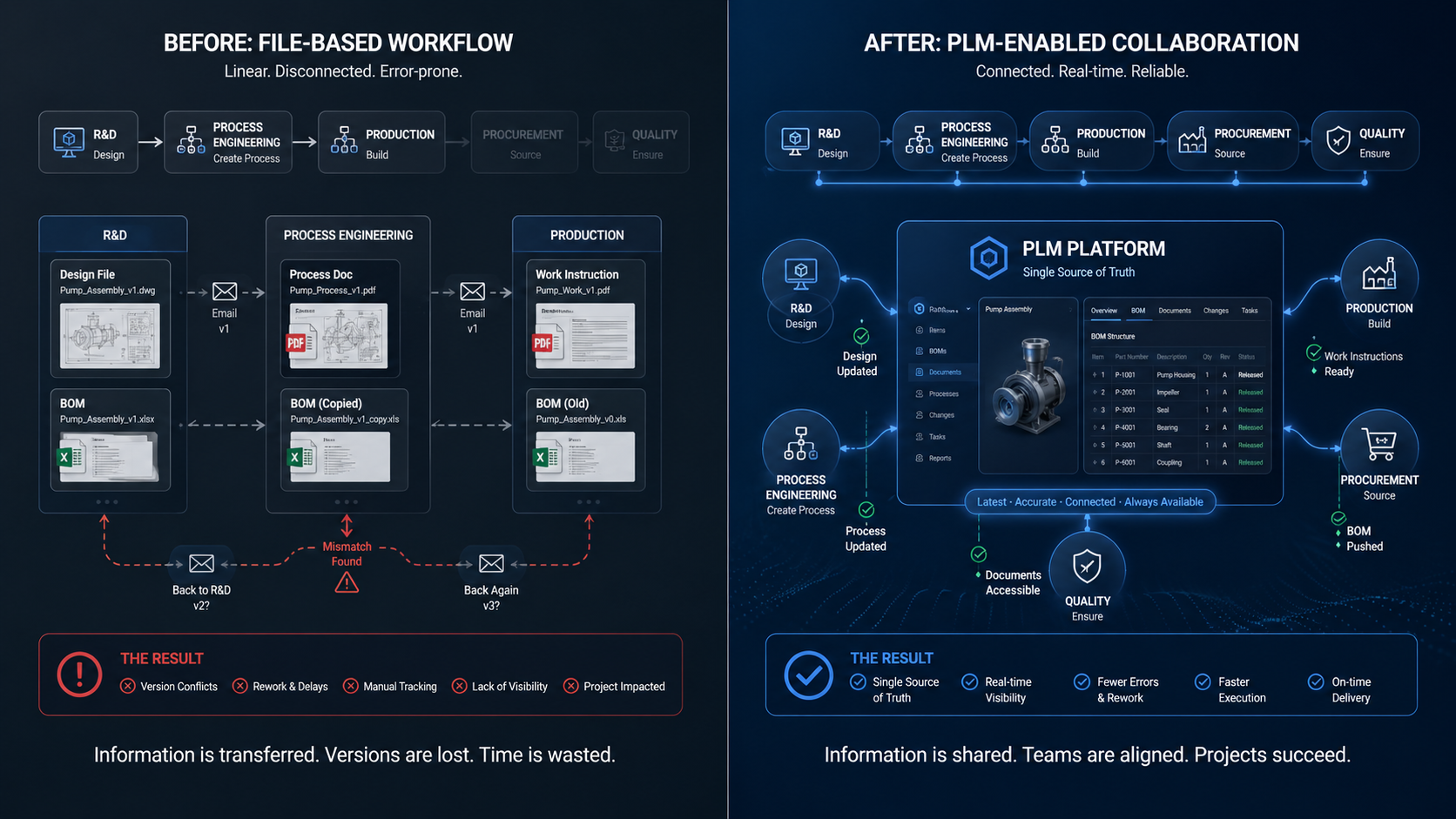
Previously, R&D completed designs and sent drawings to process engineering. Process engineering completed work and sent files to production. Production received files and discovered mismatches between drawings and process instructions. Back to R&D, who said this was not the latest version. One cycle later, projects were delayed.
Now, R&D, process engineering, production, procurement, and quality all collaborate within the PLM system. When design is complete, process engineering sees it immediately. When process engineering completes work, production sees it immediately. The latest BOM that procurement needs is pushed automatically by the system. The technical documentation that quality requires is accessible at any time. Cross-functional collaboration is no longer about transferring files. It is about sharing information.
Customer Testimonial
Our biggest fear used to be version mismatches. R&D sent one version. Production used another. Procurement ordered from a third. None matched. Now in PLM, there is only one version the latest. If someone uses the wrong version, it is no longer the system’s fault. It is a human error. With clear accountability, errors have significantly decreased.