At a Glance
Production progress visible in real time, no longer dependent on verbal reporting
Equipment status automatically collected, OEE shifts from estimation to precise calculation
Quality data fully traceable, defects can be traced to specific operations and operators
Work order execution transparent, schedule attainment significantly improved
Customer Profile
An automotive components manufacturer with annual revenue of approximately USD 180 million and 600 employees, primarily engaged in the production and processing of precision die cast components such as engine blocks and transmission housings. Customers include tier one suppliers to major global automotive brands. Production is characterized by fast takt times, stringent quality requirements, and strict product traceability. The shop floor consists of diverse equipment types with frequent changeovers, and process data had long been recorded manually.
The Invisible Shop Floor
The production schedule is released. Then what?
The production supervisor knows, but the supervisor is busy. The team leader knows, but the team leader is monitoring the line. The operator knows, but the operator is working. Management wants to know, but no one can provide an answer immediately.
The shop floor is the most authentic place in a manufacturing enterprise, yet it is also the most opaque.
This company was once exactly that. Until they brought the shop floor onto MES.
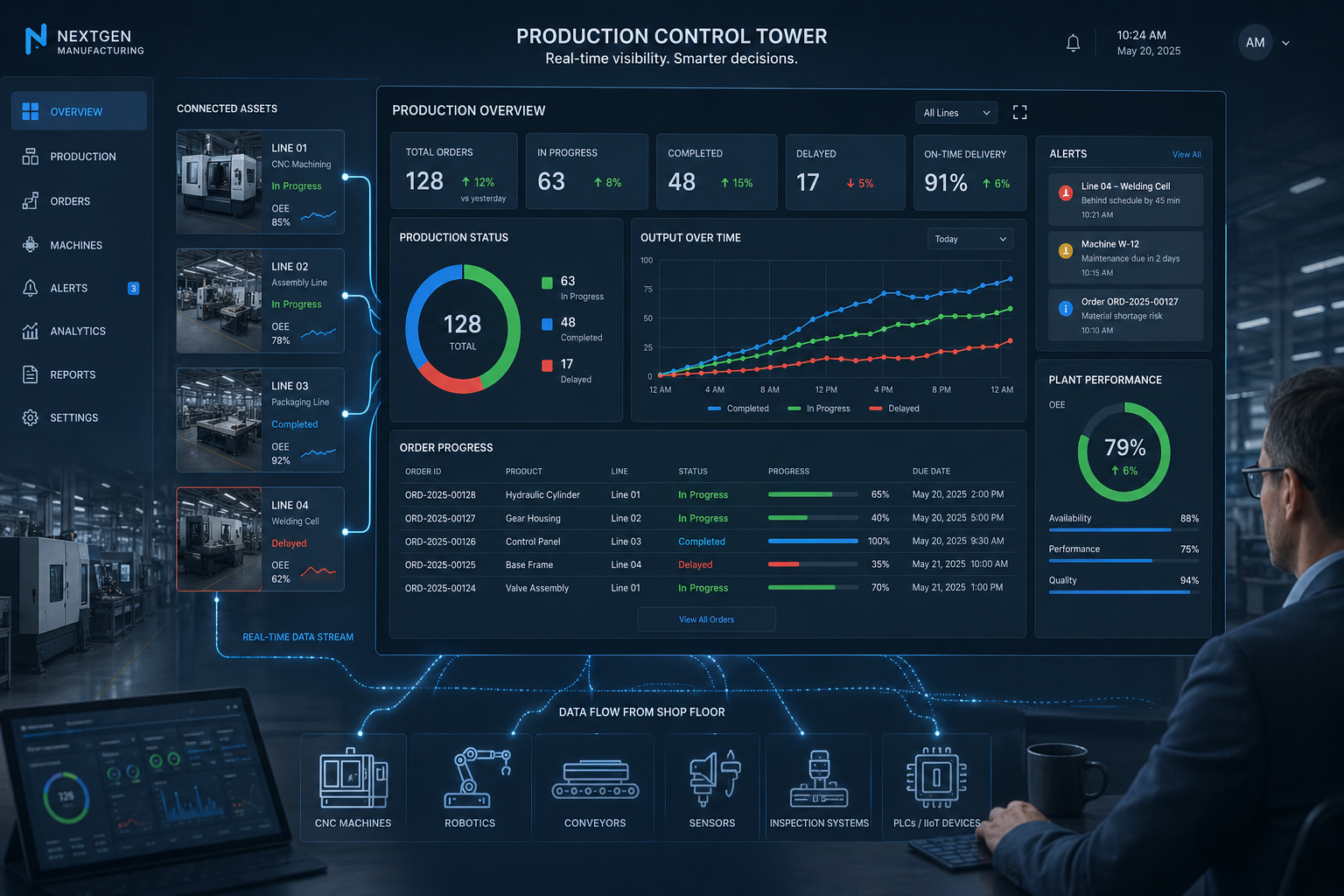
Production Progress Visible in Real Time
The moment a work order is released, the system begins tracking. Which operation has started, which operation has completed, which operation is stuck, the status of every operation updates in the system in real time.
Planners no longer need to walk the shop floor with work orders to inquire about progress. Open the system, and the status of all work orders is immediately clear. Which order is ahead, which order is behind, which order has been stalled for three days, all visible at a glance.
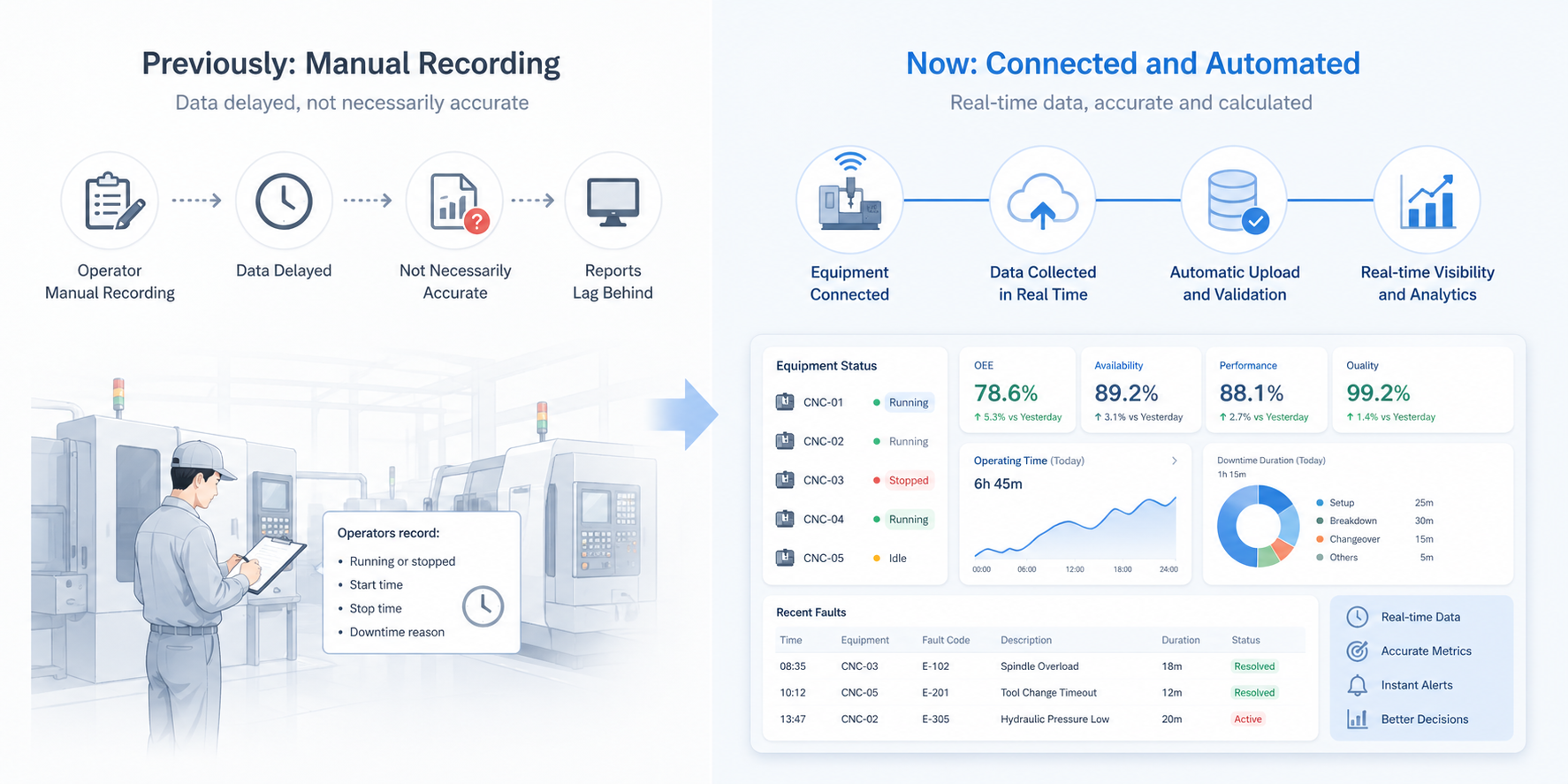
Equipment Status Automatically Collected
Previously, whether equipment was running, how long it had been running, and how long it had been stopped all depended on operators manual recording. Data was delayed and not necessarily accurate.
Now, equipment is connected to the network. Operating status, processing time, downtime duration, fault codes are all automatically collected and uploaded in real time. OEE is no longer an estimated number; it is calculated.
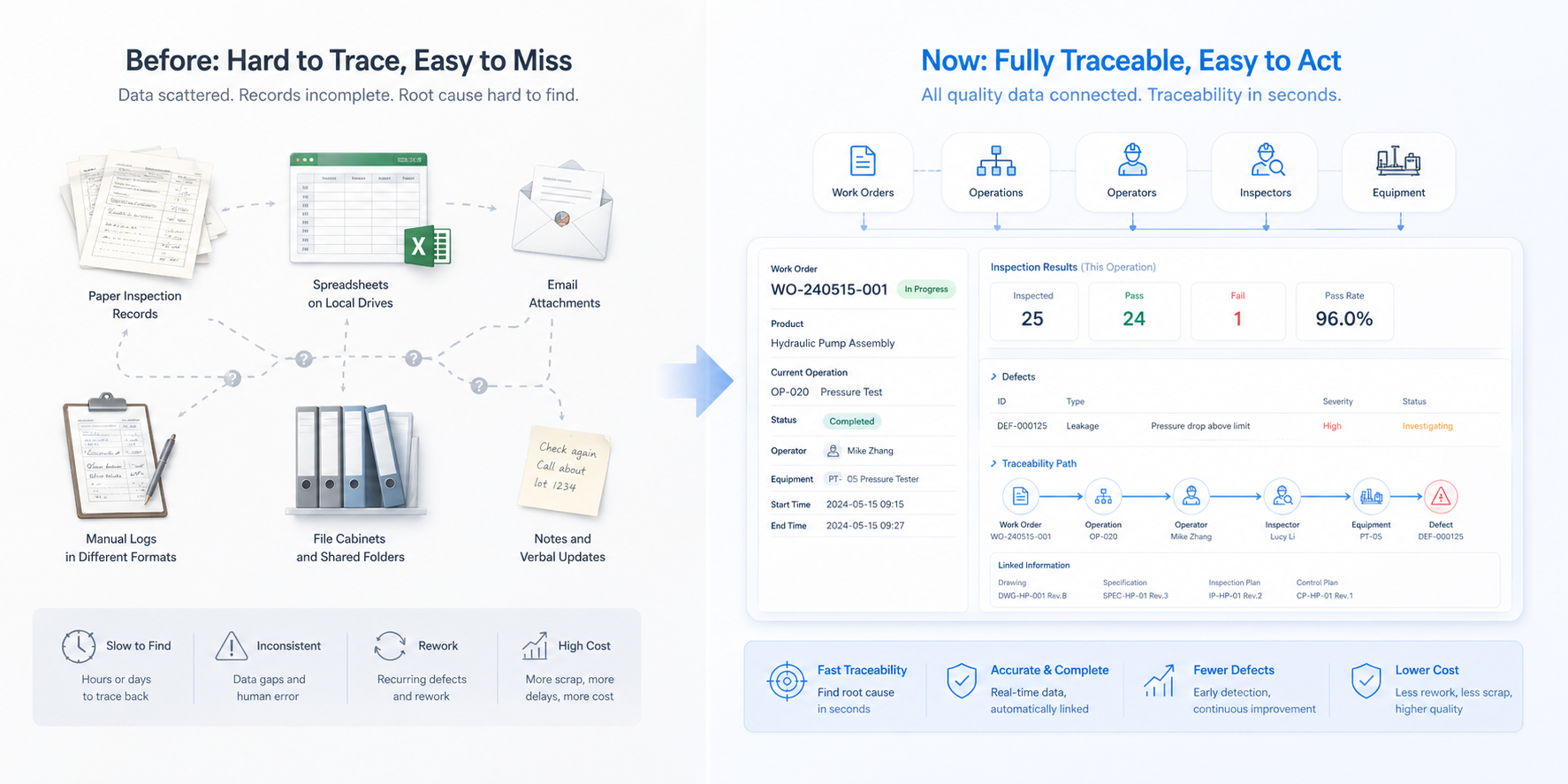
Quality Fully Traceable
In the past, inspection data was often recorded on paper or scattered across spreadsheets. When quality issues arose, teams had to manually trace back through incomplete or inconsistent records, making it difficult to pinpoint the root cause. Information gaps, delays, and human error often led to prolonged investigations and recurring defects.
Now, inspection data for every operation is entered into the system. Every defect is linked to the specific work order, operation, operator, inspector, and equipment. Traceability is no longer a matter of searching through paper; it is a matter of a few mouse clicks.
Shop Floor Coordination Automatically
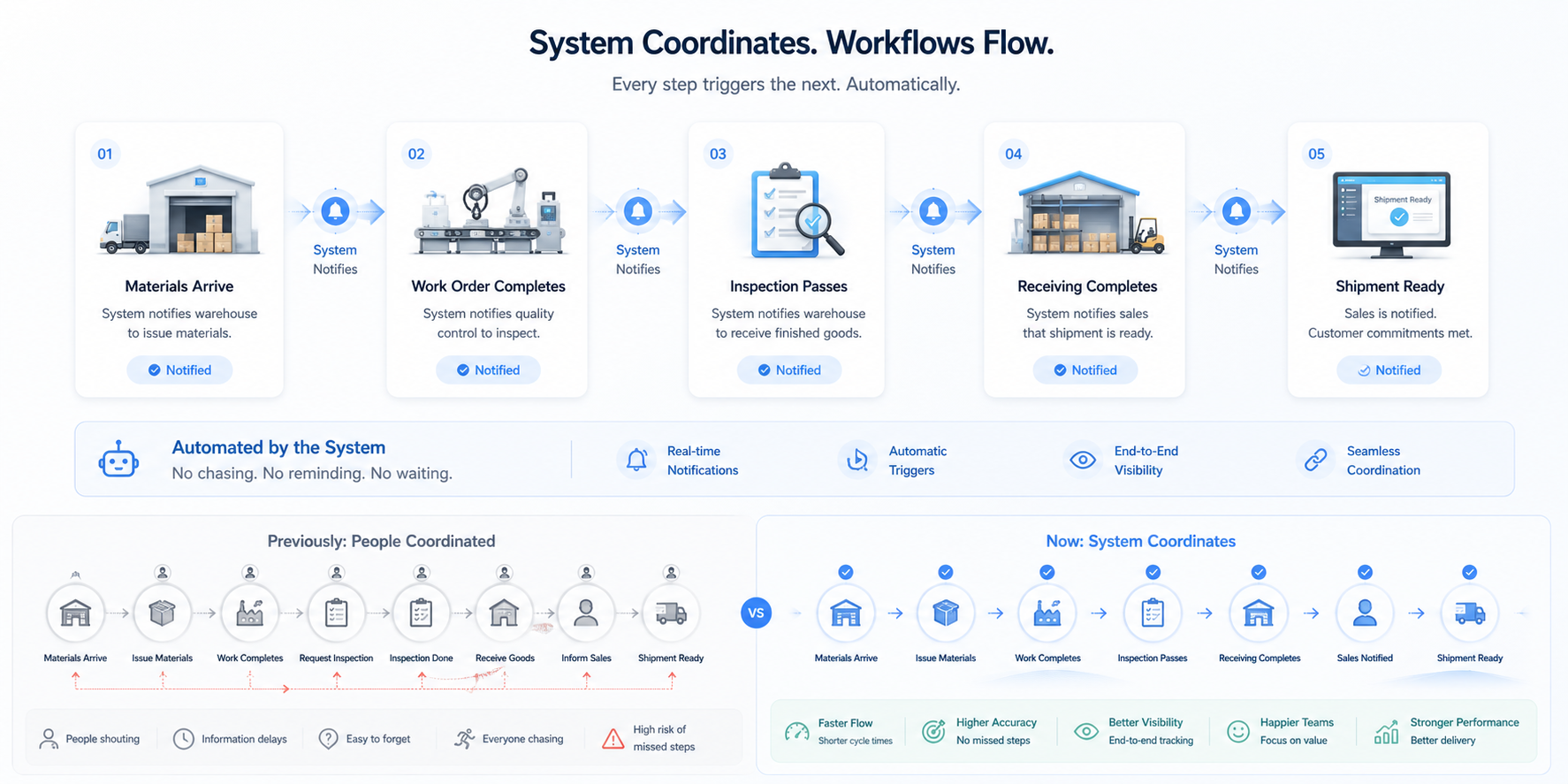
When materials arrive, the system notifies the warehouse to issue them. When a work order completes, the system notifies quality control to inspect. When inspection passes, the system notifies warehouse to receive finished goods. When receiving completes, the system notifies sales that shipment is ready.
Previously, coordination between these steps relied on people shouting. Now, the system does the coordination. No one needs to chase. No one needs to remember. No one needs to wait.
Customer Testimonial
Every morning, my first task used to be walking the shop floor to see what had been completed overnight and whether shipments could go out today. Now I sit in my office, open the system, and the entire shop floor is right in front of me.