At a Glance
Material requirements calculated automatically, planning time reduced from days to hours
Purchase recommendations generated precisely, stockouts and overstock improved simultaneously
In-transit materials fully visible, delivery commitments more reliable
Production and procurement coordinated, material availability rates significantly improved
Customer Profile
An electronics manufacturing company with annual revenue of approximately USD 250 million and 800 employees, primarily engaged in PCBA assembly and finished product manufacturing for industrial control products. The company manages over 6,000 material SKUs with complex BOM structures. Customer orders are characterized by high-mix low-volume, with frequent production changeovers. Material planning had long relied on manual Excel calculations, consuming one week each month, and often suffered from omissions and errors leading to production stoppages due to stockouts or excessive inventory accumulation.
Material Planning Is a Complex Math Problem
A sales order arrives. How many resistors, capacitors, and chips are needed must be calculated. Ten orders arrive. Shared materials must be consolidated. Existing inventory must be subtracted. In-transit orders must be accounted for. Safety stock must be added. Supplier lead times must be considered.
Hundreds of formulas in Excel. One wrong cell, and the entire spreadsheet is incorrect. Planners spent one week each month calculating material requirements, then another week chasing materials. When orders changed, the calculations had to start over.
Material planning was not planning. It was firefighting. This company was once exactly that. Until they moved material planning onto MRP.
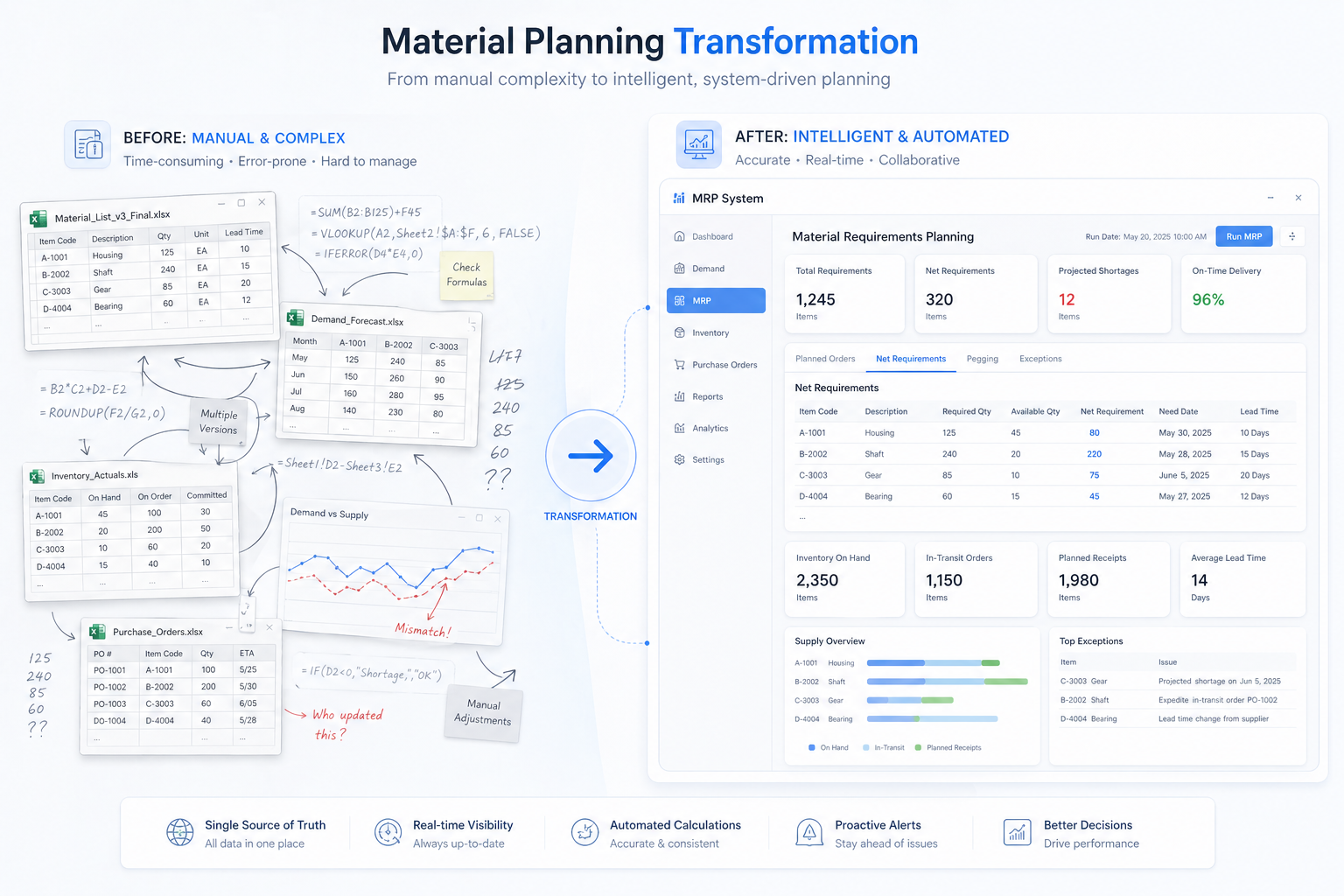
Requirements Run Automatically
Previously, when sales orders arrived, planners manually entered them into Excel, manually subtracted inventory, and manually generated purchase recommendations. When order volumes were high, tasks were overwhelming, and omissions were common.
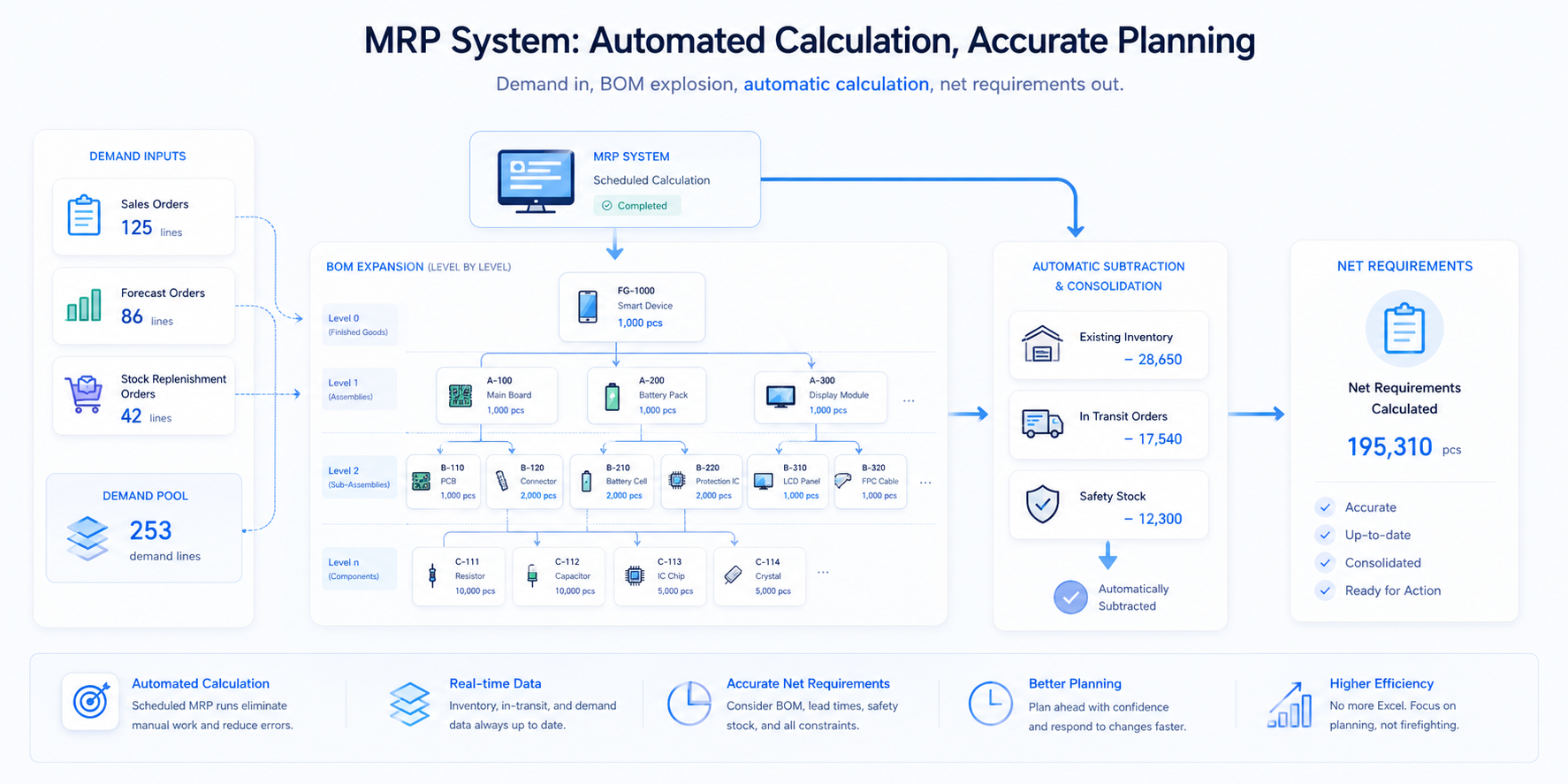
Now, the MRP system runs calculations on a scheduled basis. Sales orders, forecast orders, and stock replenishment orders all flow into the demand pool. The system expands layer by layer according to the BOM, calculating material requirements at each level. Existing inventory, in-transit orders, and safety stock are automatically subtracted and consolidated. Planners no longer touch Excel. Open the system, and net requirements are already calculated.
Purchase Recommendations Generated Precisely
Previously, when purchasers received material requirement lists from planners, they still had to make their own judgments. Was this supplier reliable on lead times? Did that supplier have a minimum order quantity? Should this batch be consolidated with another order? When judgments were correct, outcomes were favorable. When judgments were wrong, either stockouts or excess inventory resulted.
Over time, these decisions became increasingly complex as supplier variability, changing demand, and operational constraints made manual judgment harder to sustain at scale. What once relied on experience alone began to require more consistent, data-driven support. Purchase recommendations are no longer rough estimates. They are precise down to the unit and the day.
In-Transit Materials Visible
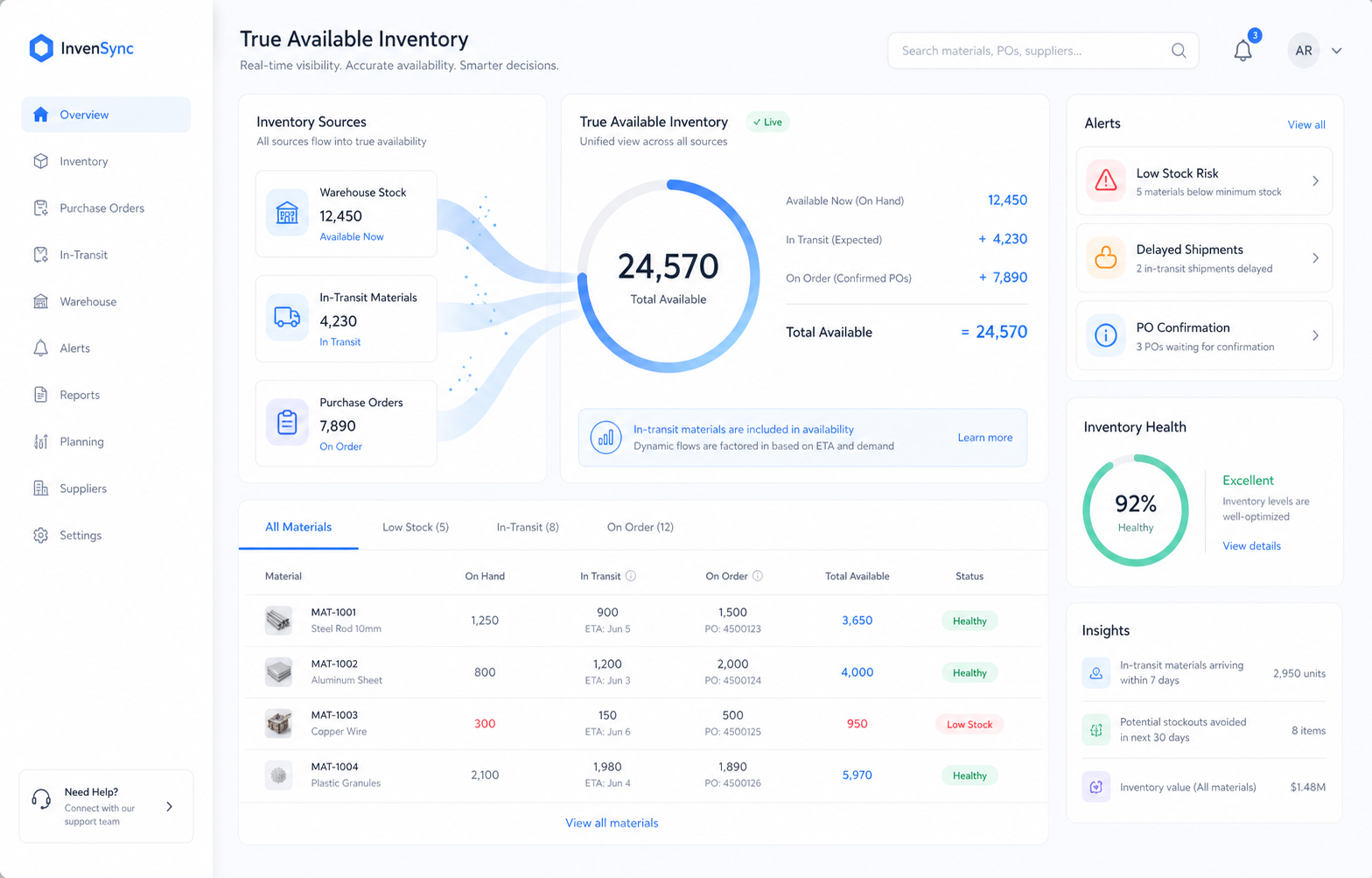
Previously, after purchase orders were issued, materials were on the way, but planners did not know. The inventory planners saw was always what was in the warehouse. Materials in-transit were invisible. Even when materials were about to arrive, planners continued to push purchasers for updates.
Now, the MRP system incorporates in-transit materials into calculations. The moment a purchase order is confirmed, the in-transit quantity is included in available inventory. When planners open the system, they do not see warehouse inventory alone. They see true available inventory. Stockout alerts are no longer false alarms. Material chasing is no longer blind.
Kitting Analysis Provides Early Warning
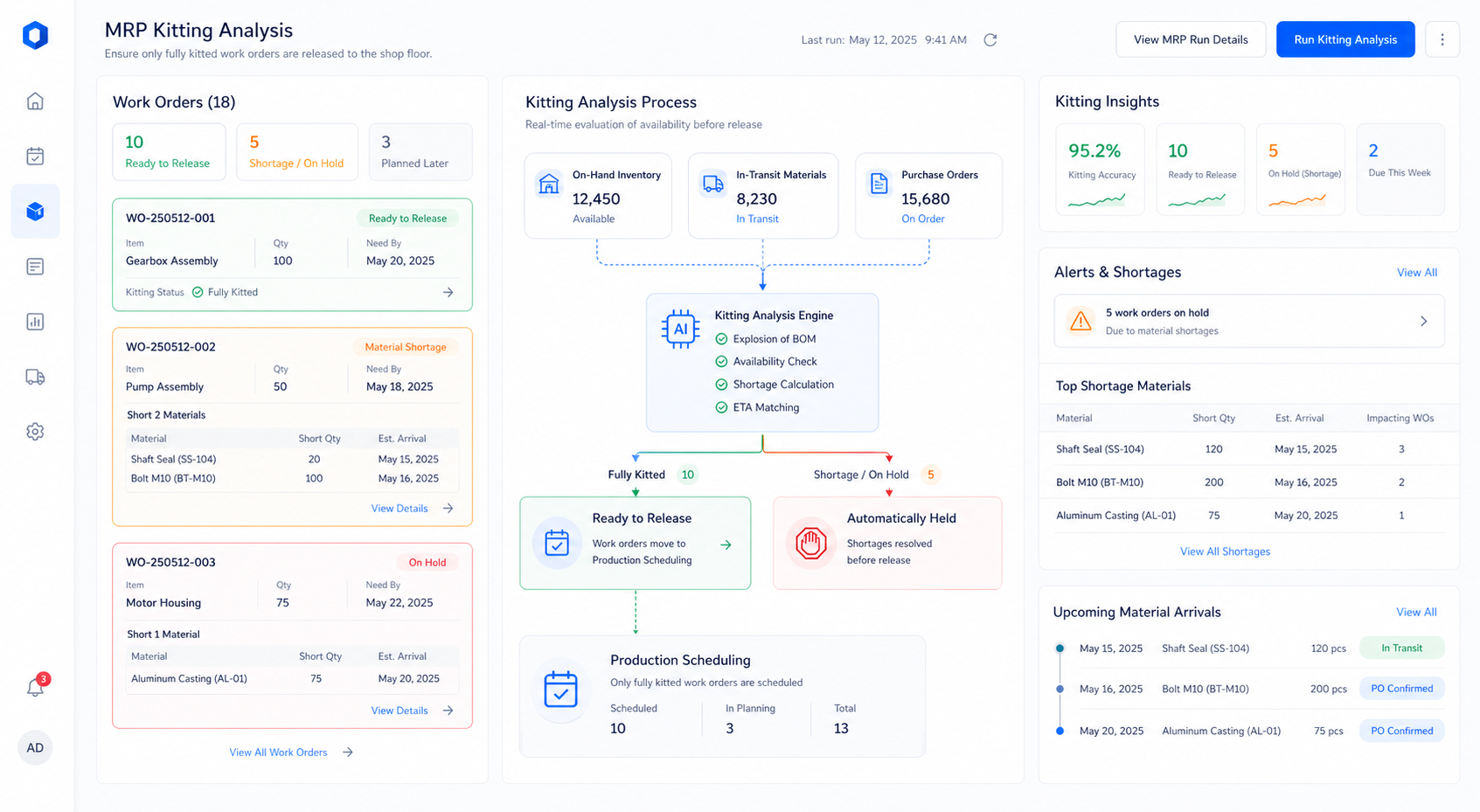
Previously, production schedules were released, shop floor operations began, and only then were material shortages discovered. A single missing screw could stop an entire production line. While waiting for materials, labor costs continued, equipment ran, but no output was produced.
Now, before production schedules are confirmed, the MRP system performs kitting analysis. Which work orders are short which materials, how much is needed, when materials will arrive all are calculated clearly. Only fully kitted work orders are released to the shop floor. Work orders with shortages are automatically held. The shop floor no longer waits for materials. Production schedules no longer run empty.
Customer Testimonial
The first week of every month used to mean the entire planning team buried in Excel, calculating materials, then reconciling, correcting errors, and filling gaps. Now the system runs automatically. I open it each morning, review net requirements, place orders that need placing, chase materials that need chasing. Stockouts are fewer. Inventory is lower.