At a Glance
Inventory data accurate in real-time, no longer dependent on month-end physical counts
Safety stock alerts automated, reducing both stockouts and overstock simultaneously
Inventory turnover significantly improved, working capital substantially reduced
Multi-warehouse inventory visibility, transfers no longer require phone calls
Customer Profile
An electronics manufacturing company with annual revenue of approximately USD 250 million and 800 employees, primarily engaged in PCBA assembly and finished product manufacturing for consumer electronics and industrial control products. The company manages over 8,000 material SKUs, including active components, passive components, structural parts, and consumables, some of which have strict shelf life requirements. Raw materials, semi-finished goods, and finished products are stored across three facilities. Inventory value consistently accounts for over 35 percent of working capital, and inventory management had long relied on manual experience.
Inventory is the Last to Know
When procurement places an order, they do not know how much inventory remains. When planning schedules production, they do not know whether materials are sufficient. When sales accepts an order, they do not know whether delivery can be met. When finance calculates performance, they do not know how much capital is tied up in the warehouse.
Inventory is the reservoir of an enterprise. But previously, the water level in this reservoir was known only to the warehouse.This company was once exactly that. Until they brought inventory onto IMS.
Inventory Visible in Real Time
Previously, inventory was only known at month end physical counts. To find out how much of a certain material remained on a daily basis, one had to ask the warehouse keeper, who then had to count the shelves.
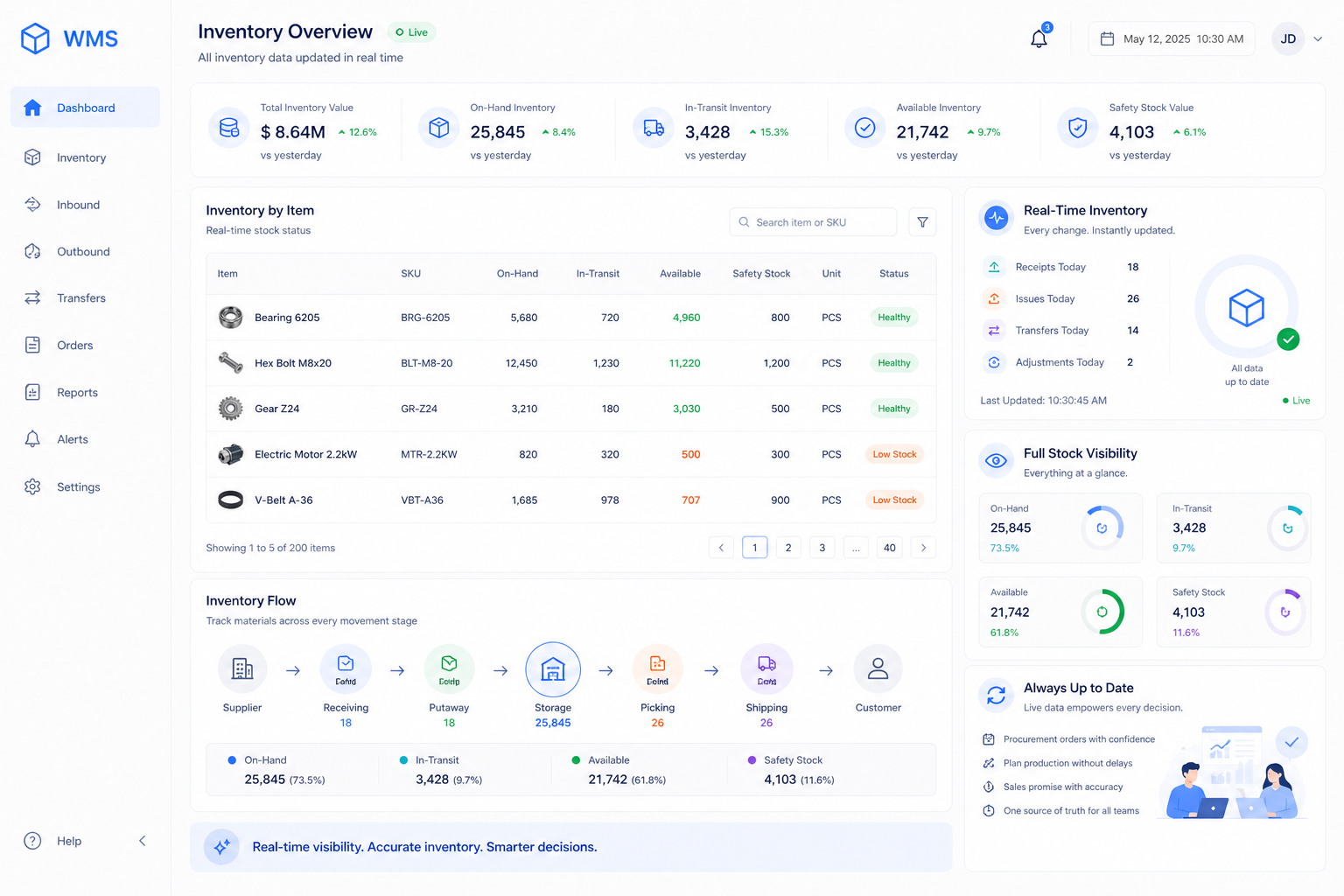
Now, every receipt, every issue, every transfer updates in the system in real time. Open the system. Current inventory, in transit inventory, available inventory, safety stock all displayed at once.
Procurement can place orders without asking warehouse. Planning can schedule production without waiting for reports. Sales can commit delivery dates without guessing.
Safety Stock Alerts Automatically
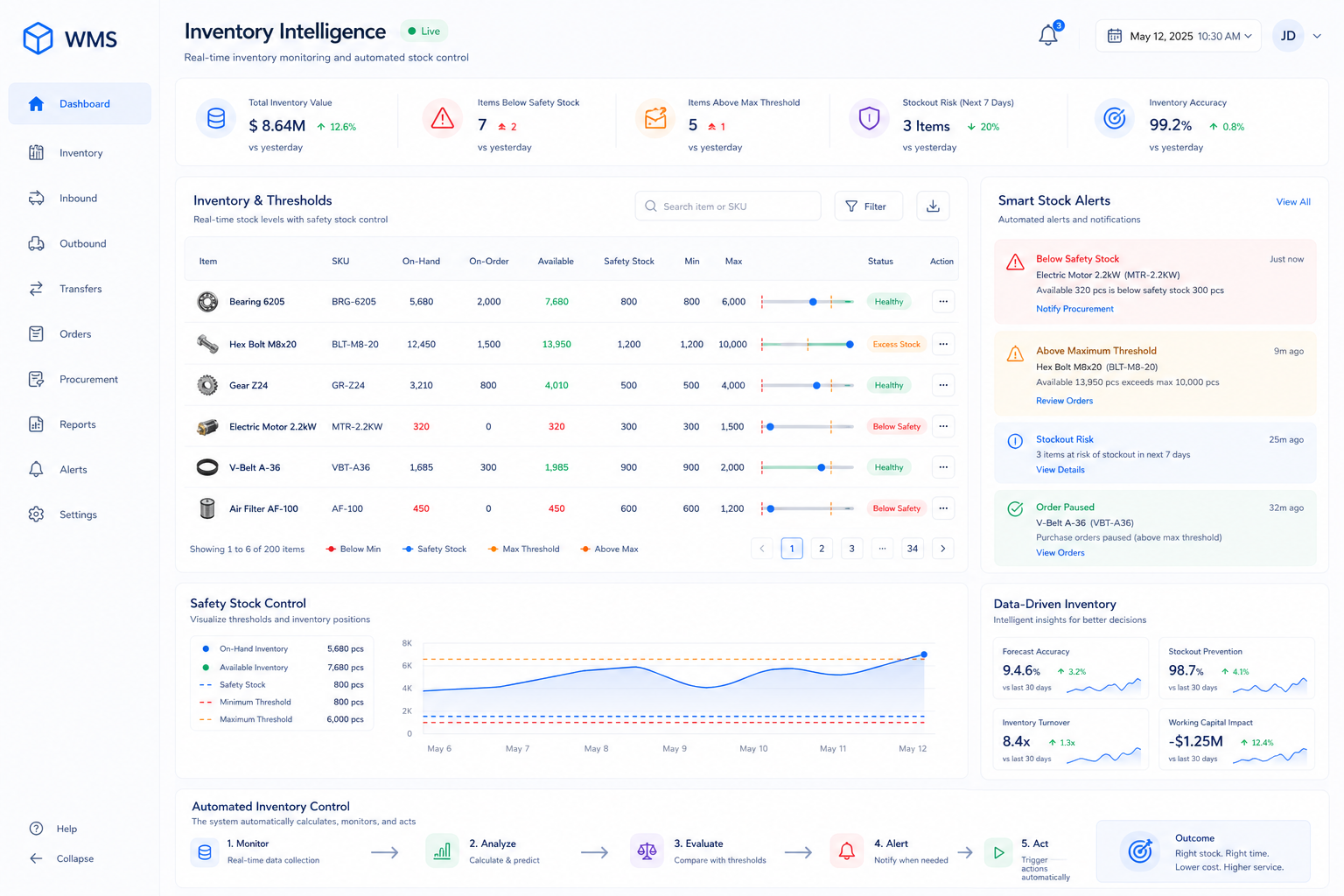
MLCC capacitors: inventory 150,000 units, safety stock 200,000 units, shortage alert. MCU chips: inventory 80,000 units, safety stock 50,000 units, sufficient. PCB boards: inventory 20,000 units, safety stock 20,000 units, critical.
Previously, these numbers relied on the warehouse keepers memory. Forgetting led to stockouts. Stockouts led to production stoppages. Fear of stockouts led to over ordering. Over ordering tied up capital.
Now, the system automatically calculates and alerts. Below safety stock, procurement receives a reminder. Above maximum threshold, procurement pauses orders. Inventory no longer relies on intuition. It relies on data.
Inventory Turnover Visible
Previously, no one could clearly state which materials turned quickly and which remained stagnant. Year end physical counts revealed obsolete materials worth millions of dollars tied up in the warehouse.
Now, the system records receipt dates, issue frequency, and aging distribution for every material. Materials untouched for over 180 days are automatically flagged. For slow moving materials, procurement knows to order less, and sales knows to promote. Capital tied up in inventory is no longer a vague total. It is a clear material-by-material account.
Multi Warehouse Coordination
Raw material warehouse at facility one, semi finished goods warehouse at facility two, finished goods warehouse at facility three, subcontractor warehouse each maintained separate records, disconnected from one another. Material transfers relied on phone calls. Shortages in one warehouse often coincided with excess in another.
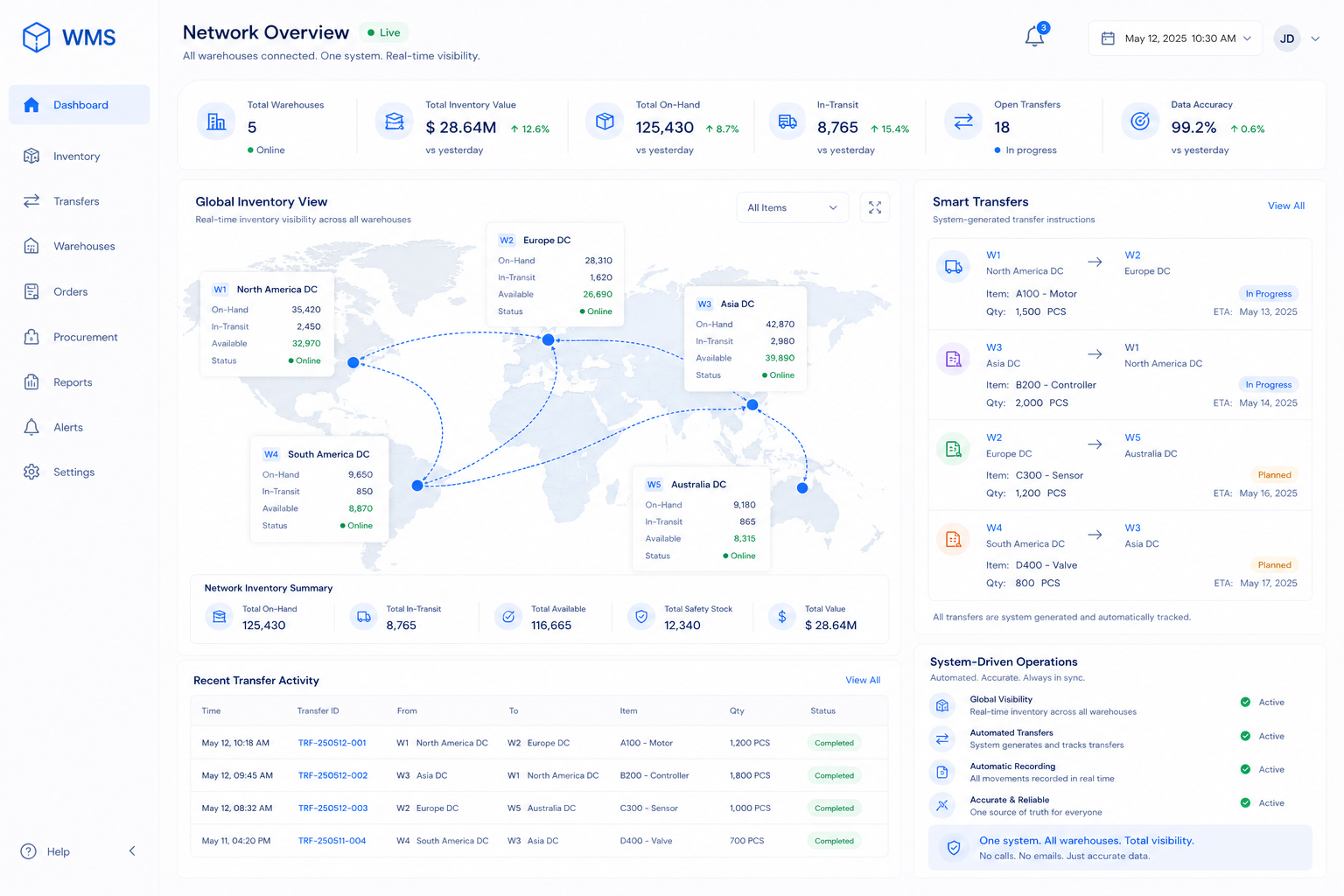
Now, all warehouses operate on the same system. Inventory data is globally visible. Transfer instructions are generated by the system. Transfer movements are automatically recorded.
Which warehouse has what, how much, and where, open the system and know instantly. Transfers no longer require phone calls. They rely on the system.
Customer Testimonial
Inventory used to be two separate realities one in the system, one in the warehouse. Every month-end physical count revealed discrepancies worth hundreds of thousands. Now what is in the system is what is in the warehouse. We no longer argue about inventory data.