Accounts Payable (AP) is often viewed as a back office administrative burden. However, in the high stakes world of industrial operations, it is a strategic lever for cash flow optimization and supply chain resilience.
While Accounts Receivable focuses on bringing cash in, Accounts Payable is about the art of managing what goes out. Effective AP management isn't just about paying bills; it's about optimizing the timing of payments, maintaining strong vendor relationships, and ensuring absolute accuracy in the balance sheet. In an era of tightening margins, the ability to precisely track every dollar owed to suppliers is a fundamental requirement for any scaling enterprise.
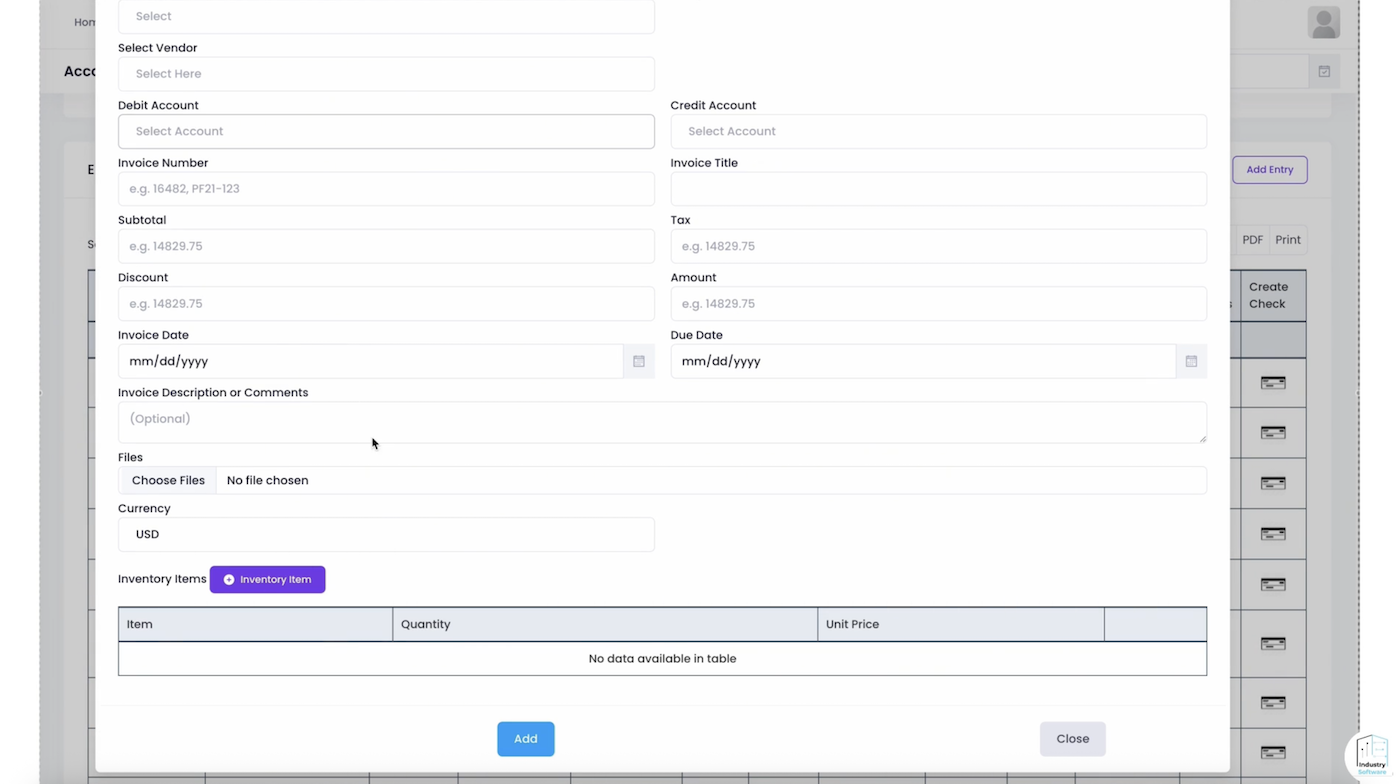 Figure 1: The Accounts Payable Dashboard provides an immediate snapshot of current liabilities, allowing finance leaders to balance outgoing payments with available liquidity.
Section I: The Visibility of Liabilities
At the core of any robust financial system is the ability to visualize the current debt profile. As shown in Figure 1, our platform offers a Comprehensive Balance Overview that breaks down the company's obligations into actionable segments.
With a total balance of $7,789.58 USD, the system provides a clear roadmap of what needs to be settled. The "Unpaid Balance" of $5,006.92 (representing 64% of total liabilities) acts as a critical indicator for cash forecasting. By identifying the volume of outstanding invoices, finance teams can ensure they have sufficient liquidity to meet obligations without compromising operational capital.
Conversely, the "Paid Balance" of $2,782.66 (36%) provides a historical view of successfully cleared obligations. This real time ratio analysis helps managers understand their Days Payable Outstanding (DPO), a key metric in determining how well the company is utilizing its credit terms to maintain cash flow.
Section II: Precise Time-Series Management
Managing AP is a race against the clock. Late payments result in penalties and strained vendor trust, while overly early payments can drain liquidity unnecessarily. Our Dynamic Date Selection Architecture solves this by allowing for surgical precision in liability tracking.
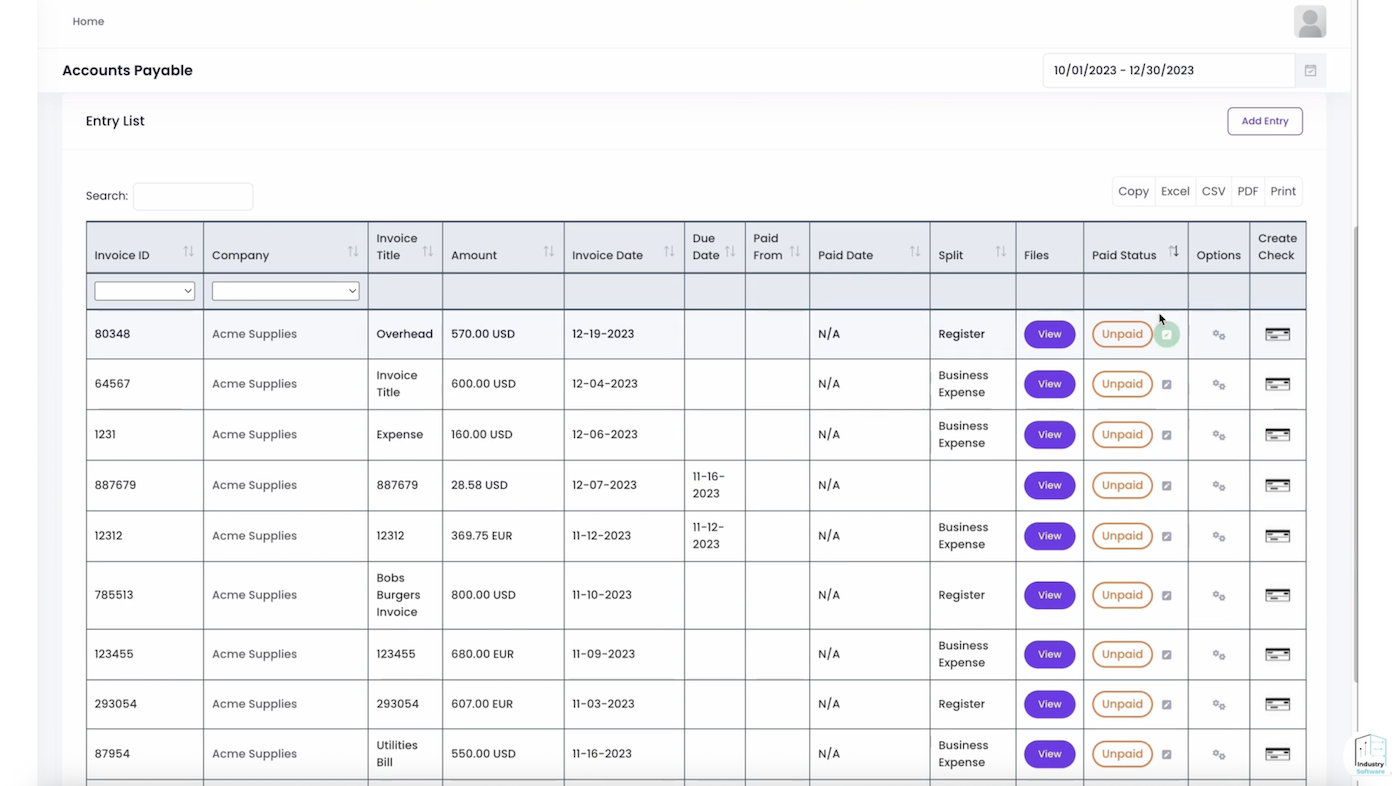 Figure 2: The integrated date picker allows teams to isolate liabilities falling due in specific windows, ensuring that no payment deadline is ever missed.
By utilizing the custom range selector shown in Figure 2, teams can look ahead to the next 30, 60, or 90 days. This forward looking view is essential for Treasury Management. For example, if a large payment for raw materials is due on November 15th, the system allows the finance team to reserve the necessary funds well in advance, avoiding high interest short term credit lines.
Furthermore, the system's ability to filter by "Last 7 Days" or "This Month" enables rapid reconciliation during month end closing, ensuring that the general ledger accurately reflects the current state of business obligations.
Section III: Accuracy at the Source: The Entry Workflow
Most accounting errors originate at the point of data entry. A misspelled vendor name or an incorrectly mapped expense account can cause hours of reconciliation work later. Our Intelligent AP Entry Modal is designed to prevent these errors before they enter the system.
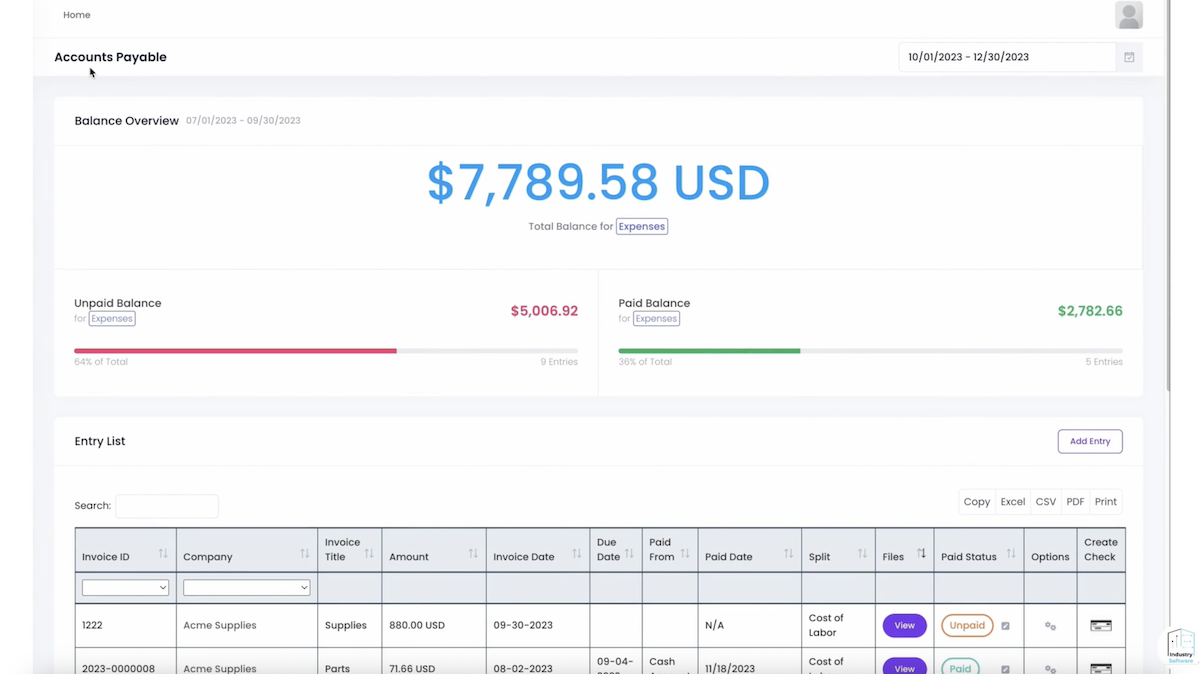 Figure 3: The Add Entry interface enforces strict data standards, linking every invoice to a verified vendor, a specific debit/credit account, and even physical inventory items.
The Add Entry workflow (Figure 3) is built for speed and compliance. Key features include:
-
Dual Entry Mapping
Every transaction requires both a Debit Account (e.g., Inventory or Utilities) and a Credit Account (e.g., Accounts Payable), ensuring balanced books for every invoice.
-
Vendor Linkage
Invoices are tied to specific vendors, allowing for detailed Vendor Spend Analysis and 1099 tracking for tax compliance.
-
Tax and Discount Logic
Separate fields for Subtotal, Tax, and Discounts allow the system to calculate the final Amount automatically, reducing manual calculation errors.
The Mechanics of the Three Way Match
In a high compliance environment, simply receiving an invoice isn't enough to trigger a payment. Our system facilitates the "Three Way Match" process, which is essential for preventing fraud and overpayment. By linking the AP entry to specific inventory items (Figure 3), the platform automatically cross references:
- The Purchase Order (PO): Did we actually authorize this purchase at this price?
- The Receiving Report: Did the warehouse actually receive these goods in the condition expected?
- The Vendor Invoice: Does the bill match the physical reality of the transaction?
This automated verification reduces the administrative burden on the finance team, allowing them to focus on resolving exceptions rather than manually checking every line item.
Section IV: The Audit Ready Ledger and Check Management
The Entry List serves as the central nervous system for the AP department. It is here that invoices are monitored, verified, and eventually settled.
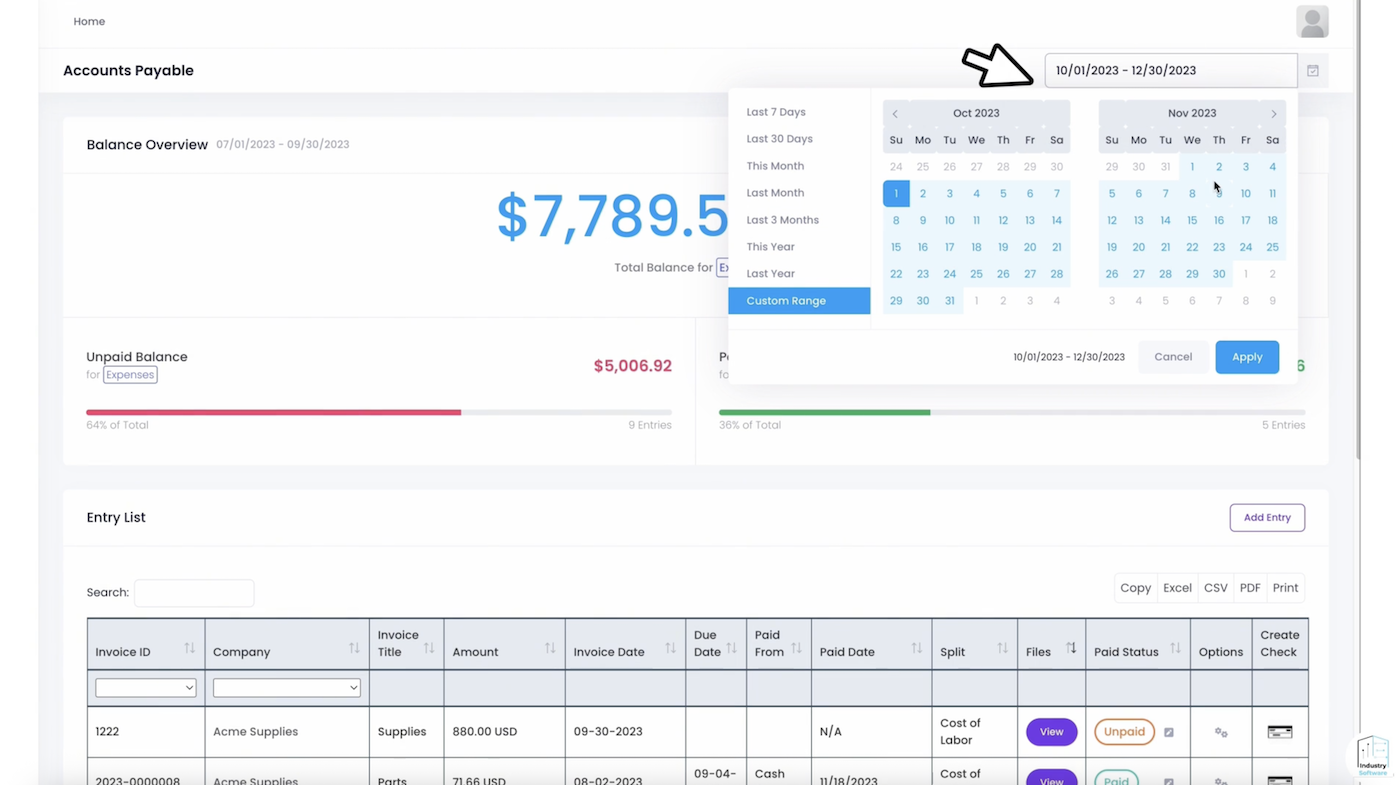 Figure 4: The unified AP ledger provides a granular view of every liability, with built-in tools for check creation and status tracking.
In Figure 4, we see the power of a modern ledger. Every invoice is tracked with its Paid Status (Unpaid vs Paid). A simple visual cue, the orange "Unpaid" badge, immediately alerts the team to pending obligations.
The "Create Check" functionality (represented by the check icon on the far right) allows for the seamless transition from "Liability" to "Settlement." By generating checks or electronic payment instructions directly from the ledger entry, the system eliminates the need for duplicate data entry, further reducing the risk of fraud or error.
Strategic Expense Categorization
The Split column allows for complex accounting scenarios. For example, a single invoice from a utility provider might be split between "Business Expense" and "Production Overhead." This level of granularity enables accurate Cost Center Reporting, allowing executives to see exactly where the company's capital is being deployed.
Section V: Cash Flow Optimization and Vendor Harmony
Beyond the technicalities of bookkeeping, a modern AP system is a tool for Strategic Negotiation. By maintaining a clean, predictable payment history, companies can negotiate better terms with their suppliers, such as 2/10 Net 30 discounts, where a 2% discount is applied if the invoice is paid within 10 days.
Our platform's Liquidity Forecasting tools allow you to model these scenarios. Is it better to pay early and take the discount, or hold onto the cash for another 20 days? With real time visibility into your Cost of Capital versus Vendor Discounts, the system empowers you to make the mathematically superior choice every time.
Furthermore, the transparency provided by the Entry List (Figure 4) fosters trust. When a supplier calls about a payment, your team can instantly provide an invoice ID, a payment date, or a check number. This professional responsiveness strengthens the supply chain, ensuring that during times of material shortages, your company is the "Preferred Customer" who always gets prioritized.
Section VI: Internal Controls and Risk Mitigation
In the modern digital landscape, the Accounts Payable department is a primary target for financial fraud, specifically Business Email Compromise (BEC) and invoice spoofing. A robust AP system must act as a fortress, protecting the company's capital through multi layered internal controls.
Our platform implements Segregation of Duties (SoD) by default. The individual who enters an invoice (Figure 3) is typically not the same individual who authorizes the final payment or generates the check (Figure 4). This "Four Eyes Principle" ensures that no single employee has end to end control over a transaction, drastically reducing the risk of internal misappropriation.
Additionally, the system maintains a Permanent Audit Trail. Every modification, from changing a vendor's bank details to updating a payment status, is logged with a timestamp and user ID. This transparency is not just about catching errors; it is about being "Audit Ready" at all times, making annual financial reviews a routine verification rather than a stressful investigation.
Section VII: The Role of Analytics in Strategic Procurement
Data is the new oil, and the AP department sits on a goldmine of it. By moving beyond simple bill paying, organizations can leverage Spend Analytics to gain a competitive edge. Our dashboard doesn't just show you what you owe; it shows you where your money is going.
By categorizing every invoice by Debit Account and Cost Center, executives can identify patterns of "maverick spend", unauthorized purchases made outside of negotiated contracts. For instance, if the system reveals that the company is purchasing the same industrial lubricants from three different vendors at three different price points, the procurement team can consolidate that volume to negotiate a significantly lower enterprise wide rate.
Key metrics tracked in real time include:
Cost per Invoice
Tracking the administrative cost of processing a single bill, from entry to settlement.
Discount Capture Rate
The percentage of available early-payment discounts that the team successfully secured.
Exception Rate
The frequency of "mismatched" invoices that require manual intervention and investigation.
Vendor Performance Score
Aggregating data on delivery accuracy and invoice consistency for every supplier.
Section VIII: Future Proofing with AI and Automation
The future of Accounts Payable lies in Touchless Processing. While our current interface provides powerful tools for manual entry and verification, the underlying architecture is designed to integrate with AI driven Optical Character Recognition (OCR).
Imagine a workflow where an invoice arrives in a dedicated email inbox, is automatically read by an AI agent, matched against a Purchase Order in the database, and presented to the finance manager as a "Verified and Ready" entry. This eliminates the "Data Entry Tax", the thousands of hours finance professionals spend typing numbers into boxes.
By freeing your team from these repetitive tasks, you transform the AP department from a "cost center" into a "value center." Your accountants become financial analysts, focusing on cash flow modeling, vendor negotiations, and strategic capital allocation.
Section IX: Compliance in a Globalized Economy
For enterprises operating across borders, compliance is a moving target. Our AP suite is built to handle the complexities of Multi-Currency Transactions and varying tax jurisdictions. Whether you are paying a local contractor in USD or a global supplier in EUR, the system handles the currency conversion and records the exchange rate at the moment of entry, protecting the company from hidden foreign exchange losses.
Furthermore, the system assists with Tax Compliance (e.g., 1099 reporting in the US or VAT in Europe). By ensuring that every vendor has the correct tax identification information on file before a payment is issued, the platform automates the year end reporting process, ensuring you stay on the right side of regulatory authorities.
Conclusion: Building a Foundation for Growth
As businesses scale, the complexity of managing hundreds or thousands of vendor payments can become a bottleneck. By automating the Accounts Payable workflow, from visual balance dashboards to inventory linked invoice entry, companies can move away from manual processing and toward Strategic Spend Management.
Mastering Accounts Payable is about more than just staying out of debt; it's about building a reputation for financial integrity that attracts better vendors, secures better credit terms, and ultimately provides the stable financial foundation required for global expansion.